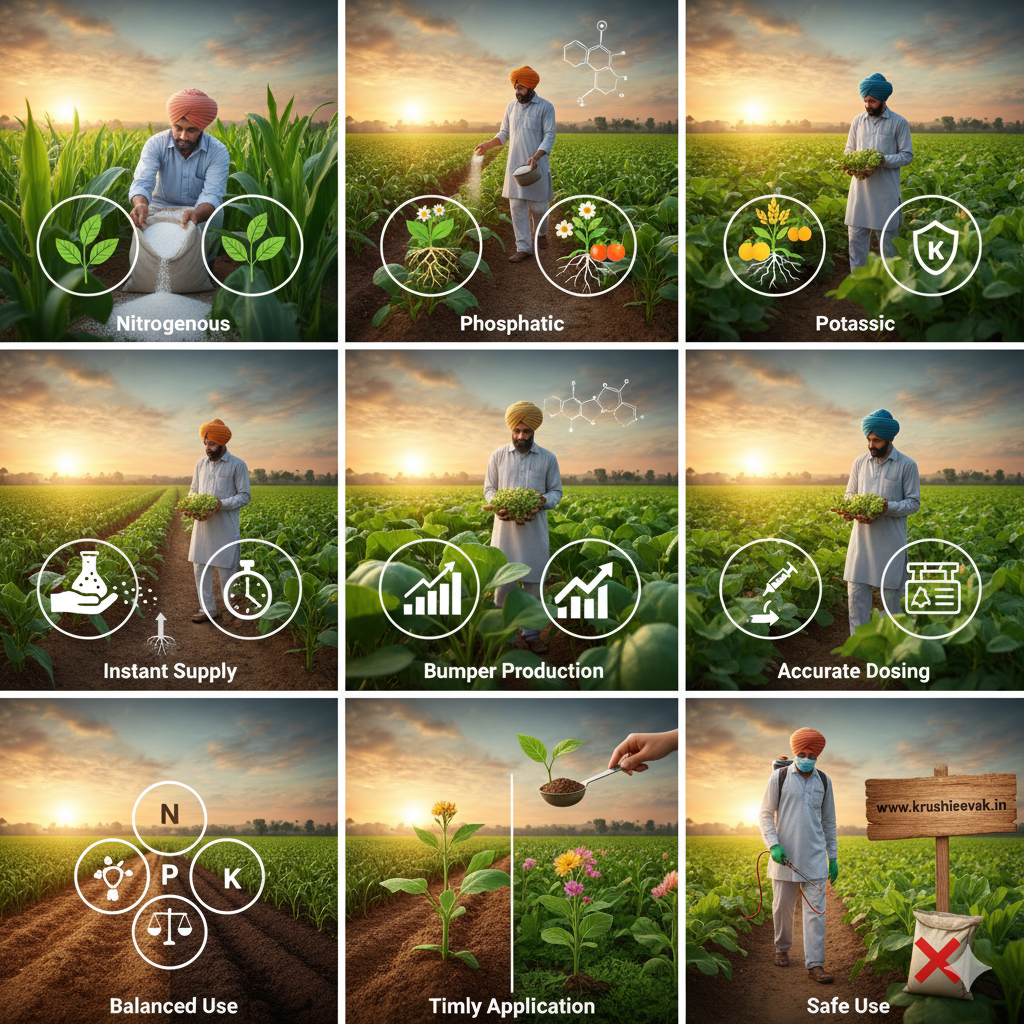

Farmers, Chemical Fertilizers are a crucial component in modern agriculture for achieving a bumper harvest. These fertilizers provide crops with the essential nutrients they need for growth, quickly and in measured quantities.
What are Chemical Fertilizers?
Fertilizers that are manufactured in factories through chemical processes and contain Nitrogen (N), Phosphorus (P), Potassium (K), and other micronutrients in specific proportions are called chemical fertilizers.
Main Types of Chemical Fertilizers
| Type | Examples | Primary Function |
|---|---|---|
| Nitrogenous Fertilizers | Urea, Ammonium Sulfate | Enhancing Vegetative Growth and greenness of the crop. |
| Phosphatic Fertilizers | Single Super Phosphate (SSP), DAP (Diammonium Phosphate) | Promoting Root Growth, and the formation of flowers and fruits. |
| Potassic Fertilizers | Muriate of Potash (MOP), Sulfate of Potash | Boosting crop Immunity, improving grain quality and shelf-life. |
| Complex / Compound Fertilizers | 10:26:26, 19:19:19 |
Benefits of Chemical Fertilizers ✅
- Immediate Nutrient Supply: Chemical fertilizers dissolve quickly in water, making the nutrients immediately available to the crop.
- Increased Production: Since essential nutrients are received in precise amounts, crop growth is excellent, leading to a massive increase in yield.
- Accurate Nutrient Dosing: A precise dose of a specific fertilizer can be given based on exactly which nutrient is deficient in the soil.
- Ease of Use: Chemical fertilizers are comparatively easy to use and store.
- Variety of Availability: Fertilizers with different ratios of Nitrogen, Phosphorus, and Potassium (e.g., 19:19:19, 0:52:34) are readily available as needed.
Proper and Safe Use ⚠️
To harness the benefits of chemical fertilizers and avoid adverse effects, the following precautions should be taken:
- Soil Testing: Conduct Soil Testing before applying fertilizers and determine the correct dose accordingly.
- Balanced Use: Avoid frequent use of a single fertilizer like just Urea; instead, ensure a balanced use of Nitrogen, Phosphorus, and Potassium.
- Correct Timing: Divide the fertilizer dose and apply it according to the crop’s growth stage (e.g., at the time of sowing, during flowering).
- Foliar Spray: When spraying soluble fertilizers, strictly follow the dosage given on the label.
- Avoid Overuse: Applying more than the recommended amount can scorch the crop or reduce the soil’s fertility.