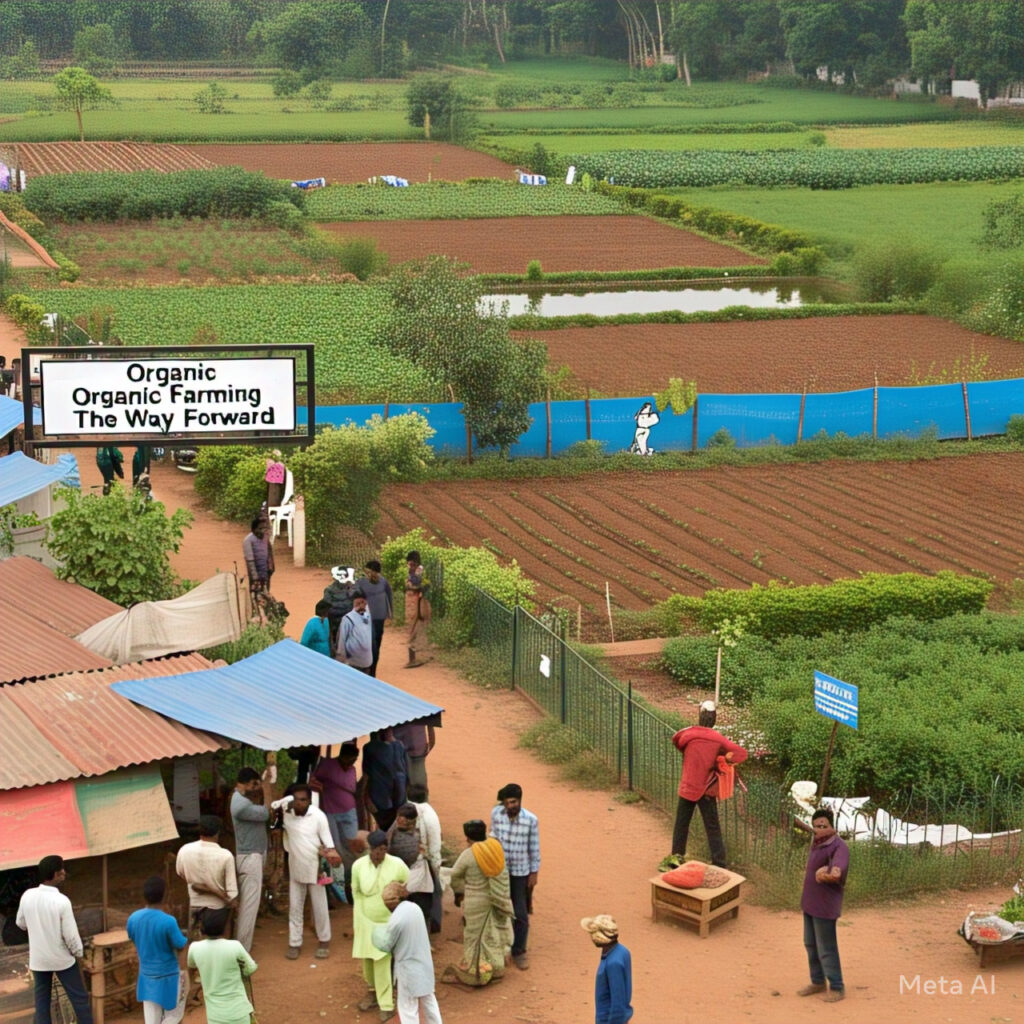

🌾 Introduction
Organic Farming is more than just a method of growing crops without chemicals—it’s a way of life that respects nature, soil, water, and the health of consumers and farmers alike. In a time when chemical fertilizers, pesticides, and genetically modified organisms (GMOs) dominate agriculture, organic farming stands out as an eco-friendly, sustainable, and health-conscious alternative.
India, with its rich tradition of natural farming, is now moving rapidly towards organic agriculture, blending ancient practices with modern science to promote healthy farming and rural prosperity.
🌿 What is Organic Farming?
Organic farming is a system of agriculture that avoids the use of synthetic fertilizers, chemical pesticides, growth hormones, and genetically modified organisms (GMOs). Instead, it focuses on:
- Maintaining soil fertility through organic manures and compost
- Using bio-fertilizers and natural pest control
- Promoting crop rotation and mixed farming
- Ensuring ecological balance and sustainability
It’s not just farming without chemicals, but farming with nature.
🧑🌾 Objectives of Organic Farming
- ✅ Protect soil health and fertility
- ✅ Produce chemical-free, nutritious food
- ✅ Reduce environmental pollution
- ✅ Maintain biodiversity
- ✅ Promote sustainable rural livelihoods
📊 Status of Organic Farming in India
India is the 5th largest country in terms of organic agricultural land and the largest number of organic producers in the world. Some key highlights:
- 🌱 Sikkim became the first 100% organic state in India.
- 🌍 Over 4.43 million hectares under organic certification (as per APEDA 2023).
- 🧺 India exports organic spices, tea, cotton, oilseeds, and pulses to the USA, EU, Canada, and more.
🧪 Key Techniques Used in Organic Farming
- Green Manuring – Using sun hemp, dhaincha, etc., to improve soil fertility.
- Composting – Preparing organic compost using farm waste and animal dung.
- Vermicomposting – Using earthworms to convert organic waste into nutrient-rich compost.
- Panchagavya & Jeevamrut – Traditional Indian bio-fertilizers made from cow dung, urine, milk, curd, and ghee.
- Crop Rotation – Growing different crops in a planned sequence to preserve soil health.
- Mulching – Covering soil with dry leaves or crop residues to retain moisture.
- Natural Pest Control – Neem oil, garlic spray, chili spray, and biological agents like Trichoderma.
🧭 Benefits of Organic Farming
🌎 Environmental Benefits
- Reduces soil degradation and erosion
- Enhances water conservation
- Maintains ecological balance
- Supports pollinators and biodiversity
💪 Health Benefits
- Free from harmful chemical residues
- Higher in antioxidants and nutrients
- Reduces risk of diseases caused by pesticides
💰 Economic Benefits
- Higher market value for organic produce
- Increasing export demand
- Government support through subsidies and training
📋 Organic Certification in India
Organic farming in India is regulated by the National Programme for Organic Production (NPOP) under APEDA (Agricultural and Processed Food Products Export Development Authority).
Key Certifications:
- PGS-India (Participatory Guarantee System) – For domestic small-scale farmers
- NPOP Certification – For export-oriented organic farming
📌 Certification ensures that the produce is truly organic and can be sold in domestic and international markets with trust.
🏛️ Major Government Schemes Supporting Organic Farming
- ✅ Paramparagat Krishi Vikas Yojana (PKVY)
➤ Promotes cluster-based organic farming with training and certification. - ✅ Mission Organic Value Chain Development for North Eastern Region (MOVCDNER)
➤ Focuses on organic farming in the NE states with value chain support. - ✅ National Project on Organic Farming (NPOF)
➤ Offers capital investment subsidies for organic inputs production units. - ✅ Soil Health Card Scheme
➤ Encourages farmers to understand and improve their soil health naturally. - ✅ Agri-Clinics and Agri-Business Centers (ACABC)
➤ Promotes agri-entrepreneurs in organic input production and services.
🧠 Challenges in Organic Farming
- ⛔ Lower initial yields compared to conventional farming
- ⛔ Lack of awareness and training among farmers
- ⛔ High labor input
- ⛔ Difficulty in marketing and logistics
- ⛔ Costly and time-consuming certification process
But with growing consumer awareness and export demand, these challenges are being overcome rapidly.
💡 How to Start Organic Farming – Step-by-Step Guide
- ✅ Choose suitable land (preferably not used with chemicals for 2-3 years)
- ✅ Select crops based on climate, soil, and market
- ✅ Prepare organic compost, vermicompost, and bio-fertilizers
- ✅ Use natural seeds or desi seeds (non-GMO)
- ✅ Avoid all chemical fertilizers and pesticides
- ✅ Maintain records and go for organic certification
- ✅ Connect with organic markets, mandis, or cooperatives
📈 Market Opportunities for Organic Farmers
- 📦 High demand in metro cities and online grocery platforms
- 🌍 Export potential to USA, Germany, UAE, Japan, and Australia
- 🛒 Tie-ups with organic stores, farm-to-fork companies, and Farmer Producer Organizations (FPOs)
📚 Conclusion
Organic Farming is the key to a healthy farmer, healthy consumer, and healthy planet. It not only promotes soil and human health but also ensures long-term profitability and sustainability. With increasing government support, export demand, and consumer awareness, organic agriculture is no longer just a niche—it’s the future of Indian farming.