
Timber farming (Agroforestry) is a long-term investment that, once established, can provide millions of dollars in revenue due to the high market value of quality wood.
Key Profitable Tree Species:
| Tree Species | Wood Use | Estimated Harvest Period |
|---|---|---|
| Teak (Sagwan) | High-end furniture, doors, windows, ship building. | 12 to 25 Years |
| Sandalwood (Chandan) | Essential oil, cosmetics, carving, Ayurveda medicine. | 15 to 20 Years |
| Sheesham (Indian Rosewood) | Premium furniture, structural timber. | 10 to 15 Years |
| Mahogany | Plywood, furniture, musical instruments. |
Essential Cultivation Stages:
- Selection of Quality Saplings and Land:
- Use Tissue Culture (TC) saplings for uniform and superior growth.
- Medium to heavy soil with excellent water drainage is ideal.
- Planting Technique:
- Maintain appropriate spacing based on the species (e.g., 8 \times 8 feet for Teak).
- Planting should primarily be done during the monsoon season (June-July).
- Intercropping (Supplementary Income):
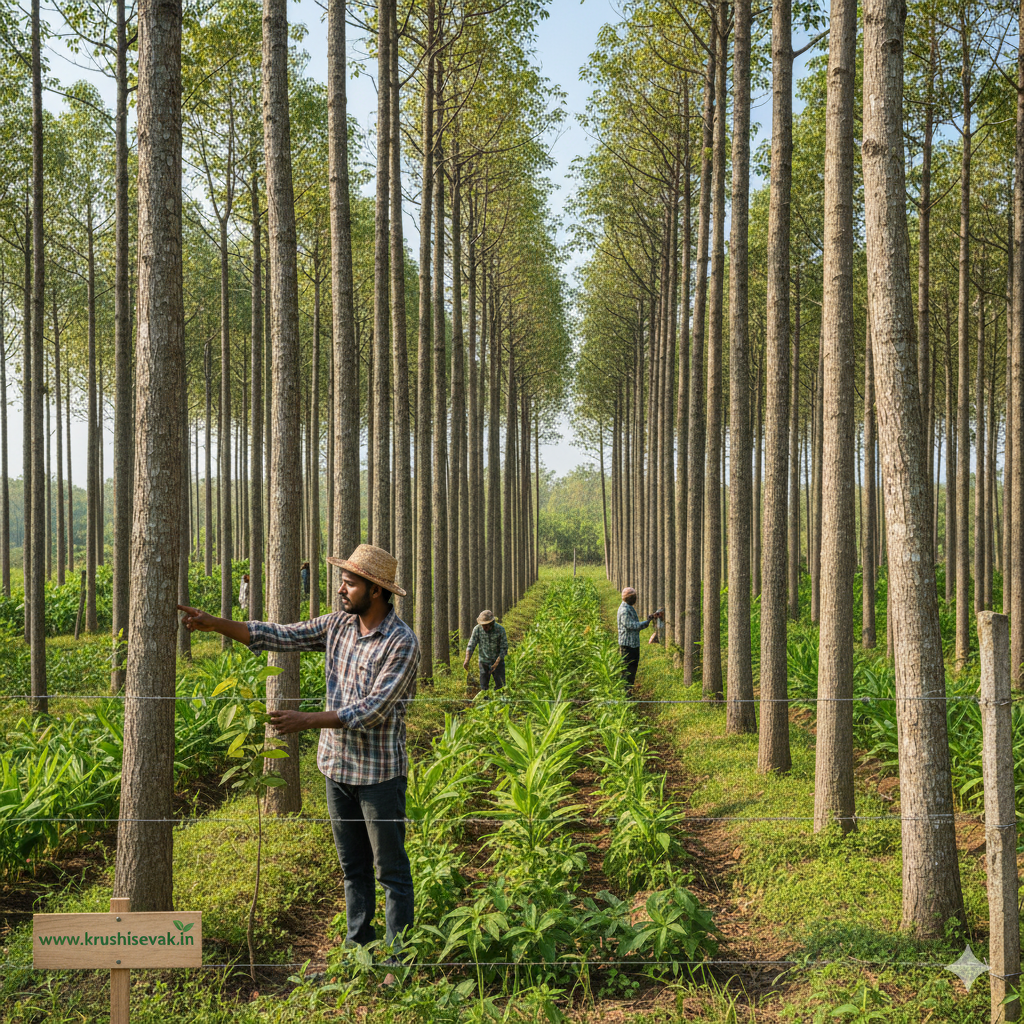
- During the initial 3 to 5 years, while the trees are growing, you can grow turmeric, ginger, chili, or vegetables as intercrops between the rows to generate extra income.
- Management and Care:
- Timely pruning and thinning are crucial to produce knot-free, high-quality timber.
- For species like Teak, harvesting after 12 years or more significantly increases both the volume and market price.
- Special Regulation (Sandalwood):
- Sandalwood cultivation requires obtaining a permit from the Forest Department (or state equivalent) and adhering strictly to government regulations regarding harvest and sale.