
The Pulse Mill business is one of the most important agro-based industries in India. Due to the year-round demand for pulses (Dal) and the ability to add significant value to the product through processing, this can be a profitable and promising venture.
Pulse Mill Business Planning
To start a pulse mill, consider the following key stages:
1. Market Study and Location Selection
- Demand: Study which types of pulses (e.g., Tur/Arhar, Chana/Gram, Moong, Masoor) have the highest demand in your local and surrounding market.
- Raw Material: Set up the mill in a location where raw materials (food grains/pulses) are easily accessible. Direct contracts with farmers or Farmer Producer Organizations (FPOs) can be beneficial.
2. Investment and Financial Planning
- Investment: Initial investment for land, machinery, and working capital (raw materials, labour, utilities) can range from approximately ₹ 5 Lakh to ₹ 30 Lakh or more (depending on the mill capacity).
- Mini Pulse Mill: Requires lower investment (e.g., ₹ 4.5 Lakh to ₹ 6 Lakh).
- Large Pulse Mill: Requires a higher initial outlay.
- Government Schemes and Loans: Assistance, subsidies, and financial aid can be accessed through government schemes like Mudra Loan, Rashtriya Krishi Vikas Yojana, or the Pradhan Mantri Formalisation of Micro Food Processing Enterprises (PMFME) scheme.
3. Essential Machinery
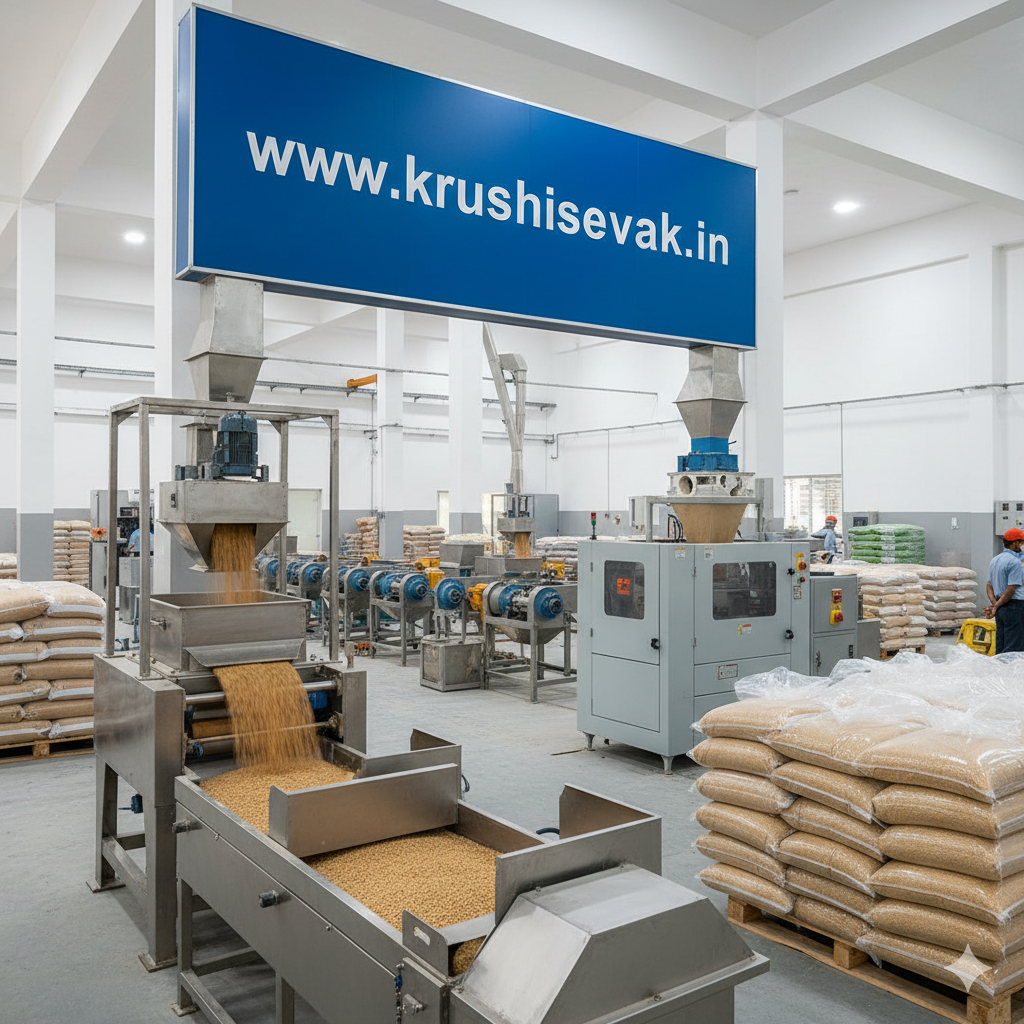
- Cleaning and Grading Machine: For cleaning and sorting the raw pulses.
- De-Stoner: For separating stones and other unwanted materials.
- Emery Rollers: Used for de-husking (removing the outer shell) of the pulses.
- Packaging Machine: For packing the finished dal product.
4. Necessary Licenses and Registration
- MSME Registration: Mandatory registration as a small-scale industry using Udyog Aadhaar or MSME.
- Food License: The FSSAI (Food Safety and Standards Authority of India) license is compulsory for any food processing unit.
- GST Registration
5. Sales and Branding
- Product Quality: It is crucial to maintain excellent quality and hygiene of the processed dal.
- Branding: Create a strong Brand Name and attractive packaging for your product.
- Sales: You can sell through the wholesale market, retail outlets, large stores (Supermarkets), and online platforms.