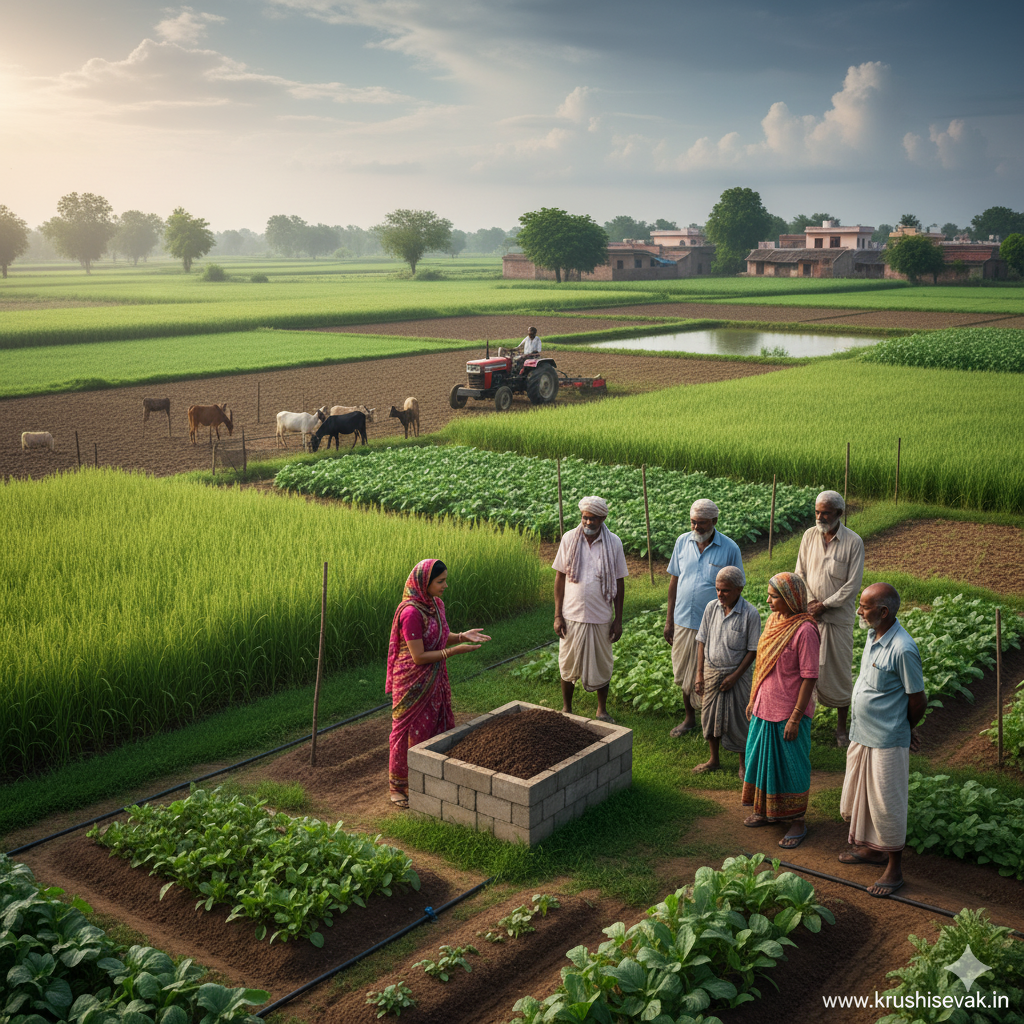
Increase Production: To enhance the productivity of rainfed farming and increase farmers’ income.
Reduce Risk: To minimize agricultural losses caused by drought or climate change by promoting the adoption of Integrated Farming Systems (IFS).
Sustainability: To make farming more sustainable and profitable in rainfed regions.
Key Features
Subsidy: Each farmer family can receive a grant of up to ₹30,000 for adopting the Integrated Farming System.
Integrated Farming: The scheme promotes supplementary activities alongside cultivation, such as:
Crops and Livestock: Includes cultivation of nutritious grains, pulses, vegetables, and fodder crops, as well as dairy, goat, sheep, and poultry farming.
Ancillary Businesses: Includes fisheries, beekeeping (for honey production and pollination), and setting up vermicompost units (for organic fertilizer production).
Priority:Small and marginal farmers, women farmers, and farmers belonging to Scheduled Castes and Scheduled Tribes are given priority in the application process.
Eligibility Criteria
Farmer: Any farmer in Maharashtra is eligible to apply.
Geographical Limit: This scheme is primarily limited to selected villages (implemented in a cluster approach in a few selected villages from each subdivision). Farmers must check if their village has been selected before applying.
Application Process
Online Application: Interested farmers must apply online through the MahaDBT Farmer Scheme Portal.
Portal Selection: The application option is generally available on the portal only for farmers in the villages selected for the scheme.
Contact Agricultural Assistant: Before filling out the application, farmers should contact their local Agricultural Assistant (Krushi Sahayak). They will provide guidance on the scheme and the application process.
Documents: Necessary documents (e.g., Aadhaar Card, land ownership documents, income certificate) should be kept ready while applying online.