
🌾 Introduction
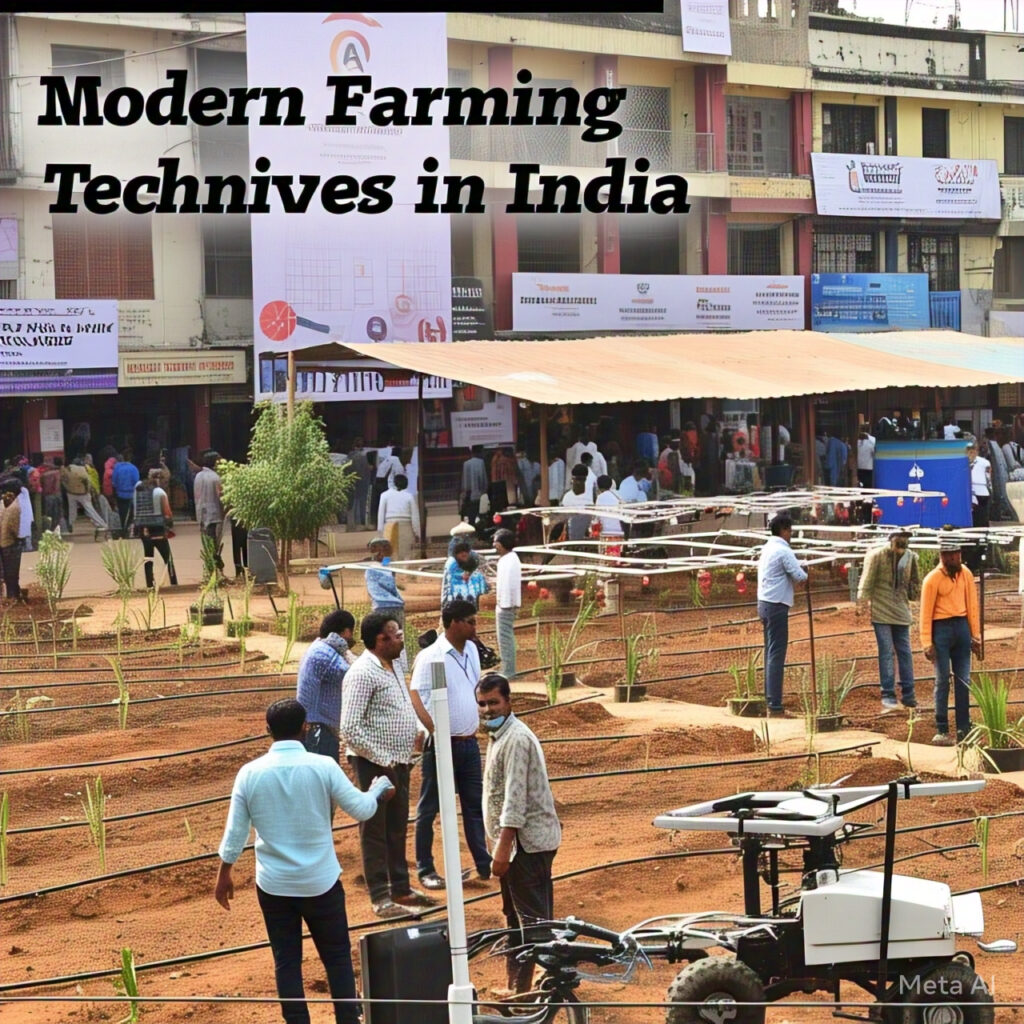
Agriculture in India has evolved significantly from traditional plowing to smart farming using drones, AI, IoT, and automation. As the population grows and demand for food increases, farmers need to adopt modern farming techniques that are efficient, sustainable, and profitable.
Modern agriculture is about combining technology, data, machinery, and scientific knowledge to improve productivity, soil health, and farmer income. These advanced methods are not just for big industrial farms—they are now accessible to small and medium-scale Indian farmers as well.
🌱 What is Modern Farming?
Modern farming refers to the scientific and technology-driven approach to agriculture that enhances productivity, conserves resources, and reduces environmental impact. It replaces traditional guesswork with data, automation, and precision.
It includes:
- Smart irrigation
- Mechanization
- Precision farming
- Hydroponics & vertical farming
- Drone surveillance
- AI-based crop monitoring
- Use of mobile apps and farm software
🧪 Top Modern Farming Techniques in India
1. 💧 Precision Farming
Precision farming involves applying the right inputs at the right place and time, using data from soil sensors, satellite images, and weather patterns.
Benefits:
- Reduces input cost
- Improves crop yield
- Enhances soil fertility
2. 🌊 Drip and Sprinkler Irrigation
Efficient irrigation methods like drip and sprinkler systems deliver water directly to the plant roots, minimizing wastage.
Advantages:
- Saves 30–70% water
- Increases crop yield by 25–50%
- Ideal for water-scarce regions
3. 🚁 Use of Drones
Drones are used for aerial surveillance, crop health monitoring, pesticide spraying, and yield estimation.
Use Cases:
- Quick field scanning
- Early pest detection
- Precise chemical application
4. 🌿 Hydroponics & Vertical Farming
Hydroponics is a soil-less farming method where crops grow in nutrient-rich water. Vertical farming involves growing crops in stacked layers, usually indoors.
Benefits:
- Requires 90% less water
- Grows crops all year round
- Suitable for urban and small spaces
5. 🤖 Artificial Intelligence (AI) in Agriculture
AI-powered apps and systems analyze soil conditions, weather data, pest risks, and recommend the best actions.
Examples:
- Krishi Rakshak App for pest alerts
- Chatbots for farmer queries
- AI sensors for soil health
6. 📱 Mobile-Based Smart Farming
Mobile apps help farmers:
- Monitor crops remotely
- Get real-time weather alerts
- Buy/sell products online
- Access government schemes
Popular Apps:
- Kisan Suvidha
- mKisan
- AgriApp
7. 🚜 Mechanization
Using advanced tools like harvesters, planters, rotavators, and threshers to save time, cost, and labor.
Impact:
- Reduces drudgery
- Increases efficiency
- Boosts profitability
8. 🌾 Tissue Culture and Hybrid Seeds
Tissue culture produces disease-free, high-yield plants under lab conditions. Hybrid seeds give higher productivity and are pest-resistant.
Crops using tissue culture:
- Banana
- Sugarcane
- Turmeric
- Floriculture crops
9. 🧬 Biotechnology in Farming
Genetically improved varieties are developed through biotechnology to resist pests, tolerate drought, and increase yield.
Example:
- Bt Cotton – India’s first genetically modified crop
10. 📡 Internet of Things (IoT) in Farming
IoT uses smart devices like soil moisture sensors, temperature monitors, and automated irrigation systems.
Benefits:
- Reduces wastage
- Promotes real-time decision-making
- Increases automation
📈 Advantages of Modern Farming Techniques
| Benefit | Impact |
|---|---|
| 💰 Higher Profit | Increases productivity & reduces input cost |
| 🌿 Sustainability | Uses resources wisely, protects environment |
| 🧠 Informed Decisions | Uses data and science for better results |
| 🕒 Time Saving | Mechanization and automation reduce time |
| 👨🌾 Empowerment | Makes farming smart and attractive for youth |
🏛️ Government Support & Schemes
- Sub-Mission on Agricultural Mechanization (SMAM)
➤ Provides subsidy on farm machinery. - Pradhan Mantri Krishi Sinchai Yojana (PMKSY)
➤ Promotes micro-irrigation systems like drip & sprinkler. - National e-Governance Plan for Agriculture (NeGP-A)
➤ Offers digital services and mobile applications for farmers. - Custom Hiring Centers (CHCs)
➤ Provides tractors and tools on rent to small farmers. - Agri-Tech Start-up Support under RKVY
➤ Encourages youth and entrepreneurs to innovate in Agri-tech.
📚 Challenges in Adoption
- 💸 High initial cost for equipment & setup
- 🤝 Lack of awareness and training
- ⚙️ Poor infrastructure in rural areas
- 🗣️ Language & digital literacy barriers
- 📉 Fear of new technology among traditional farmers
But with the help of Krishi Vigyan Kendras (KVKs), agriculture universities, and start-ups, these challenges are being addressed.
🧭 How Farmers Can Start Using Modern Techniques
- ✔️ Attend training by KVK or Agriculture Department
- ✔️ Apply for subsidy schemes and loans (like NABARD assistance)
- ✔️ Use mobile apps and portals for guidance
- ✔️ Start small – try drip irrigation or a weather app
- ✔️ Join local FPOs or co-operatives for shared tech access
📢 Conclusion
Modern farming is not a luxury—it is a necessity. In the face of climate change, labor shortage, and rising demand, adopting modern farming techniques is the only way to ensure better productivity, profitability, and sustainability.
Every Indian farmer, big or small, can benefit from tech-driven agriculture and make farming a smart and proud profession once again.