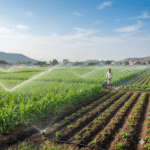

Agriculture in India is not merely an economic sector; it is a livelihood network supporting more than half of the nation’s population. For decades, the primary vulnerability for small and marginal farmers was the sharp cash crunch faced right before the sowing season. Farmers often struggled to secure initial liquid capital to purchase essential inputs like high-yielding seeds, organic fertilizers, and diesel for irrigation pumps. Deprived of institutional credit access, many resorted to local moneylenders, entering high-interest debt traps that compromised their long-term financial survival.
To provide a permanent, systematic cushion against these seasonal cash shortages, the Government of India launched the Pradhan Mantri Kisan Samman Nidhi (PM-KISAN) yojana. Formally announced during the interim budget in early 2019 and operationalized retrospectively from December 2018, the initiative functions as a 100% Centrally Funded Central Sector Scheme under the Ministry of Agriculture and Farmers Welfare.
The core philosophy of PM-KISAN marks a significant policy shift from traditional indirect crop subsidies or retrospective farm loan waivers. It introduces a direct, crop-neutral income support mechanism designed to empower farmers with timely cash assistance. By injecting liquidity directly into the rural economy at critical seasonal intervals, the scheme protects the financial dignity of agrarian households, minimizes reliance on unorganized credit, and ensures uninterrupted agricultural cycles.
The Core Features and Financial Structure
The financial framework of PM-KISAN is designed for predictability, simplicity, and direct impact. The scheme provides a guaranteed financial benefit of ₹6,000 per year to all eligible landholding farmer families across the country.
Dividend Distribution Mechanics
The annual cash support of ₹6,000 is not disbursed as a single lump-sum payment. Instead, it is divided into three equal installments of ₹2,000 each, distributed every four months within a financial year:
- Tranche 1: April to July
- Tranche 2: August to November
- Tranche 3: December to March
This four-month cyclical cadence matches the operational timelines of India’s primary cropping seasons—Kharif, Rabi, and Zaid. This ensures that the cash reaches the farmer’s account exactly when seasonal input procurement expenses peak.
Direct Benefit Transfer (DBT) and the Digital Pipeline
A key administrative feature of PM-KISAN is the total elimination of middlemen, district brokers, or local bureaucratic intermediaries. The program operates entirely via a digital pipeline through the Direct Benefit Transfer (DBT) model.
Once a farmer’s identity, land credentials, and banking details are cross-verified by the respective state administration, the funds are released from the central exchequer. The money is transferred directly into the beneficiary’s Aadhaar-linked bank account through the National Electronic Funds Transfer (NEFT) network managed by the Public Financial Management System (PFMS) and the National Payments Corporation of India (NPCI). This high-tech architecture ensures complete fiscal transparency, minimizes financial leakages, and prevents corruption.
Evolution of Eligibility and Scope
When the scheme was launched in February 2019, its scope was restricted to Small and Marginal Farmers (SMFs) who collectively owned cultivable land up to two hectares. This initial targeting was aimed at protecting the most vulnerable segments of the rural economy.
However, realizing that larger landholders face similar climate uncertainties and seasonal cash constraints, the government revised the operational guidelines. The landholding cap was removed, expanding the scheme’s coverage to all landholding farmer families across India, regardless of the size of their agricultural land plots.
Under the scheme’s revised framework, a “farmer family” is defined as a cohesive domestic unit consisting of a husband, a wife, and minor children. The land records maintained by individual State Governments or Union Territory administrations serve as the legal basis for identifying eligible families. The scheme also maintains parity across geographic boundaries, covering cultivable lands located in both designated rural sectors and urban zones, provided the urban plots are under active agricultural use.
Strict Exclusion Criteria for High Income Brackets
To ensure public funds are directed toward genuine agricultural practitioners rather than affluent individuals, PM-KISAN features a strict exclusion policy. The following categories of individuals and households are structurally barred from receiving financial benefits, even if they own valid cultivable land:
- Institutional Landholders: Any agricultural land owned by corporate entities, cooperative societies, trusts, or religious organizations is excluded.
- Constitutional and Political Figures: Former and current holders of constitutional positions, sitting or former Ministers, Members of Parliament (MPs), Members of Legislative Assemblies (MLAs), and mayors of municipal corporations are ineligible.
- Government Employees: All serving or retired officers and employees of Central or State Ministries, structural departments, public sector undertakings (PSUs), autonomous local bodies, and regular attached offices. However, this exclusion explicitly spares Class IV, Multi-Tasking Staff (MTS), and Group D workers.
- Affluent Pensioners: Any superannuated or retired pensioner whose consolidated monthly pension amounts to ₹10,000 or more is excluded, with the exception of retired Class IV or Group D employees.
- Taxpayers: Any individual who paid income tax during the immediate last financial assessment year is barred.
- Registered Professionals: Professionally active individuals registered with statutory national councils, such as practicing doctors, engineers, lawyers, chartered accountants, and architects.
Step-by-Step Registration and Onboarding Process
The onboarding process for PM-KISAN has been fully digitized, offering self-service paths alongside physical assisted channels to bridge the rural digital divide.
Self-Registration via the PM-KISAN Portal
- Access the Portal: The applicant visits the official PM-KISAN national website (pmkisan.gov.in) and navigates to the designated “Farmers Corner.”
- Initiate New Registration: The farmer selects “New Farmer Registration” and chooses between Rural or Urban options based on land location.
- Identity Verification: The system prompts the input of the farmer’s Aadhaar number and registered mobile number. The system triggers an automated verification request with the Unique Identification Authority of India (UIDAI).
- Data Form Submission: Upon successful Aadhaar validation, an interactive digital application form opens. The farmer enters personal details, state, district, block, sub-district, village name, and bank account parameters (IFSC and account number).
- Land Record Integration: The applicant must input precise land holding identifiers, including the Khata number, Khasra number, and total land area. In states integrated into the central AgriStack framework, this step triggers real-time digital verification against state land databases.
- Document Upload: The farmer uploads scanned copies of land ownership deeds, their Aadhaar card, and the front page of their bank passbook before submitting the finalized profile.
Physical Onboarding via Common Service Centers (CSCs)
Farmers who lack access to smart devices or face connectivity issues can visit their nearest Common Service Center (CSC). The local village-level entrepreneur assists the farmer in uploading documentation and collects biometric data for instant validation, routing the application through the same administrative pipeline.
Key Verification Milestones: e-KYC and Land Seeding
As the scheme matured, the government introduced mandatory security layers to eliminate duplicate profiles, prevent fraud, and remove non-eligible beneficiaries. These verification steps are now required for any installment release.
Mandatory e-KYC Verification
Completing the electronic Know Your Customer (e-KYC) process is mandatory for all registered users. Farmers can complete this independently through the portal via an OTP sent to their Aadhaar-linked mobile phone, or by visiting a CSC for biometric fingerprint authentication.
Additionally, the official PM-KISAN mobile app features a Face Authentication feature. This allows remote farmers to complete their mandatory e-KYC by scanning their face using a smartphone camera, removing the need for fingerprints or mobile OTPs.
Aadhaar-Bank Account Seeding and Land Verification
The system requires that the beneficiary’s bank account be linked with their Aadhaar number and mapped through the National Payments Corporation of India (NPCI) coordinator. If this link is broken or unmapped, the central DBT engine automatically holds the transaction.
Concurrently, local revenue authorities perform physical and digital land verification. This process confirms that the registered farmer remains the actual owner of the cultivable plot and that the land has not been converted to non-agricultural use.
Technology Architecture and the AgriStack Ecosystem
PM-KISAN stands as one of the largest digital agricultural welfare platforms in the world. Its success relies heavily on integrated technology tools that streamline operations.
The Kisan-eMitra AI Chatbot
To improve user experience and provide instant support, the ministry integrated an AI-driven digital assistant named “Kisan-eMitra.” Launched as a multi-lingual, voice-activated chatbot, it allows farmers to inquire about their installment status, check registration errors, verify e-KYC completeness, and resolve payment processing issues in their native regional dialects.
Integration with AgriStack and the Farmer ID Initative
The infrastructure of PM-KISAN is increasingly integrated with India’s broader “AgriStack” digital modernization drive. Under this ecosystem, participating states are generating a unique “Farmer ID” (Kisan Pehchaan Patra) for registered individuals.
This ID links verified land records, crop cultivation histories, and geographical data to a single profile. This integration allows the PM-KISAN portal to automatically verify land ownership changes, ensuring the database updates automatically when land is sold or transferred.
Socio-Economic Transformation and Systemic Impacts
Independent academic reviews and field studies by organizations like the International Food Policy Research Institute (IFPRI) show that PM-KISAN has made a quantifiable impact on rural economies.
Alleviating Liquidity Constraints and Enhancing Yields
The regular cash transfers have significantly alleviated liquidity constraints for smallholders. Rather than waiting for credit approvals or dealing with local informal lenders, farmers use the money to purchase high-quality seeds, fertilizers, and modern crop technologies on time. Studies show that beneficiaries spend a substantial portion of the funds during peak agricultural months directly on farm inputs. This timely investment correlates with improved crop health, better management, and higher net yields.
Investment in Sustainable Assets and Human Capital
The impact of the scheme extends beyond seasonal input purchases. Because the cash transfer is predictable, many smallholder households use the money to diversify their income streams. Families frequently invest in small livestock, poultry, or dairy feeds, creating secondary revenue sources.
Furthermore, the unconditional nature of the income support gives families flexibility. During non-sowing months, households use the funds to meet essential domestic needs, such as paying for children’s school tuition, purchasing household medicines, or covering critical healthcare costs without taking on new debt.
Gender Inclusivity and Social Equality
PM-KISAN has also driven progress toward gender inclusivity in the agricultural sector. The scheme recognizes women as independent landholders and farmers, with millions of female agriculturalists receiving installments directly into their personal bank accounts. This economic inclusion improves financial independence, enhances decision-making power within rural households, and elevates the social status of women farmers in traditional agrarian communities. By establishing a reliable financial floor, PM-KISAN continues to serve as a foundational support system for rural development and sustainable agriculture across India.