
Introduction
In India’s vast informal economy, millions of traditional artisans, micro-entrepreneurs, and home-based workers possess exceptional generational skills but face significant financial barriers. Among these, home-based tailors—particularly women—have long struggled to upgrade from slow, manual equipment to modern industrial tools. Without capital, access to institutional credit, or formal skill validation, these small-scale operators remain trapped in low-income cycles.
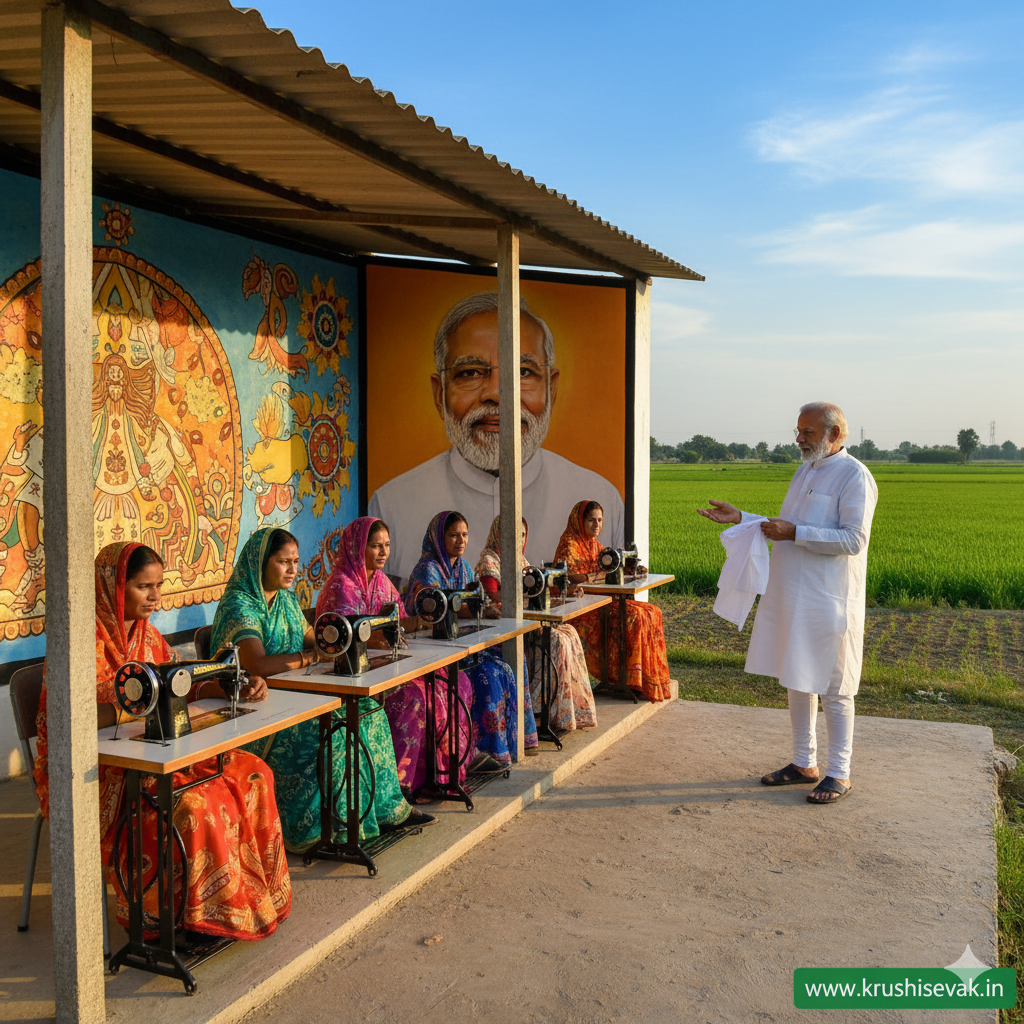
To transform this unorganized sector, the Ministry of Micro, Small, and Medium Enterprises (MoMSME), alongside the Ministry of Skill Development and Entrepreneurship (MSDE), introduced the PM Vishwakarma Yojana. Widely recognized at the grassroots level as the Free Sewing Machine Scheme, this enterprise development program targets traditional trades, with a strong focus on tailors (Darzis).
Rather than functioning as a minor welfare handout, the program is a comprehensive enterprise development strategy. It replaces older, fragmented state-level distribution initiatives with a unified, digital framework that links financial aid with skill development and institutional credit. By providing financial support for high-grade machinery, certified skill training, and collateral-free business loans, the program empowers independent tailors to transform small, home-based operations into highly productive, self-sustaining micro-enterprises.
The Core Concept: Moving Beyond Welfare to Strategic Investment
The casual reference to this program as a “free sewing machine scheme” understates its true economic scope. Historically, various state departments distributed low-cost, basic manual sewing machines to underprivileged groups without offering any supporting training or follow-up. Many of those machines ended up underutilized because the recipients lacked the technical skills to maintain them or the capital to buy fabrics and secure commercial orders.
The PM Vishwakarma framework fixes these systemic issues by making the ₹15,000 Toolkit Incentive part of a broader development model. The government does not ship physical, generic machines to households. Instead, verified tailors receive digital e-RUPI vouchers worth ₹15,000 directly on their mobile phones. This voucher can only be redeemed at authorized vendors for specialized equipment, such as high-speed industrial straight-stitch machines, motorized tailors’ units, or interlocking overlock machines, based on the operator’s specific business needs.
This digital approach prevents middleman corruption, ensures the money is spent exactly as intended, and allows artisans to select the precise brand and model of machinery that suits their commercial workspace.
The Complete Institutional Benefit Structure
The scheme provides multiple layers of financial and educational support to help micro-enterprises grow sustainably.
1. Formal Recognition and Digital Identity
Upon clearing the initial verification steps, the artisan receives an official PM Vishwakarma Certificate and a digital Vishwakarma ID Card featuring a unique 12-digit identification number. This certificate serves as a formal government credential that validates the artisan’s skills, making it easier for them to secure bank accounts, join textile cooperatives, participate in state exhibitions, and establish institutional business relationships.
2. Structured Skill Upgradation and Financial Stipend
The scheme requires all approved candidates to complete a professional, fully funded training program to sharpen their technical and business skills:
- Basic Skilling Phase: A mandatory 5 to 7-day (40-hour) intensive module covering advanced fabric cutting, modern pattern design, garment finishing techniques, and basic industrial machinery maintenance.
- Advanced Skilling Phase: An optional 15-day (120-hour) advanced course for artisans looking to specialize in high-end boutique fashion, export-quality production, or bulk commercial manufacturing.
- Daily Training Stipend: To compensate for the loss of daily wages during the training period, the government transfers a ₹500 daily stipend directly into the beneficiary’s bank account via Direct Benefit Transfer (DBT).
3. The ₹15,000 Toolkit Grant
Immediately after the artisan completes the basic training module, the system triggers the core benefit: a ₹15,000 digital e-RUPI toolkit voucher. This electronic voucher is sent via SMS or a dedicated QR code to the beneficiary’s registered smartphone. The artisan can then use this voucher to purchase heavy-duty motorized sewing machines, premium cutting shears, steam irons, and tailoring accessories from authorized dealers registered on the government’s GeM (Government e-Marketplace) portal.
4. Low-Interest Enterprise Development Credit
To help tailoring units scale up, buy bulk inventory, or rent physical shop space, the scheme offers a structured, two-tier business loan program with highly favorable interest rates:
- First Tranche: A collateral-free loan of up to ₹1 Lakh with an 18-month repayment timeline, available once the basic training is complete.
- Second Tranche: An additional loan of up to ₹2 Lakhs with a 30-month repayment timeline, accessible after the borrower successfully repays the first tranche and shows active usage of digital transactions in their business.
- Concessional Interest Rate: Borrowers pay a fixed, highly subsidized interest rate of just 5% per annum. The central government covers the remaining interest cost by paying an 8% subvention directly to the lending banks, and the Ministry of MSME completely waives all credit guarantee fees.
Strict Eligibility and Exclusion Metrics
To ensure the program’s ₹13,000 crore budget reaches actual, working artisans rather than being exploited by automated bots or wealthier households, the government enforces strict eligibility rules.
Demographic and Trade Prerequisites
- The applicant must be an active artisan or craftsperson working with hands and tools in one of the 18 family-based traditional trades recognized under the scheme. To get a sewing machine voucher, the applicant must register specifically under the Tailor (Darzi) trade profile.
- The minimum age of the applicant must be 18 years on the exact date of submission.
- The applicant must be actively practicing the trade on the day of registration and must operate within the unorganized or self-employed sector.
Cross-Scheme and Family Exclusions
- The program enforces a strict “One Family, One Beneficiary” restriction. A family is defined as a husband, wife, and their unmarried children. If one member has registered or received a toolkit voucher, no other family member can apply.
- To prevent double-subsidization, any applicant who has received a business loan under similar central or state credit schemes—such as the Prime Minister’s Employment Generation Programme (PMEGP), PM SVANidhi, or MUDRA loans—within the past 5 years is ineligible.
- Government Employment Ban: If the applicant or any member of their immediate family is employed in government service (central, state, local urban bodies, or public sector undertakings), the entire household is disqualified.
Required Documentation Checklist
Before visiting an authorized registration center, applicants must gather specific personal and financial documents to avoid system rejections during data processing:
- Aadhaar Card: This serves as the primary biographical and identity document. The applicant’s name and date of birth must match their supporting records exactly.
- Aadhaar-Linked Mobile Number: This is a critical requirement. The registration portal uses biometric verification and mobile OTP generation for security. If the mobile number is not linked to the Aadhaar card, the application will be blocked.
- Bank Account Passbook / Cancelled Cheque: Needed to set up the Direct Benefit Transfer (DBT) pathway for training stipends and loan disbursements. The name on the bank account must match the Aadhaar record exactly.
- Ration Card: This document is mandatory for family structure verification, helping the system enforce the “one benefit per household” rule. For households without a standard ration card, a localized family affidavit or state-approved relationship document must be provided.
- Caste Certificate: While the scheme is open to all categories, submitting a valid SC, ST, or OBC certificate helps the system properly track social equity parameters across regional offices.
Detailed Step-by-Step Application and Multi-Tier Verification Process
Because biometric verification is mandatory to prevent identity fraud, applicants cannot complete the registration entirely from home. The application requires a secure, multi-step process handled through authorized centers and local administrative bodies.
Step 1: Biometric Registration at a Common Service Centre (CSC)
The applicant visits their nearest government-authorized Common Service Centre (CSC) or Jan Seva Kendra. The CSC operator logs into the official portal using secure credentials.
The operator then performs an initial Aadhaar OTP verification, followed by a live biometric fingerprint scan on an e-KYC device to lock in the applicant’s identity. The operator then fills out the digital form, entering the applicant’s personal details, family status, bank routing numbers, and selecting “Tailor (Darzi)” as the primary trade category.
Step 2: Tier-1 Verification (Gram Panchayat or Urban Local Body Level)
Once submitted online, the digital application file is routed to the applicant’s local administrative unit. In rural areas, this is handled by the Gram Panchayat (headed by the Gram Pradhan or Sarpanch). In urban areas, it goes to the respective Urban Local Body (ULB) or municipal office.
Local officials review the application to confirm that the applicant is a resident of the area, actively practices tailoring, and that no other family member has claimed a similar benefit.
Step 3: Tier-2 Review (District Level Implementation Committee)
After receiving local approval, the application moves up to the District Implementation Committee (DLIC), which is managed by the General Manager of the District Industries Centre (DIC).
The DLIC cross-references the data against national databases to ensure the applicant has no conflicting active MUDRA or PMEGP loans from the past five years. If the file remains stuck at this stage for more than 45 days, applicants can visit their local DIC headquarters with their enrollment number to request an official status update.
Step 4: Tier-3 Approval (State Level Monitoring Committee)
The final approval is managed by the State Level Monitoring Committee (SLMC), which is chaired by the State’s Chief Secretary. The SLMC reviews the district recommendations and grants final clearance.
Once approved, the system generates the artisan’s digital PM Vishwakarma Certificate and ID Card, and issues an automated SMS notification informing the applicant that they are officially registered.
Step 5: Training Activation and Voucher Disbursal
The local District Industries Centre notifies the approved artisan to attend the basic 5-day training program at a certified regional skill development center.
After completing the course, the system records the artisan’s attendance and triggers the release of the ₹15,000 e-RUPI toolkit voucher to their mobile phone. The artisan can then take this digital voucher to an authorized machinery outlet to purchase their new motorized sewing machine.