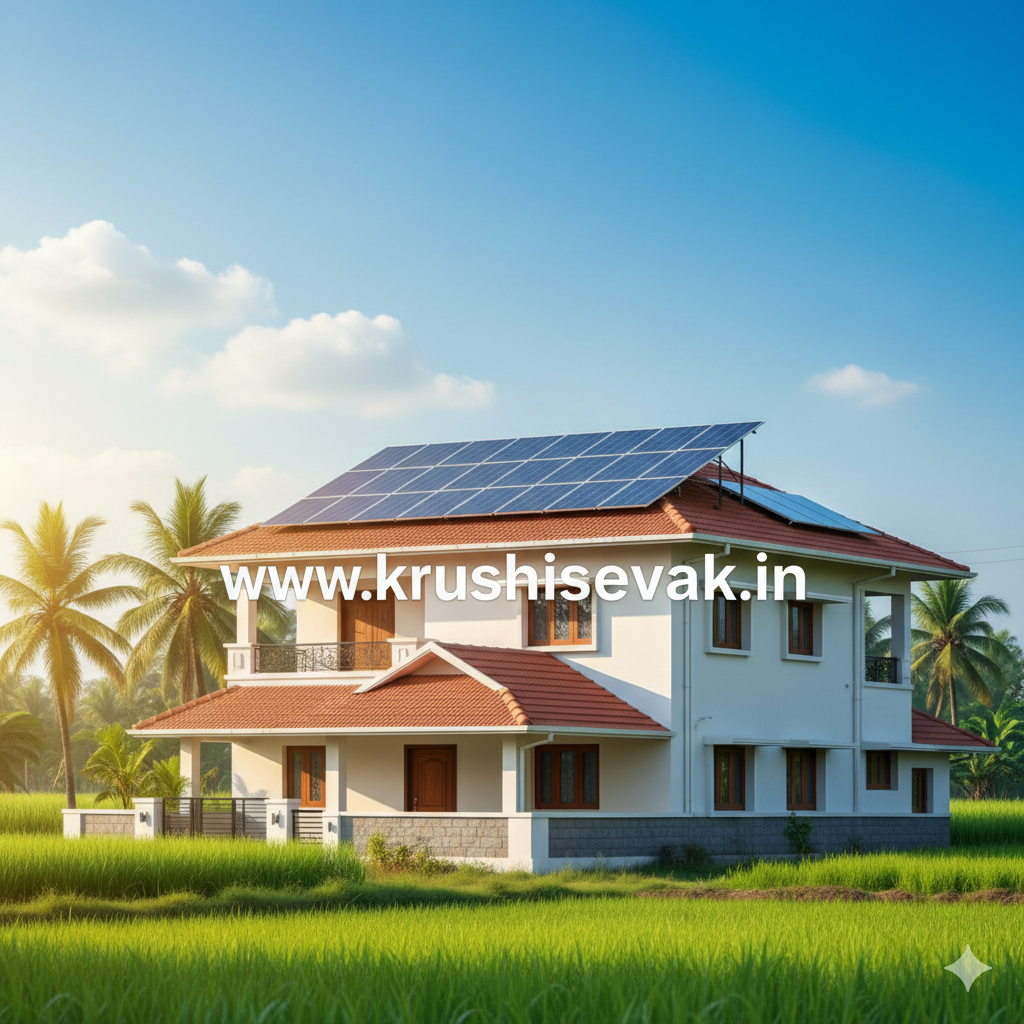

Securing an uninterrupted and affordable power supply is one of the foundational requirements for the economic upward mobility of any household. With rapid urbanization and a growing dependence on electronic appliances, electricity bills have become a significant monthly expense for middle-income and lower-income families. To address this financial burden while advancing India’s green energy transitions, the Central Government launched its flagship rooftop solar program: PM Surya Ghar: Muft Bijli Yojana.
Launched with a substantial nationwide budget, this visionary scheme aims to empower over one crore households across India to set up rooftop solar panels, effectively providing up to 300 units of free electricity every single month. In the industrialized and highly populated state of Maharashtra, the scheme is being executed at an incredible pace. Supported by state distribution companies (DISCOMs) like MSEDCL (Mahavitaran), Tata Power, Adani Electricity, and BEST, Maharashtra residents can access lucrative central subsidies combined with state-specific top-up incentives.
This comprehensive guide details everything about the PM Surya Ghar: Muft Bijli Yojana in Maharashtra, including system capacity criteria, documentation, financial advantages, and a step-by-step application walkthrough.
Core Objectives and Benefits of the Scheme
The PM Surya Ghar: Muft Bijli Yojana is designed as a decentralized power model. Instead of relying solely on massive, centralized power grids that suffer from transmission losses, the government turns independent residential rooftops into micro-power plants.
### Massive Reduction in Electricity Bills
The primary benefit for a standard household is immediate financial relief. A typical 3 kW solar power plant generates roughly 300 to 420 units of electricity per month, depending on seasonal solar irradiance. For a family that consumes around 300 units monthly, their net electricity bill drops close to zero, save for minor fixed grid adjustment and meter rental fees.
### Earn from Surplus Power Generation
The scheme utilizes a mechanism called Net Metering. When your solar panels generate more electricity during the day than your household consumes, the excess power is automatically pumped back into the local DISCOM grid (such as Mahavitaran). This surplus energy is credited to your consumer account, further lowering your nighttime electricity costs or resulting in direct financial adjustments from the utility provider.
Protection from Tariff Hikes
Electricity tariffs from commercial boards tend to rise periodically due to fuel adjustment costs and infrastructure upgrades. By installing a rooftop solar plant with an active operational lifespan of over 25 years, a homeowner effectively locks in a major portion of their power security, insulating themselves from future utility price hikes.
The Solar Subsidy Structure in Maharashtra
To make solar technology affordable for middle-class and economically weaker sections, the financial layout includes a blend of Central Financial Assistance (CFA) and state-specific support.
### Central Government Subsidy Slabs (PM Surya Ghar)
The central subsidy is directly linked to the DC capacity of the solar module system installed, capped at a maximum of 3 kW for individual residential homes.
- For 1 kW Systems: The government provides a flat subsidy of ₹30,000. This is ideal for tiny households with a monthly consumption of under 150 units.
- For 2 kW Systems: The subsidy scales up to ₹60,000 (calculated at ₹30,000 per kW). It suits average households consuming between 150 and 200 units monthly.
- For 3 kW Systems and Above: For the third kilowatt, an additional ₹18,000 is provided, bringing the total maximum central subsidy to a fixed cap of ₹78,000. Even if a homeowner installs a 5 kW, 8 kW, or 10 kW system based on a larger sanctioned load, the central subsidy remains locked at the maximum ceiling of ₹78,000.
### Housing Societies and Residential Welfare Associations (RWA)
For Group Housing Societies (GHS) and Resident Welfare Associations setting up solar networks for common facility areas (such as elevators, corridor lighting, and water pumps), the subsidy is fixed at ₹18,000 per kW, up to a total maximum capacity of 500 kW.
### Maharashtra State Top-Up Benefits
Maharashtra stands out because the state government provides additional top-up financial aid to further reduce out-of-pocket setup costs. Under targeted local initiatives, residential solar adopters can access an additional state subsidy ranging between ₹25,000 and ₹60,000, depending on the system configuration and income categories. For a standard 3 kW system, combining the central and state components can significantly lower the net cost for the homeowner.
Technical and Eligibility Benchmarks
To maintain standard grid safety and ensure eligibility for direct benefit transfers, applicants must satisfy several strict criteria set by the Ministry of New and Renewable Energy (MNRE):
- Residential Ownership: The applicant must be an Indian citizen residing in Maharashtra and must own the residential property where the panels are to be mounted. Tenants can apply only if they obtain a formal No Objection Certificate (NOC) from the property owner.
- Valid Active Connection: The home must have an active consumer account number with a registered local electricity distribution utility (e.g., MSEDCL, Adani, Tata Power). There should be no outstanding unpaid electricity bills at the time of processing the application.
- Shadow-Free Space: The household must possess adequate, unshaded roof space (either concrete or strong metal sheet structures) capable of holding the physical weight of the solar panels and structure.
- Domestic Content Requirement (DCR): To support the ‘Make in India’ initiative, subsidies are only granted if the installed solar modules are DCR-compliant (manufactured domestically in India) and chosen from the Approved List of Models and Manufacturers (ALMM) issued by the government.
- Empanelled Vendor Rule: The physical installation must be executed exclusively by a vendor empanelled and registered with the National Portal and your local DISCOM. Self-installations or assemblies by unapproved third parties are barred from receiving subsidies.
Exhaustive List of Required Documents
Keep clear scanned copies (preferably in PDF or JPEG formats under 500 KB) of the following documents ready before launching the online application portal:
- Identity Verification Proof: Aadhaar Card of the primary consumer electricity account holder.
- Address Verification Proof: Aadhaar card, voter ID, or latest land revenue records.
- Recent Electricity Bill: A complete copy of the residential electricity bill (not older than two months). The name on the electricity bill must match the name on the application and your identification cards.
- Property Ownership Proof: Copy of the index-II document, tax assessment receipt, or a formal roof usage authorization certificate.
- Bank Clearance Documents: A scanned copy of the applicant’s active bank account passbook page or a clear, cancelled cheque leaf. The bank account must be actively linked to the applicant’s Aadhaar card to receive the automated Direct Benefit Transfer (DBT) subsidy safely.
Step-by-Step Online Application Process in Maharashtra
The application framework for the PM Surya Ghar: Muft Bijli Yojana is managed via a centralized national solar portal. Follow these steps to ensure a smooth application experience:
Step 1: Initial Consumer Profile Registration
- Open your web browser and navigate to the official national platform at www.pmsuryaghar.gov.in.
- Click on the link option marked “Apply for Rooftop Solar” or “Consumer Registration”.
- Select “Maharashtra” from the state dropdown option menu.
- Choose your respective local power distribution company (e.g., Maharashtra State Electricity Distribution Co. Ltd (MSEDCL), Tata Power, Adani Electricity, or BEST).
- Input your unique Electricity Consumer Number, which can be easily located at the top right of your monthly physical utility bill.
- Type in your active personal mobile number and email ID. Verify your credentials by completing the instant One-Time Password (OTP) verification step sent to your phone.
Step 2: Submitting the Detailed RTS Application Form
- Log back into the platform using your newly registered Consumer Number and verified Mobile Number.
- Once inside your dashboard, select the module option marked “Apply for Solar Rooftop”.
- Fill out the comprehensive form by providing your full residential address, communication pointers, and the exact capacity of the solar plant you intend to install (e.g., 3 kW).
- Upload a high-resolution scanned copy of your latest electricity bill. Double-check that your sanctioned load matches or accommodates the planned solar system size, and click “Submit”.
### Step 3: DISCOM Technical Feasibility Approval
Once submitted, your digital application is routed automatically to the local subdivision office of your chosen DISCOM (such as MSEDCL). A field engineer will conduct a technical feasibility assessment. They check local distribution transformer capacities to ensure your grid lines can safely handle solar power feedback. The status of this “Feasibility Approval” will update right on your dashboard portal within a few working days.
### Step 4: Selecting a Vendor and Finalizing Installation
Crucial Rule: Do not install any solar equipment until you receive official feasibility clearance on the portal.
Once clearance is visible:
- Browse the portal’s built-in directory to select an authorized, empanelled solar vendor operating in your district area.
- Contact the vendor to arrange a site visit. They will design your structural array, outline the exact module placement, and provide a cost quotation based on your roof space.
- Sign the standard mutual installation contract with your vendor. They will proceed to mount the structural framework, fit the ALMM-approved solar panels, and connect the BIS-certified inverter systems safely.
Step 5: Net Metering Integration and System Commissioning
- Once physical installation wraps up, your empanelled vendor will submit an internal installation work completion report via the national portal.
- Your DISCOM team will schedule a brief site visit to install a specialized bi-directional Net Meter. This meter tracks both the units you draw from the grid and the excess units your system feeds back into it.
- After evaluating grid safety compliance, the DISCOM will officially issue a digital Commissioning Certificate directly through the national solar portal.
Step 6: Claiming the Direct Benefit Transfer (DBT) Subsidy
- Log into your portal dashboard one last time.
- Navigate to the subsidy claim section, enter your updated bank details, and upload a clear picture of your cancelled bank cheque leaf.
- Submit the digital claim form. The central regulatory bodies will cross-verify the commissioning tracking records, and the full eligible subsidy amount will be directly deposited into your bank account via online DBT, typically within 30 working days.
Financial Analysis and Return on Investment (ROI)
Investing in rooftop solar under the PM Surya Ghar framework offers attractive long-term returns for homeowners in Maharashtra.
Consider a standard 3 kW solar power plant setup:
- Average Capital Outlay Before Subsidy: Approximately ₹1,800,000 to ₹2,30,000, depending on the chosen component brands and engineering requirements.
- Total Financial Subsidy Received: Up to ₹78,000 from the central government, which can be further enhanced by applicable state top-ups.
- Net Cost out of Pocket: Reduces significantly to a manageable range of roughly ₹1,00,000 to ₹1,40,000.
- Estimated Payback Horizon: Given that a 3 kW system saves approximately ₹3,000 to ₹4,500 every month on household electricity bills, the entire net investment is recovered within 3 to 4 years.
- Long-Term Profit Window: Since modern solar setups carry standard manufacturing warranties of 25 years on performance efficiency, a homeowner enjoys nearly free electricity for over 20 years after the initial payback period.
Conclusion: Take Control of Your Energy Future
The PM Surya Ghar: Muft Bijli Yojana provides an excellent opportunity for residential consumers in Maharashtra to lower their electricity costs while contributing to clean energy. By utilizing unused rooftop space, households can secure long-term energy independence. With a simple online registration process, clear subsidy guidelines, and verified empanelled vendors, transitioning to clean solar energy is easier and more secure than ever before.
Are you planning to install a rooftop solar system, or do you have any questions about choosing the right system capacity for your household’s monthly electricity consumption?