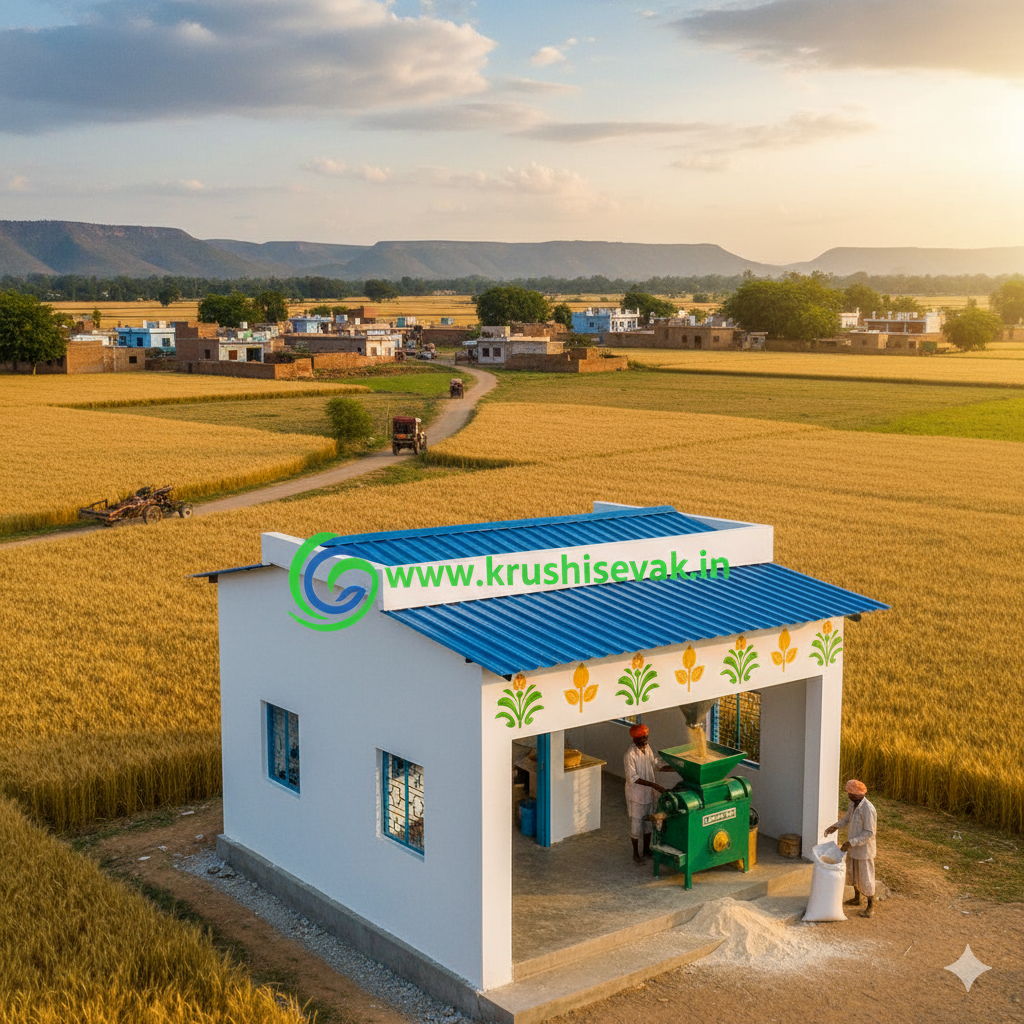

The Free Flour Mill Scheme, locally celebrated in Maharashtra as the Mofat Pithachi Girni Yojana, is an empowering socio-economic initiative driven by the state government. Designed primarily to uplift rural, tribal, and economically marginalized women, the program provides high-quality electronic flour mills (Atta Chakkis) with a substantial subsidy structural model—ranging from 90% to a full 100% government-funded grant.
In many rural and semi-urban sections of Maharashtra, women balance household obligations with a strong desire to contribute financially to their families. However, a lack of investment capital often stalls their entrepreneurial ambitions. This scheme directly solves that problem by providing commercial-grade equipment to women right at their doorsteps. By removing the initial cost barrier, the Mofat Pithachi Girni Yojana helps home-based entrepreneurs earn a steady daily income by grinding grains for their local communities, paving a clear path toward financial independence.
Core Objectives of the Yojana
The Department of Social Justice and Special Assistance, alongside the Women and Child Development Department (Zilla Parishad), runs this program with clear, long-term developmental goals:
- Promoting Grassroots Entrepreneurship: The primary objective is to help rural women transition from performing unpaid domestic labor to running viable, micro-level enterprises without requiring them to commute or leave their families.
- Encouraging Financial Independence: By establishing home-based milling businesses, beneficiaries secure a consistent, daily cash flow from processing local grains like wheat, jowar, and bajra. This steady income enhances their decision-making power within their households.
- Providing Targeted Structural Relief: The application process is carefully designed to prioritize the most vulnerable segments of society, ensuring that widows, destitute individuals, divorced women, and those from Scheduled Castes (SC) and Scheduled Tribes (ST) receive first preference.
- Eliminating Middlemen and Processing Gaps: By purchasing the equipment directly from government-vetted suppliers or transferring funds straight via Direct Benefit Transfer (DBT), the state ensures that high-performing machinery reaches the applicant without bureaucratic delays or unnecessary leakages.
Subsidy Structure and Machine Specifications
The scheme is structured to ensure that financial limitations do not prevent eligible women from participating.
High-Tier Subsidy Allocations
Depending on the specific implementing body (such as the District Social Welfare Committee or local Zilla Parishad frameworks), the scheme provides an exceptional subsidy tier:
- The 100% Grant Framework: Under specific tribal sub-plans and localized Social Welfare programs, selected low-income beneficiaries receive the flour mill completely free of cost, with the state government covering the full purchase price.
- The 90:10 Contributory Framework: Under standard Zilla Parishad rural development models, the government provides a 90% capital subsidy. The chosen beneficiary contributes a minimal 10% share of the machine’s certified cost, making it highly affordable even for lower-income households.
Machine Specifications
To ensure the business remains viable over time, the program supplies compact, modern, and energy-efficient flour mills. These machines typically feature a 1 HP to 2 HP electric motor that balances strong processing capacity with low domestic electricity consumption. They are designed to operate safely within a household setting, requiring minimal mechanical upkeep and featuring easy multi-grain configurations.
General Eligibility Parameters
To ensure the benefits reach the right households, the Government of Maharashtra has established a clear baseline eligibility framework:
- Gender and Residence: The scheme is open exclusively to women who are permanent residents of Maharashtra and hold a valid state domicile certificate.
- Age Profile: The applicant must be between 18 and 60 years old at the time of submission (some localized Zilla Parishad variations cap the upper age tier at 50 years).
- Income Constraints: The total combined annual income of the applicant’s household must not cross ₹1,20 Lakh (or up to ₹2.50 Lakh under specific expanded multi-sectoral sub-plans). Families recorded on the official Below Poverty Line (BPL) registry are automatically fast-tracked during the selection phase.
- Social Group Prioritization: Special priority is granted to women from Scheduled Castes (SC), Scheduled Tribes (ST), and Nomadic Tribes (VJNT). Furthermore, within any community tier, preference is given to widows, destitute individuals, and abandoned or divorced women.
- Prior Benefits Restriction: To maintain fairness, neither the applicant nor any immediate member of her household must have received a free or heavily subsidized flour mill, sewing machine, or similar vocational equipment from any government department within the past three to ten years.
Comprehensive Document Dossier
Applicants must gather and organize clean physical and digital copies of the following documents before starting the application process:
- Identity Proof: A clear copy of the Aadhaar card.
- Residential and Domicile Proof: A formal Domicile Certificate issued by a competent revenue officer, a permanent Ration Card, or a recent residential electricity bill to verify local address details.
- Economic Evaluation Proof: An authentic Annual Family Income Certificate signed by the local Tahsildar, or an official extract showing the family’s code on the active Below Poverty Line (BPL) registry.
- Caste Credentials: A valid Caste Certificate issued by an authorized Sub-Divisional Officer (SDO) or Deputy Collector, where applicable.
- Social Status Certificates: Official documentation proving status as a widow (husband’s death certificate), a certified court divorce decree, or a local Gram Panchayat declaration confirming a destitute or abandoned status.
- Financial Setup Elements: A copy of the applicant’s active bank passbook showing her name, account number, and IFSC code. The account must be linked to her Aadhaar card via the NPCI gateway to receive digital fund transfers smoothly.
- Commercial Asset Estimation: A formal price quotation for the targeted flour mill, sourced from a government-approved vendor or local authorized commercial dealer.
Step-by-Step Offline Application Process
The offline application track remains highly effective for the Mofat Pithachi Girni Yojana, as local Gram Panchayats and Anganwadi networks help guide applicants directly through the manual submission steps.
Step 1: Procuring the Scheme Application Form
Visit your local Gram Panchayat office, the Panchayat Samiti headquarters, or the nearest District Women and Child Development Department office. You can request the official printout for the Free Flour Mill Scheme Form completely free of charge. You can also consult your local Anganwadi Sevika, who often keeps a stock of these forms to help women in her area.
Step 2: Filling out the Form Accurately
Carefully fill out all sections of the form in clear handwriting. Ensure your legal name, age, and caste details match the spelling on your Aadhaar card exactly. You will need to specify the electrical capacity of your home setup and confirm that you have an active domestic electricity connection capable of running a small motor.
Step 3: Compiling and Attesting Your Documents
Attach clear photocopies of your Aadhaar card, income certificate, caste certificate, ration card, and bank passbook to your completed form. Bring your original identity cards to a local gazetted officer, Gram Sevak, or Sarpanch to have the physical copies verified and officially attested, if required by your local district guidelines.
Step 4: Submission to the Nodal Agent
Hand over your completed application package to your local Anganwadi Sevika or submit it directly to the Child Development Project Officer (CDPO) counter at the Panchayat Samiti office. Make sure to collect your signed and stamped acknowledgment receipt. This receipt features an inward manual tracking number, which is essential for following your application through the evaluation phases.
Step-by-Step Online Application Process via MahaDBT
For districts that manage vocational and agricultural equipment allotments through centralized digital portals, the application process runs smoothly via the MahaDBT platform.
Step 1: New User Registration
Open an internet browser and navigate to the official portal: mahadbt.maharashtra.gov.in. Locate and click on the option labeled New Applicant Registration. Select the Aadhaar-authenticated track, enter your 12-digit Aadhaar number, and input the secure verification OTP sent to your registered mobile phone to securely import your verified personal details.
Step 2: Establishing Account Security
Create a unique username and a strong password. Input and verify your active email address and mobile number using separate OTP confirmations sent by the system. Once completed, log back into the portal through the Applicant Login window.
Step 3: Building your Comprehensive Profile
Navigate to the My Profile dashboard. You must fill out this profile section completely before browsing available grants:
- Personal and Caste Tabs: Enter your exact community categorization and certificate tracking numbers.
- Income & Domicile Details: Input your family income details and upload your matching Tahsildar certificate numbers.
- Banking Configurations: Confirm that your active savings account is linked to the Aadhaar-seeded NPCI platform to prevent electronic transfer failures.
Step 4: Selecting the Scheme and Uploading Files
Click on the All Schemes menu panel and filter your search by selecting the Women and Child Development Department or the Agriculture Mechanization components. Select the Free Flour Mill Scheme (Mofat Pithachi Girni). Scan your supporting documents clearly as PDFs or JPEGs (keeping file sizes under 500 KB) and upload them to their corresponding slots. Review your entries and click submit to generate a digital tracking number.
Selection, Verification, and Disbursal Process
Because the demand for the Mofat Pithachi Girni Yojana is traditionally quite high, the state government follows a structured, transparent process to select beneficiaries and distribute equipment:
- Review by the Social Welfare Committee: After the submission deadline passes, all incoming forms undergo an initial review by the local Gram Sabha or Child Development Project Officer. The final list of approved beneficiaries is chosen by the District Social Welfare Committee (Samaj Kalyan Samiti).
- The Priority Matrix: If the number of applications exceeds the district’s available budget, the committee applies a strict priority matrix. First preference is given to BPL widows and destitute women, followed by SC/ST applicants, and then lowest-income general category candidates.
- The Modern Lottery Selection (MahaDBT): For online applications processed through the automated MahaDBT system, the software uses a random electronic lottery draw to select winners fairly from the pool of eligible applicants.
- Fund Disbursal via DBT: Once selected, the beneficiary receives a pre-sanction letter. Depending on the district’s setup, the government either delivers the flour mill directly through an authorized local distribution camp or transfers the approved subsidy amount via Direct Benefit Transfer (DBT) directly into the woman’s bank account to cover the vendor’s invoice.
Key Operational Tips for Beneficiaries
To keep your business running smoothly and maintain your standing with the scheme, keep these practical tips in mind:
- Verify Your Home Power Setup: Before the machinery arrives, ensure your domestic electrical wiring can handle a 1 HP or 2 HP motor. Operating high-load equipment on weak or faulty wiring can blow fuses or damage your machine’s motor.
- Honor the Non-Transferability Agreement: The flour mill is granted exclusively for the self-employment of the selected woman. Beneficiaries sign a binding agreement confirming they will not sell, rent, or transfer ownership of the machine to a third party. Local welfare inspectors conduct periodic checks, and finding a machine sold or misused can lead to financial penalties or disqualification from future state programs.
- Link Your Mobile Number for Updates: Ensure the mobile number linked to your application stays active. The state uses SMS alerts to communicate lottery results, distribution dates, and subsidy transfer confirmations.