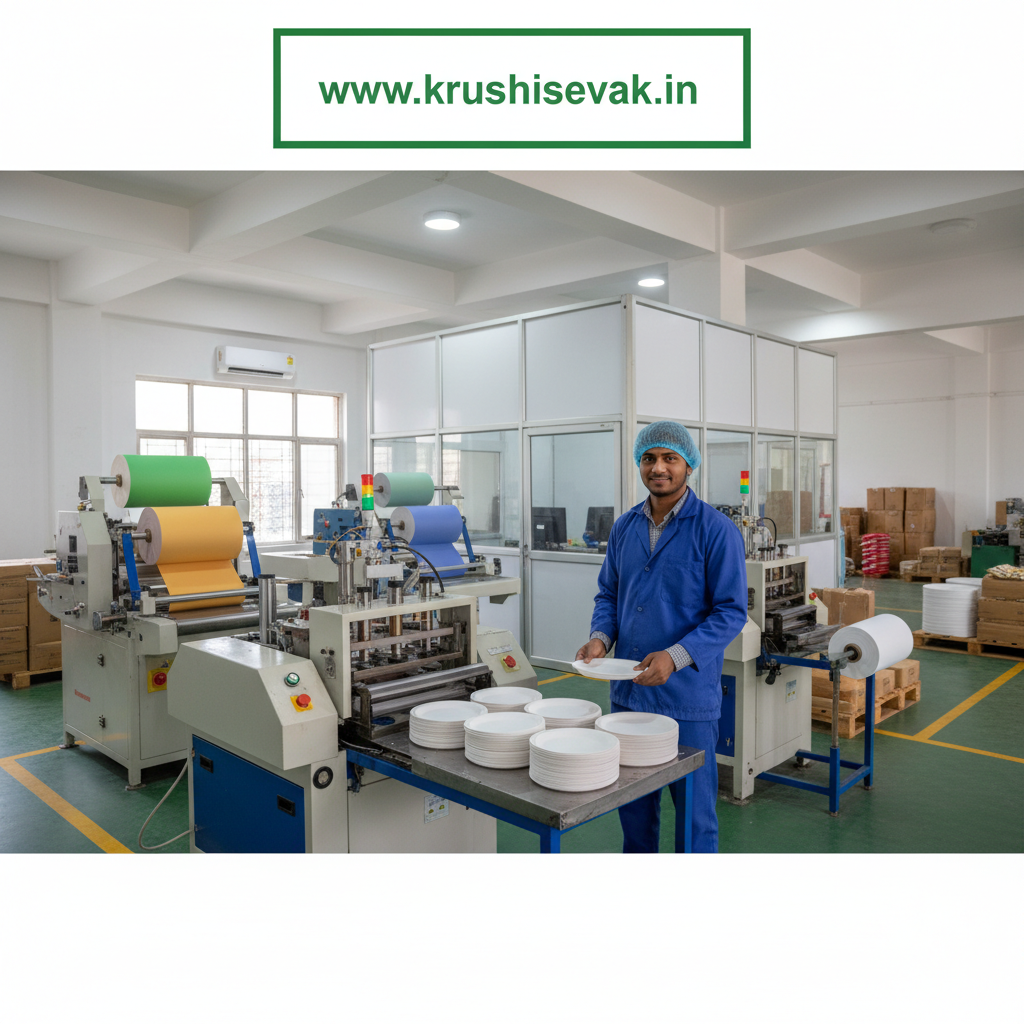

The global shift toward sustainability, combined with strict regulations on single-use plastics, has created a major market for eco-friendly alternatives. Disposable paper plates, once used primarily for picnics and parties, are now staples for street food vendors, fast-food joints, caterers, and households. Starting a paper plate manufacturing business offers a profitable entry point for entrepreneurs due to its low capital requirements, simple production process, and consistent year-round demand.
Market Dynamics and Business Growth Drivers
Understanding market demand is essential before investing in machinery or raw materials. The growth of the paper plate industry is driven by several key factors:
- Environmental Regulations: Governments worldwide are banning or heavily taxing single-use plastic and thermocol (polystyrene) tableware. Paper products are biodegradable and recyclable, making them the preferred alternative.
- Expansion of the Food Sector: The rapid growth of street food culture, food trucks, cloud kitchens, and takeaway services increases the daily consumption of disposable plates.
- Hygiene Awareness: Consumers frequently prefer disposable plates at public gatherings, religious functions, and large events to ensure hygiene and reduce cleanup labor.
- Affordability: Paper plates are lightweight, stackable, cost-effective to transport, and far cheaper than ceramic or glass alternatives.
Infrastructure, Machinery, and Power Requirements
Setting up a manufacturing unit requires an efficient workflow layout to handle raw materials and finished goods smoothly.
Space Requirements
A minimum area of 400 to 600 square feet is recommended for a small-scale to micro-enterprise. This space should be divided into:
- A dedicated production area for housing the machinery.
- A dry storage space for delicate raw material paper rolls, which must be protected from moisture.
- A storage section for packaged, finished inventories.
- A small administrative desk.
Power Infrastructure
Depending on your machinery setup, the power requirements will vary:
- Single-Die/Double-Die Automatic Machines: These generally run on standard single-phase domestic power connections (220V), drawing approximately 1 to 3 kW.
- High-Speed Hydraulic Multi-Die Machines: These require a three-phase industrial power connection (440V), drawing 5 kW or more to run heavy hydraulic pumps and heating elements.
Machinery Profiles
Choosing the right machinery depends on your investment budget and targeted production scale:
1. Manual and Hand-Operated Machines
These machines rely entirely on manual labor to press a foot lever or hand wheel to mold the plates. They have low production rates (approx. 500–800 pieces per hour) and require continuous physical effort. This setup is best suited for rural self-help groups or home-based micro-businesses with minimal startup capital.
2. Semi-Automatic Machines
In a semi-automatic setup, the operator manually places pre-cut sheet circles onto the die, and an electric or pneumatic mechanism handles the pressing and molding. This system offers better uniformity but still requires dedicated manual handling for every single plate.
3. Fully Automatic Single/Double-Die Machines
These machines pull raw paper directly from a continuous rear-mounted roll, feed it mechanically into the heated dies, stamp the plate shape, cut the edges, and drop the finished plate onto a collection tray. A single operator can manage multiple machines, making this the most cost-effective and scalable choice for new entrepreneurs. Production speeds range from 2,500 to 4,000 pieces per hour.
4. Hydraulic High-Speed Machines
Designed for mass manufacturing, these systems use hydraulic pressure rather than mechanical cams to press heavy-gauge boards into intricate shapes (like partition buffet plates). They can run multiple dies simultaneously and handle tough, multi-layered materials.
Raw Material Configuration
The quality of your raw materials directly determines the durability of your final product. Using inferior paper will cause your plates to sag, soak through, or fail under wet and oily foods, which can quickly alienate B2B clients.
- Kraft Paper Rolls: The primary structural base for standard plates, usually ranging from 80 GSM to 200 GSM (Grams per Square Meter). Higher GSM yields a stiffer, higher-quality plate.
- PE-Coated Paper: Paper rolls laminated with a thin Polyethylene (PE) layer provide water and grease resistance, making them ideal for serving liquid items like gravies and ice creams.
- Silver/Aluminium Laminated Foil Paper: This popular material bonds a shiny aluminum or plastic film to the underlying paperboard, creating an attractive, moisture-resistant finish commonly used for party plates and street food bowls.
- Biodegradable/Scrap Paper Options: Some manufacturers use unbleached recycled paper or bagasse (sugarcane fiber) boards to cater to premium, eco-conscious markets.
- Packaging Consumables: High-grade polyethylene bags for grouping plates (typically in packs of 25, 50, or 100) and corrugated cardboard boxes for transport.
Costing Breakdown and Capital Expenditure
To understand the financial requirements, let us look at a realistic cost projection for an automatic double-die machine unit.
Fixed Capital Investment (One-Time Costs)
- Machinery Cost: A reliable automatic double-die paper plate making machine costs roughly ₹75,000 to ₹1,20,000.
- Die Sets: Purchasing a variety of interchangeable molds (e.g., 6-inch chat plates, 8-inch tiffin plates, 12-inch buffet plates, and 4-inch deep bowls) costs around ₹15,000 to ₹25,000.
- Electrical Installation & Setup: Industrial wiring, safety switches, and site preparation cost approximately ₹10,000.
- Licensing & Registrations: Securing a basic business registration, MSME Udyam Certification, and local trade permits costs around ₹5,000.
- Total Fixed Capital: Approximately ₹1,05,000 to ₹1,60,000.
Monthly Recurring Operating Cost
- Raw Material Inventory: Purchasing around 3 tons of silver foil paper rolls and PE rolls costs approximately ₹1,80,000 (assumed at an average cost of ₹60 per kg).
- Packaging Materials: Plastic bags and outer cartons cost around ₹10,000.
- Factory/Room Rental: Monthly rent for a commercial space costs about ₹8,000.
- Electricity Charges: Power bills for machinery motors and heating elements total roughly ₹6,000.
- Labor Wages: One skilled operator/helper to load rolls, monitor production, and pack plates costs around ₹12,000.
- Logistics & Marketing: Local transport and fuel costs total about ₹5,000.
- Total Monthly Operational Expenditure: Approximately ₹2,21,000.
Unit Economics and Profit Analysis
To determine profit margins, we must look at production costs on a per-kilogram basis, as raw paper is purchased by weight and finished plates are sold by weight or piece count.
Production and Yield Assumptions
- Raw Material Base Cost: ₹60 per kg.
- Production Wastage: Around 5% to 7% of the paper roll is left over as scrap during circular stamping. This scrap can be sold back to paper mills for recycling at roughly ₹8 to ₹12 per kg, slightly offsetting losses.
- Processing Add-ons: Combining power, labor, packaging, and overhead adds roughly ₹12 of processing cost to each kilogram of raw material.
- Net Cost of Production: Approximately ₹72 per kilogram of finished paper plates.
Profit Margin Realization
- Wholesale Selling Price: Finished paper plates are sold to wholesale distributors and catering suppliers at an average price of ₹85 to ₹95 per kg, depending on design and structural stiffness.
- Net Profit Margin per Kilogram: Subtracting the production cost (₹72) from a conservative wholesale price (₹87) yields a net profit of ₹15 per kilogram.
- Daily Profit Generation: An automatic double-die machine processing 150 kg of paper per 8-hour shift generates a daily profit of ₹2,250.
- Monthly Profit Generation: Operating for 26 days a year at this scale yields a net monthly profit of ₹58,500. Scaling up to a two-shift daily schedule or adding more machines can double or triple these monthly earnings.
Key Benefits of the Paper Plate Business
Investing in a paper plate manufacturing business offers several strategic advantages for new entrepreneurs:
- Low Entry Barrier: The business requires no specialized technical degrees or complex software skills. Machine suppliers provide operational training within a couple of days.
- Quick ROI Turnaround: Because of the low initial capital investment and steady product movement, well-managed units can fully recover their machinery costs within 6 to 9 months.
- Resilient Market Demand: Fast food consumption does not drop significantly during economic downturns, ensuring a steady, recession-resistant demand for disposable tableware.
- Scalable Operations: You can start with a single automatic machine and add extra machinery units as your client base and revenues grow, without overhauling your production layout.
- Eligible for Government Subsidies: Many local governments offer low-interest loans, subsidies, and credit-linked grants to eco-friendly manufacturing startups under micro-enterprise development programs.
Critical Challenges and Mitigation Strategies
While the business is highly profitable, new owners must manage specific operational challenges to ensure long-term success:
1. High Competition and Low Price Differentiation
Because anyone can buy a machine and enter the market, wholesale price competition can be intense.
- Mitigation: Do not rely entirely on standard silver foil plates. Diversify into high-quality printed paper options, multi-partition lunch plates, or unbleached natural eco-plates to target premium, higher-margin buyers.
2. Managing raw material price fluctuations
Fluctuations in global pulp paper pricing can shrink your profit margins overnight if your selling prices remain fixed.
- Mitigation: Form long-term supply contracts with established paper mills or large distributors to secure stable raw material pricing, and maintain at least two weeks of raw paper stock.
3. Moisture Contamination
Paper absorbency is a significant storage issue. If raw paper rolls absorb humidity from damp floors or rainy air, the paper will crack or tear during heat-stamping.
- Mitigation: Store all raw material rolls on elevated wooden pallets away from walls, and ensure the storage facility has proper ventilation and waterproof roofing.
Marketing and Distribution Framework
Success in this business depends on building a reliable sales network to keep your machines running consistently. Focus on these core sales channels:
- Wholesale Mandis and Disposable Product Merchants: Establish relationships with major local wholesale markets. These distributors buy in bulk and offer consistent, high-volume orders, even though they negotiate for lower per-unit prices.
- Caterers and Event Event Planners: Partner directly with catering agencies, wedding decorators, and event management groups to supply custom buffet plates in bulk.
- Street Food Vendors and Sweet Shops: Assign a sales representative to secure daily or weekly supply contracts with local tea stalls, chat vendors, food trucks, and roadside eateries for steady cash flow.
- Digital B2B Marketplaces: List your business on manufacturing directories and wholesale portals like IndiaMART, Alibaba, and TradeIndia to capture bulk orders from out-of-state buyers.