
Introduction
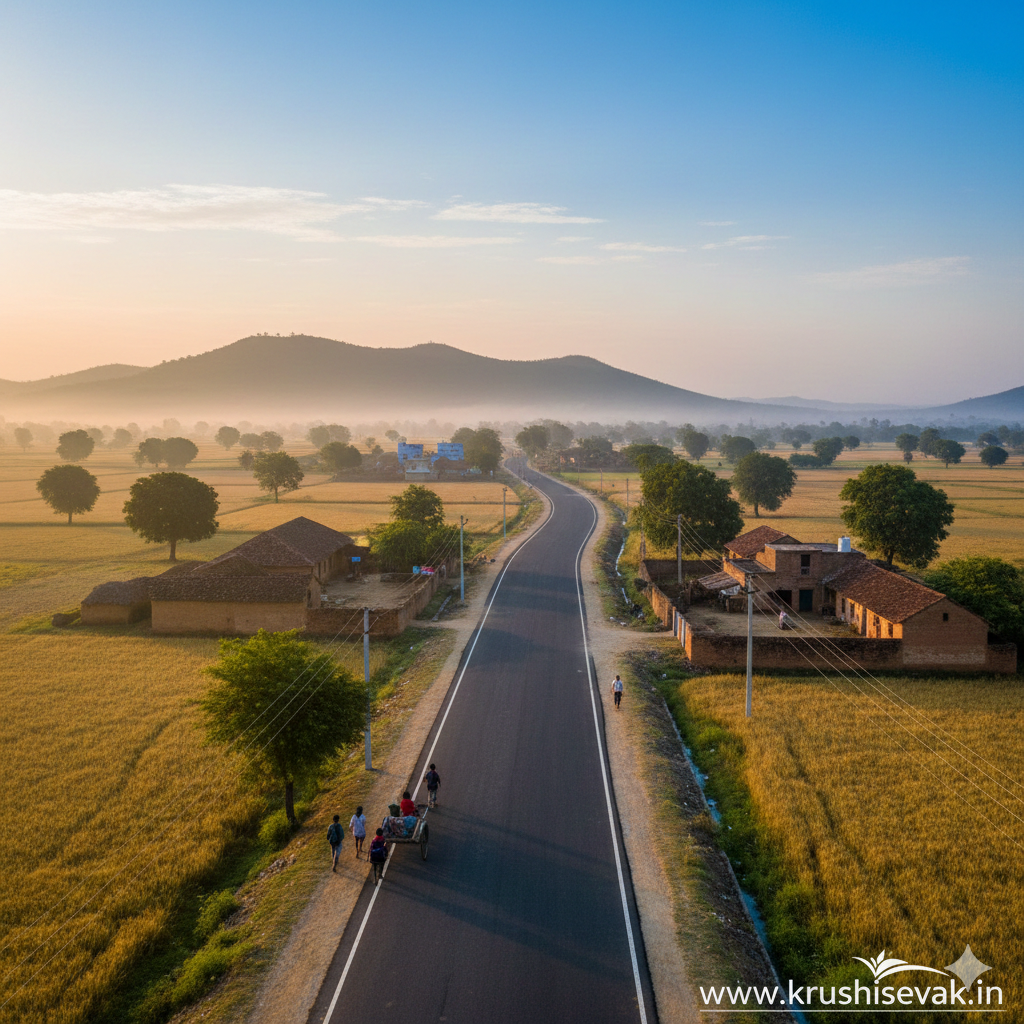
The Pradhan Mantri Gram Sadak Yojana (PMGSY) is one of India’s most significant and transformative rural development initiatives. Launched on December 25, 2000, by the Government of India under the leadership of then-Prime Minister Atal Bihari Vajpayee, the program was conceived to address a historical imbalance in India’s growth narrative: the isolation of rural habitations. For decades, a vast majority of India’s villages lacked reliable access to urban economic centers, healthcare facilities, and educational institutions, primarily due to the absence of robust road infrastructure.
PMGSY was introduced as a nationwide, federally backed initiative to provide all-weather road connectivity to eligible unconnected rural habitations. An all-weather road is defined as one that is negotiable during all seasons of the year, equipped with the necessary culverts and cross-drainage structures to withstand heavy monsoon seasons. Over the last two and a half decades, the scheme has expanded through successive strategic phases—spanning from PMGSY-I to the active rollout of PMGSY-IV—evolving from a simple connectivity program into an advanced socio-economic mechanism powered by green technology, digital governance, and precise demographic engineering.
Objectives and Vision
The primary objective of PMGSY is to offer durable, sustainable, and reliable road connectivity to rural areas that have historically been left off the logistical map. The core philosophy driving this vision is that rural connectivity is not merely an infrastructure requirement but a fundamental precursor to poverty alleviation, economic equity, and social mobility.
Core Parameters of the Scheme
The scheme defines its target units not by revenue villages or Panchayats, but by “Habitations.” A habitation is defined as a cluster of population living in an area whose location does not change over time. Common terms for these include Tolas, Dhanis, Majras, and hamlets. PMGSY deliberately targets these localized clusters to ensure that road infrastructure reaches the actual points of human settlement.
The operational focus of the scheme is divided into two major interventions:
- New Connectivity: Constructing brand-new roadways where no stable path exists, linking an isolated habitation directly to the nearest major road network.
- Upgradation: Enhancing the structural strength, width, and quality of existing rural tracks or worn-out roads that fail to meet all-weather operational standards.
Evolution Through the Phases
PMGSY-I: The Genesis
Launched as a 100% Centrally Sponsored Scheme, PMGSY-I established the baseline criteria for rural connectivity across India using population data from the 2001 Census. The eligibility thresholds were systematically categorized to prioritize larger settlements before moving to smaller ones:
- Plain Areas: Habitations with a population of 500 persons or more.
- Special Category Areas: Habitations with a population of 250 persons or more. This included the North-Eastern states, Himalayan states, Union Territories, Desert areas, Tribal regions under Schedule V, and designated Aspirational Districts.
- Left-Wing Extremism (LWE) Affected Districts: To counter the structural isolation that breeds security challenges, the threshold was lowered significantly to cover habitations with a population of 100 persons or more.
PMGSY-I succeeded in laying down hundreds of thousands of kilometers of roads, fundamentally shifting the baseline of rural connectivity.
PMGSY-II: Consolidation and Efficiency
Approved in May 2013, PMGSY-II shifted the programmatic focus from establishing initial connectivity to consolidating the existing rural road network. This phase recognized that the roads built under early rural programs needed substantial upgradation to handle increasing traffic volumes and to support local economic expansion.
The target for PMGSY-II was to upgrade roughly 50,000 kilometers of the existing rural road network. Rather than focusing on single-habitation links, this phase revitalized “Through Routes” and “Link Routes” within the Rural Core Network—the major arteries that collect traffic from smaller village roads and channel it toward commercial markets and district highways.
PMGSY-III: Connecting Growth Pillars
Launched in July 2019, PMGSY-III took a major step forward by systematically linking rural habitations to critical socio-economic gateways, affectionately termed “growth pillars.” The target length for this phase was set at 1,25,000 kilometers of rural roads.
The strategic focus under PMGSY-III shifted toward creating direct routes to:
- Gramin Agricultural Markets (GrAMs): Enabling farmers to transport perishable produce swiftly to local and regional market hubs, reducing transit losses and eliminating predatory middlemen.
- Higher Secondary Educational Institutions: Ensuring that rural children, particularly young girls, do not drop out of school due to the hazards or structural impossibility of commuting on unpaved roads.
- Hospitals and Community Health Centers: Reducing emergency response and transit times for maternal healthcare and critical medical conditions.
PMGSY-IV: The Next Horizon (2024–2029)
Approved to run through the late 2020s, PMGSY-IV represents the modern operational frontier of rural road network expansion. Backed by substantial budgetary allocations, this phase places an uncompromising emphasis on absolute saturation, targeted social equity, and climate resilience.
PMGSY-IV utilizes updated Census data to map out remaining pockets of isolation. A notable feature of this phase is its deep integration with targeted welfare initiatives:
- The Cluster Approach: In highly complex, mountainous, or international border-sharing blocks, PMGSY-IV allows for the clustering of small, distinct habitations. If a cluster collectively meets the population criteria, it becomes eligible for all-weather connectivity.
- PM-JANMAN Convergence: This phase actively collaborates with the Pradhan Mantri Janjati Adivasi Nyaya Maha Abhiyan to prioritize road infrastructure for Particularly Vulnerable Tribal Groups (PVTGs), bringing infrastructure to some of the most marginalized communities in India.
- PM-AJAY Alignment: In convergence with the Pradhan Mantri Anusuchit Jaati Abhyuday Yojana, PMGSY-IV prioritizes habitations where 40% or more of the residents belong to Scheduled Caste (SC) communities, ensuring equitable infrastructure distribution.
Funding Pattern and Financial Architecture
When PMGSY began in 2000, it was funded entirely by the Central Government. However, following the recommendations of the 14th Finance Commission, the financial architecture was reorganized in the 2015–16 financial year to establish a collaborative fiscal partnership between the Union and State governments.
The modern funding ratio is structured as follows:
- General States: Costs are shared on a 60:40 basis between the Central Government and the State Government.
- North-Eastern and Himalayan States/UTs: Due to fiscal constraints and challenging geographic terrain, the cost-sharing ratio is set at 90:10, with the Center bearing the overwhelming majority of the burden.
- Union Territories without Legislatures: The Central Government provides 100% of the funding.
The funds are routed systematically through State Rural Roads Development Agencies (SRRDAs), which act as nodal implementation bodies at the state level.
Technological Innovations and Green Initiatives
PMGSY has gained recognition for integrating green engineering, carbon-footprint reduction, and sustainable industrial waste recycling into rural infrastructure development.
Green Technologies and Non-Conventional Materials
To protect fragile eco-systems, particularly in the Himalayan regions and flood-prone plains, the Ministry of Rural Development has mandated the use of locally available, eco-friendly materials:
- Waste Plastics: Shredded plastic waste is blended with hot bitumen to construct “Plastic Roads.” This improves the tensile strength and water-resistance of the pavement while diverting thousands of tons of plastic waste from landfills.
- Cold Mix Technology: Traditional road construction requires heating bitumen to high temperatures, releasing substantial greenhouse gases. Cold mix technology allows asphalt to be laid at ambient temperatures, reducing fuel consumption and protecting the health of local laborers.
- Industrial By-products: The use of Fly Ash (from thermal power plants), Steel Slag, and Geo-synthetics (including natural coir and jute textiles) is encouraged for soil stabilization and slope protection along rural embankments.
Digital Governance and Real-Time Monitoring
To eliminate corruption, track execution delays, and maintain stringent quality records, PMGSY operates on an advanced suite of digital governance platforms:
- OMMAS (Online Management, Monitoring and Accounting System): This centralized web portal acts as the digital backbone of the scheme. Every single road project, from its initial Detailed Project Report (DPR) formulation and tendering to its fund releases and physical completion status, is recorded and visible in the public domain.
- **e-MARG (Electronic Maintenance of Rural Roads under PMGSY): A major historical challenge for rural roads was their rapid degradation post-construction. e-MARG is a performance-linked digital platform designed to track and regulate routine maintenance. It connects performance metrics directly to payment distributions for contractors, ensuring accountability during the mandatory 5-year post-construction maintenance period.
- Geo-Spatial Mapping and GPS Tracking: PMGSY utilizes satellite imaging and Geographic Information Systems (GIS) to map the Rural Core Network. Since May 2022, it has been mandatory to install GPS-enabled Vehicle Tracking Systems (VTS) on construction machinery to monitor the real-time movement and execution quality of projects on the ground.
Institutional Framework and Quality Control Mechanism
The execution of PMGSY relies on a structured, multi-tiered institutional framework designed to bridge the gap between central policy design and village-level implementation.
Administrative Oversight
At the apex sits the National Rural Infrastructure Development Agency (NRIDA), providing technical and operational support to the Ministry of Rural Development. At the provincial level, each state operates a State Rural Roads Development Agency (SRRDA), which coordinates with District Project Implementation Units (PIUs) led by executive engineers responsible for daily on-site supervision.
Three-Tier Quality Control Mechanism
To combat structural compromise and the phenomenon of “low-tendering” (where contractors underbid and compromise on materials), PMGSY enforces a strict quality assurance protocol:
- First Tier (Internal Quality Control): The local Program Implementation Unit (PIU) and the executing contractor are legally required to establish a field-level quality control laboratory at every project site to test materials like aggregates, soil, and bitumen consistency.
- Second Tier (State-Level Independent Monitoring): State Quality Monitors (SQMs) conduct independent, unannounced inspections of road works to cross-verify the quality reports submitted by the PIUs.
- Third Tier (National-Level Independent Audits): The NRIDA deploys National Quality Monitors (NQMs)—experienced, senior retired engineers—to conduct random inspections across various states. Payment clearances and final project sign-offs are structurally tied to the grades awarded by these national monitors.
Socio-Economic Impact Assessment
The socioeconomic benefits generated by PMGSY over nearly twenty-six years have transformed the landscape of rural India. By converting seasonal mud tracks into permanent all-weather asphalt roads, the scheme has delivered significant, measurable advancements across multiple sectors.
Agricultural Transformation
Before PMGSY, a significant portion of harvest rusted or rotted in fields during heavy monsoons because heavy vehicles could not reach the farms. All-weather roads have streamlined the supply chain, allowing farmers to quickly transport cash crops, dairy, and poultry to urban centers. This has helped farmers secure better prices, reduced transport costs, and encouraged a shift from subsistence farming to high-value commercial agriculture.
Healthcare Accessibility
The correlation between rural roads and public health is direct. PMGSY roads have made it possible for state ambulance services to reach remote villages during medical emergencies. Studies indicate a notable increase in institutional deliveries and a corresponding drop in maternal and infant mortality rates in connected villages. Furthermore, healthcare workers can consistently visit rural clinics to run immunization and health awareness drives.
Educational Enrollment and Literacy
The construction of safe, reliable roads has significantly improved school attendance, especially among girls. Parents are often hesitant to send their daughters to distant higher-secondary schools or colleges when the commute involves walking through isolated, unpaved terrain. PMGSY roads have enabled public and private transport options, making commutes safer and helping lower dropout rates while increasing literacy.
Poverty Alleviation and Employment Generation
Road construction projects generate significant direct local employment during their execution phases. Once completed, these roads lower transport costs, attract small enterprises, improve access to credit, and open up non-farm employment opportunities. This allows rural workers to commute to nearby towns for employment without needing to migrate permanently to urban slums.
Challenges and the Way Forward
Despite its significant achievements, the implementation of PMGSY continues to face structural and geographic challenges:
- Terrain and Environmental Clearance Hurdles: Laying roads through dense forest tracts, wildlife sanctuaries, and landslide-prone mountain ecosystems requires complex engineering and prolonged regulatory clearances.
- Center-State Financial Coordination: Delays in the release of matching state budget shares occasionally halt projects mid-way, leading to cost escalations and material degradation.
- The Maintenance Challenge: While new road construction receives substantial political and financial support, securing regular funds from state exchequers for routine maintenance after the initial 5-year contractor liability period remains an uphill battle.
To address these challenges, the program continues to evolve by emphasizing digital platforms like e-MARG, adopting climate-resilient designs, and exploring alternative funding models.
Conclusion
The Pradhan Mantri Gram Sadak Yojana is more than just an infrastructure program; it serves as a structural foundation for rural empowerment. By adding hundreds of thousands of kilometers of all-weather roads to the country’s footprint, PMGSY has brought once-isolated communities into the economic mainstream.
As the program progresses through PMGSY-IV, its emphasis on green technology, strict quality controls, and targeted social integration ensures that its benefits reach the most vulnerable populations. By transforming unpaved village tracks into durable, all-weather corridors, PMGSY continues to bridge the rural-urban divide, helping build a more integrated and equitable national economy.