
Information:
Smart Farming involves using modern technologies, such as the Internet of Things (IoT), Sensors, and Data Analytics, to make agriculture more efficient and productive. Compared to traditional farming, Smart Farming reduces the consumption of resources (like water and fertilizer), thereby cutting costs and protecting the environment.
Key Technologies in Smart Farming and Their Use:
- Sensors:
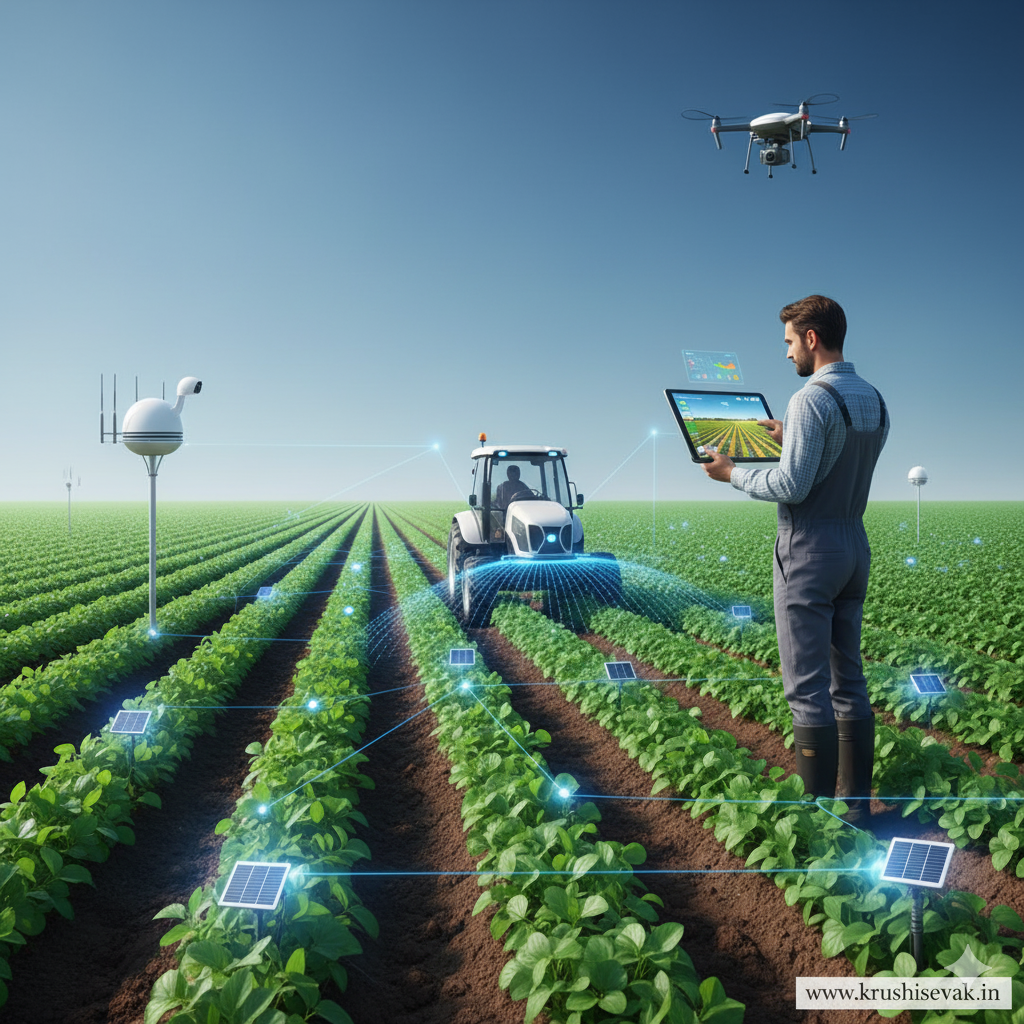
- Use: Various types of sensors are placed in the field to measure soil moisture, temperature, nutrient levels, crop health, and weather changes.
- Benefit: The precise information obtained from these sensors helps farmers determine exactly when and how much water and fertilizer to apply.
- Internet of Things (IoT):
- Use: The IoT connects sensors, cameras, and automated farm machinery via the internet. This network allows farmers to operate irrigation pumps, sprayers, or even tractors remotely.
- Benefit: Farmers can monitor the field and make necessary adjustments using a mobile app or computer, even when they are away from the farm.
- Data Analytics:
- Use: Data analytics is used to analyze the large volume of information collected from sensors and other sources (e.g., weather data, satellite imagery).
- Benefit: This analysis provides accurate predictions about potential crop diseases, water requirements, and expected yields. This minimizes risks and enables timely decision-making.
Benefits of Smart Farming:
- Resource Conservation: Water and fertilizers are supplied based on the exact need identified by the sensors, significantly reducing waste.
- Increased Productivity: Timely interventions based on crop requirements improve crop health and increase the overall yield.
- Reduced Cost and Labor: Automated systems lower human labor and wage costs.
- Environmental Protection: The reduced and precise use of fertilizers and pesticides minimizes soil and water pollution.