
Introduction: The Digital Agricultural Revolution
For centuries, agriculture has been a practice driven by human intuition, historical patterns, and observation of the weather. Farmers have relied on their experience to judge when to plant seeds, how much water to allocate, and when to harvest. While these traditional methodologies sustained humanity for generations, the modern agricultural landscape faces an unprecedented combination of global pressures. Exponential population growth, climate volatility, shrinking arable land, and depleting water reserves mean that traditional, intuition-based farming is reaching its limits.
To address these challenges, the global agricultural sector is undergoing a massive digital revolution known as Smart Farming. Also referred to as Precision Agriculture or AgTech (Agricultural Technology), smart farming moves the industry away from uniform, blanket field management. Instead, it treats every square meter of land, every individual plant, and every farm animal as a unique data point.
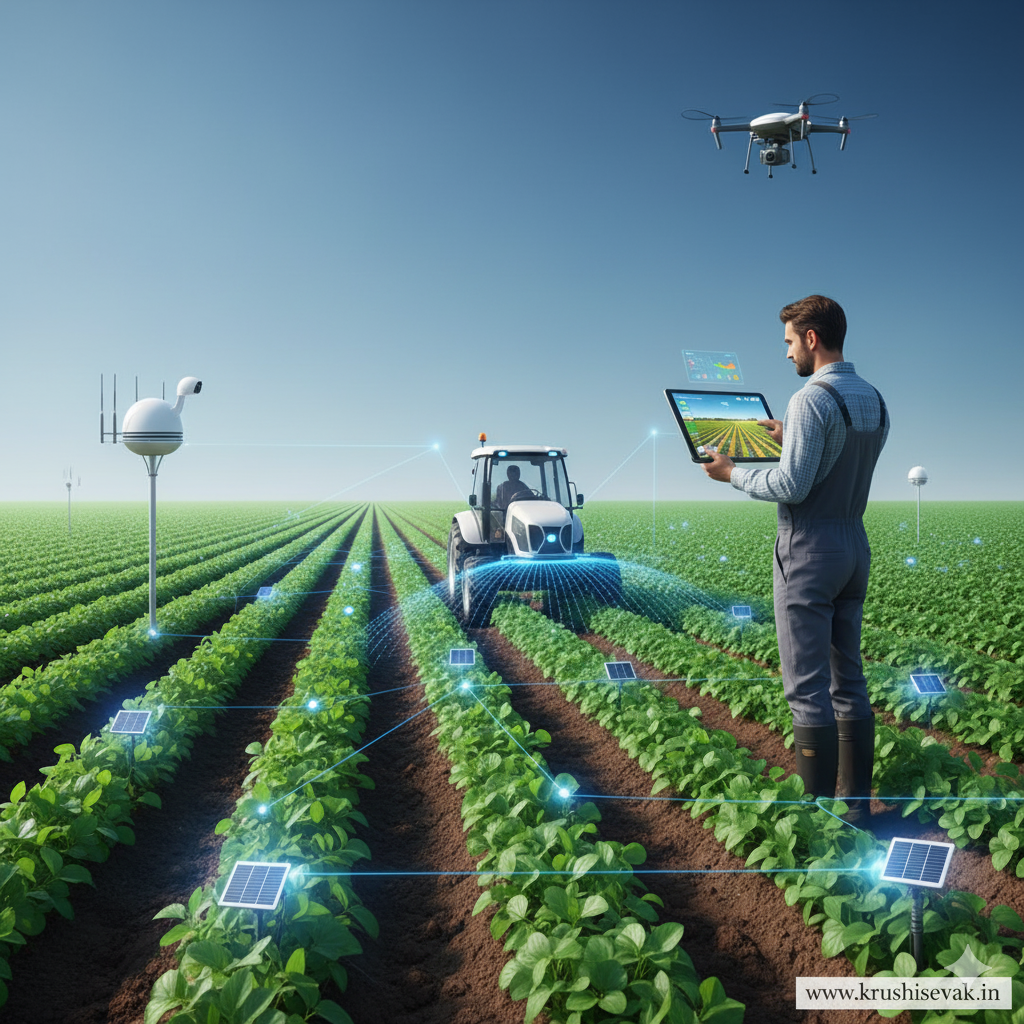
By combining advanced physical sensors, the Internet of Things (IoT), and high-speed data analytics, smart farming allows producers to make real-time, data-driven decisions. This transformation goes beyond improving convenience; it optimizes resource management to reduce costs, maximize crop yields, and ensure global food security.
The Technology Stack of Smart Farming
Smart farming does not rely on a single piece of equipment. It uses an interconnected stack of modern hardware and software that works seamlessly across fields. This digital ecosystem can be broken down into three core, interdependent layers:
[ Data Collection Layer ] —-> [ Data Transmission Layer ] —-> [ Data Analytics Layer ]
(Sensors, Drones, IoT) (LoRaWAN, 5G, Cellular) (AI, Cloud, Dashboards)
1. The Data Collection Layer (Sensors and IoT Edge Devices)
This layer acts as the eyes and ears of the digital farm. It consists of physical sensors deployed across fields, attached to machinery, or worn by livestock. These devices convert physical environmental variables—like soil moisture, ambient temperature, leaf wetness, and animal heart rates—into digital data packets.
2. The Data Transmission Layer (The Communications Network)
Once edge sensors collect information, that data must travel to a central processing hub. Because farms are often located in remote areas with sparse cellular coverage, smart farming utilizes specialized communication protocols. Low-Power Wide-Area Networks (LPWANs), such as LoRaWAN (Long Range Wide Area Network), are highly valued because they can transmit tiny data packets over miles using minimal battery power. In more connected regions, high-speed 5G connectivity and satellite networks enable real-time tracking across massive properties.
3. The Data Analytics Layer (Cloud Compute and Artificial Intelligence)
This is the brain of the operation. Raw data by itself holds little value. In this layer, cloud-computing platforms, machine learning algorithms, and predictive data software process incoming data streams. They translate raw data into actionable insights, providing real-time alerts or automated instructions directly to farm equipment.
The Power of Agricultural Sensors: Monitoring the Microclimate
Sensors form the foundation of smart farming. By continuously capturing high-resolution environmental data, they help farmers manage risks that were once completely invisible.
Soil Health and Moisture Sensors
These probes are buried at varying root depths across the farm. Using electrical conductivity and frequency domain reflectometry, they measure the exact volumetric water content and nutrient levels (Nitrogen, Phosphorus, and Potassium – NPK) of the soil. Instead of watering a 100-acre field uniformly, a farmer can target specific zones that are drying out, preventing both under-watering and water logging.
Weather and Microclimate Stations
Standard regional weather forecasts are often too broad to be helpful on a large farm. On-site smart weather stations track the specific microclimate of a farm’s valleys and hills, recording ambient humidity, solar radiation, wind speed, and barometric pressure. This localized data helps predict frost risks or identifies high-humidity windows where fungal diseases are likely to thrive.
Optical and Spectral Sensors
Mounted on automated tractors, standalone field poles, or low-flying drones, these advanced cameras capture light wavelengths reflected by plant canopies. By analyzing the Normalized Difference Vegetation Index (NDVI), software can identify plant stress, chlorophyll deficiencies, or pest infestations days before the human eye can spot visible yellowing or leaf damage.
IoT in Action: Creating Connected Ecosystems
The Internet of Things (IoT) refers to the network of physical devices that communicate and interact with each other without direct human intervention. In an agricultural setting, IoT turns isolated tools into an automated, collaborative ecosystem.
Automated Variable-Rate Irrigation (VRI)
Traditional pivot irrigation systems spray water evenly across a field, wasting resources on clay-heavy zones that retain water or rocky spots that drain instantly. An IoT-enabled VRI system connects soil moisture sensors directly to the irrigation pivot through the cloud. As the massive watering arm moves across the field, it automatically adjusts its water flow rate in real time based on the specific sensor data from the ground below.
Smart Greenhouses
IoT technology has completely automated indoor vertical farming and glasshouse cultivation. In a smart greenhouse, sensors track carbon dioxide levels, light exposure, and ambient temperature. If CO2 levels drop below optimal photosynthesis parameters, the IoT gateway triggers automated ventilation valves. If sunlight fades during an overcast afternoon, automated LED grow lamps turn on to maintain consistent light exposure, ensuring optimal plant growth around the clock.
Asset Tracking and Smart Machinery
Modern tractors and combine harvesters are highly sophisticated mobile computers. Equipped with GPS and internal IoT diagnostics, these machines map field boundaries down to the centimeter, optimizing driving paths to minimize fuel use and prevent soil compaction. Furthermore, predictive maintenance sensors track internal engine vibrations and fluid temperatures, alerting the operator to replace a failing part before a costly breakdown occurs during the peak harvest window.
Data Analytics: Turning Raw Numbers into Actionable Farm Strategy
Data analytics acts as the engine that transforms massive streams of sensor data into clear, operational choices for the farmer.
Predictive Crop Yield Modeling
By combining historical weather patterns, real-time soil data, and spectral images from drones, data analytics platforms can forecast harvest volumes weeks in advance. This helps farmers plan their logistics ahead of time, allowing them to secure shipping contracts, arrange cold-storage facilities, and negotiate better market prices.
Algorithmic Pest and Disease Early Warnings
Fungal spores and insect pests multiply rapidly under specific environmental conditions. When data analytics systems notice that a field’s microclimate sensors have recorded a specific combination of temperature and leaf moisture for 48 consecutive hours, the software cross-references this with biological pest models. The farmer receives an automated text alert indicating a high risk of an outbreak, allowing them to apply targeted crop protection exactly where it is needed, rather than spraying an entire field unnecessarily.
Big Data in Livestock Management
Smart farming analytics extend into animal husbandry as well. Cattle can be equipped with IoT ear tags or smart collars that monitor their daily movements, rumination times, and body temperatures. When an animal’s activity drops significantly or its temperature spikes, the analytics platform flags that specific animal for veterinary inspection, isolating potential illnesses before a disease can spread to the rest of the herd.
Key Benefits of Adopting Smart Agriculture
The transition to sensor-driven, IoT-powered data analytics delivers clear advantages for both farm profitability and global environmental sustainability:
- Significant Resource Conservation: Precision application allows farmers to reduce water consumption by up to 30% to 40% and optimize fertilizer use, which lowers overhead costs and prevents chemical runoff into local watersheds.
- Increased Crop Yields: Continuous monitoring ensures plants grow under optimal conditions throughout their lifecycle, resulting in higher quality harvests and greater food volume per acre.
- Labor Efficiency: Automation handles tedious tracking tasks, letting small farming families manage larger areas of land without relying on scarce seasonal labor.
- Traceability for Consumers: Modern consumers want to know where their food comes from. The data logs created by smart farming provide a transparent record of a crop’s journey from seed to supermarket shelf.
Overcoming Key Implementation Challenges
Despite its clear advantages, smart farming faces several adoption hurdles that the industry must address:
High Initial Setup Costs
Purchasing high-tech soil probes, setting up LoRaWAN gateways, and subscribing to premium AI analytics platforms requires significant upfront capital. While these systems typically pay for themselves over time through resource savings, the initial cost can be a barrier for smallholders. To help, governments and cooperative banks are introducing technology subsidies and leasing options.
Data Interoperability Issues
Farmers often buy equipment from different manufacturers. If a soil sensor from one brand cannot communicate with an irrigation valve from another due to proprietary software designs, the IoT loop breaks down. The industry is actively working to resolve this by adopting open-source communication standards and universal data formats (like ISOBUS).
Tech Literacy and Connectivity Gaps
Operating a digital farm requires a basic comfort level with digital dashboards, software maps, and data alerts. Agricultural extension programs are vital for training traditional farmers to use these tools effectively. Additionally, expanding rural broadband and satellite internet coverage is essential to support smart systems in remote farming regions.
Conclusion: The Future of Food Security
Smart farming is no longer a futuristic concept confined to research laboratories; it is a practical and necessary tool for modern agriculture. By integrating sensors, the Internet of Things, and data analytics, farmers can replace guesswork with scientific precision.
As technology costs continue to fall and connectivity expands, data-driven farming will become the baseline standard for global agriculture. By treating data as a vital farm resource—just like water, seeds, and soil—the global agricultural community can build a highly efficient food production system that protects the environment while feeding a growing world