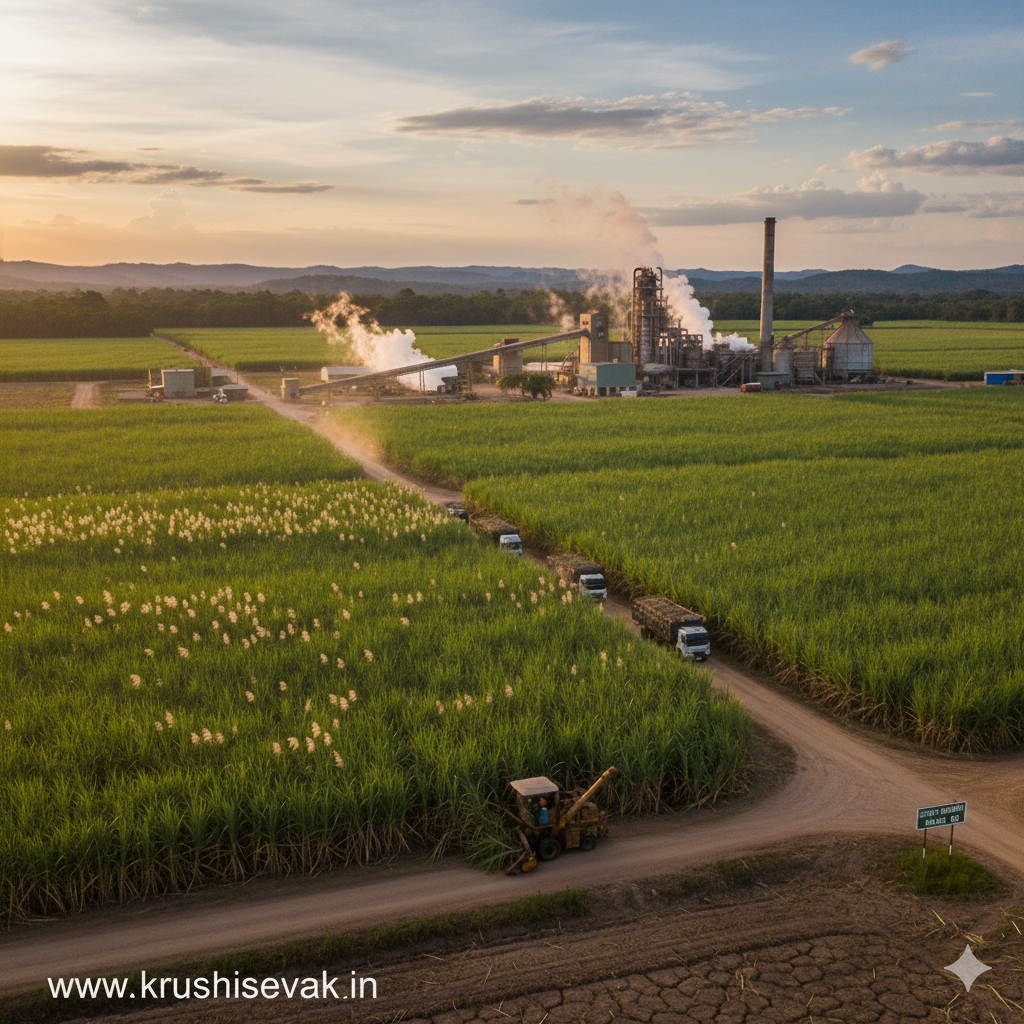

The Sugar Industry in India is generally a large-scale project that requires substantial investment, often operating under a cooperative structure. While individual farmers cannot typically start a full-fledged sugar mill, they can establish small units based on by-products or set up jaggery (gud) manufacturing units as profitable alternatives.
Here is the information on the structure and allied business opportunities related to sugar:
Significance of the Sugar Industry
The sugar industry is considered the backbone of the rural economy, particularly in sugarcane-producing regions:
- Income Assurance: It ensures a guaranteed market and a Fair and Remunerative Price (FRP) for sugarcane, securing the income of the cane farmers.
- Employment Generation: Sugar factories create significant direct and indirect employment opportunities in rural and semi-urban areas.
- Rural Development: Cooperative sugar mills have historically played a major role in the social and economic development of rural Maharashtra and other cane-growing states.
Allied Business Opportunities for Farmers
While running a sugar mill is capital-intensive, entrepreneurs and farmers can capitalize on the industry’s by-products:
1. Jaggery (Gud) and Jaggery Powder Manufacturing Unit
- This is an excellent, smaller-scale alternative to sugar manufacturing, requiring comparatively low investment.
- Organic jaggery (Gud) and jaggery powder command a high premium price and have growing demand both domestically and for export.
2. By-Product Based Industries
These opportunities use the waste and intermediate products from the main sugar manufacturing process:
- Co-generation (Power): Generating electricity from bagasse (the fibrous residue of sugarcane after juice extraction). This is a major secondary business for large mills.
- Ethanol Production: Manufacturing ethanol from molasses (a by-product of crystallization). Ethanol is used as a biofuel and is in high demand.
- Organic Manure (Press Mud Fertilizer): Converting the sludge and residue (press mud) from the mill into compost or organic fertilizer for sale.
3. Animal Feed Production
- Utilizing sugarcane leaves and other by-products to manufacture nutritious and low-cost cattle and poultry feed.