
Introduction
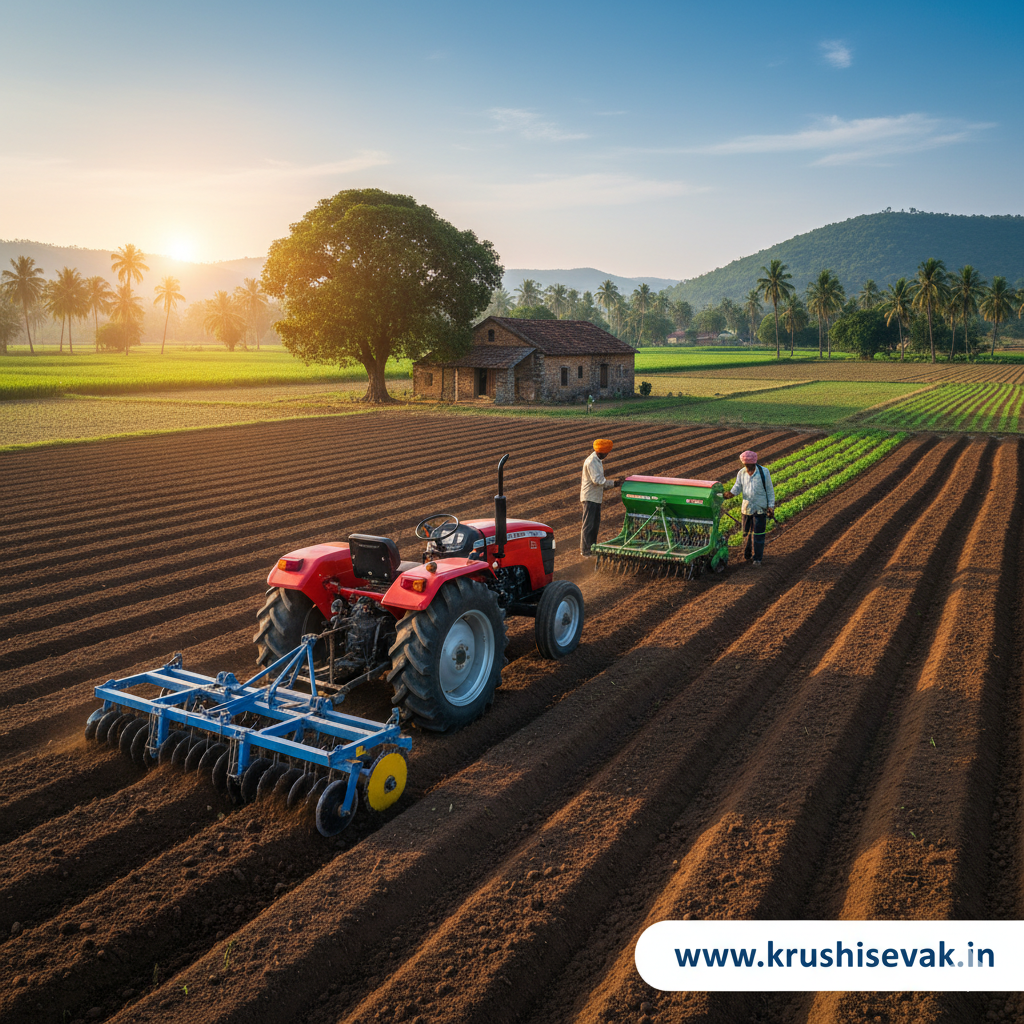
Indian agriculture is undergoing a massive structural transformation. For generations, farming across the nation relied heavily on manual labor, traditional tools, and draught animals. While these age-old methods sustained rural communities for centuries, they present severe limitations in the modern era. Today’s farmers face shrinking windows for seasonal field operations due to erratic climate patterns, acute shortages of agricultural labor during peak seasons, and escalating operational costs. To overcome these bottlenecks, modernizing farm operations through advanced machinery has transitioned from a progressive luxury to an absolute economic necessity.
Recognizing this critical shift, the Ministry of Agriculture and Farmers Welfare, in close coordination with various state governments, runs the Agricultural Mechanization Scheme, broadly recognized in regions like Maharashtra and other states as the Krushi Yantrikaran Yojana. Nationally aligned with the Sub-Mission on Agricultural Mechanization (SMAM), this flagship government program aims to make advanced farm machinery accessible, affordable, and inclusive. By integrating cutting-edge technology into smallholder farming systems, the scheme seeks to optimize inputs, reduce human drudgery, increase cropping intensity, and dramatically boost the net income of Indian farmers.
Core Vision and Strategic Objectives
The foundational roadmap of the Krushi Yantrikaran Yojana is built upon addressing the unique challenges of the Indian rural landscape, where a vast majority of growers operate small, fragmented landholdings. The scheme is designed around several central pillars:
1. Demarginalizing Small and Marginal Farmers
Historically, high-tech machinery like high-horsepower tractors, combine harvesters, and laser land levelers were only financially viable for large landholders. The primary objective of this scheme is to extend financial subsidies directly to small, marginal, women, and lower-income category (SC/ST) farmers. This financial cushion creates a level playing field, ensuring that structural resource limitations do not prevent smaller growers from accessing modern technology.
2. Expanding the Farm Power Availability Ratio
Agronomic research proves a direct correlation between farm power availability and overall crop productivity. The scheme aims to increase national farm power availability up to a target ratio of 2.5 kW/ha. Elevating this ratio ensures that critical field activities—such as deep tillage, seed bed preparation, sowing, and harvesting—are executed with scientific precision and optimal timing, directly shielding crops from late-season weather hazards.
3. Mitigating Economies of Scale via Custom Hiring Centers (CHCs)
Individual ownership of specialized, high-cost machinery is economically unviable for a farmer cultivating only two or three acres of land. To counter this, the scheme promotes the establishment of Custom Hiring Centers (CHCs) and Hi-Tech Machinery Hubs within rural clusters. Managed by rural entrepreneurs, cooperative societies, or Farmer Producer Organizations (FPOs), these centers act like commercial rental hubs. This allows smallholders to hire advanced machinery on a flexible, per-hour rental basis, completely bypassing the massive upfront capital investment of purchasing a machine.
4. Promotion of Eco-Friendly and Smart Farming Equipment
The scheme prioritizes clean energy alternatives and smart farming technologies. This includes specialized financial incentives for electric or battery-powered tools, solar-powered agricultural systems, and advanced precision components like Kisan Drones, which automate crop health monitoring and target-specific liquid chemical spraying.
Scope of Machinery and Equipment Covered
The Krushi Yantrikaran Yojana offers extensive financial coverage across a broad spectrum of farm equipment, meticulously catering to every phase of the crop production cycle.
Tillage and Land Preparation Equipment
To ensure robust soil health, proper aeration, and optimal moisture retention, the scheme provides subsidies on high-power machinery. This includes tractors (ranging from compact mini-tractors under 20 HP for orchards to heavy-duty variants over 35 HP), power tillers, rotavators, cultivators, and mouldboard plows. It also financially assists the procurement of laser land levelers, which optimize field topography to reduce irrigation water waste by up to 30%.
Sowing, Planting, and Resource Conservation Tools
To maximize seed germination and eliminate seed waste, the scheme emphasizes precision sowing machinery. Farmers can secure subsidies for multi-crop seed drills, pneumatic planters, paddy transplanters, and Zero-Tillage seed-cum-fertilizer drills. Zero-till machinery is highly favored as it allows immediate sowing after a harvest without prior plowing, conserving soil moisture, lowering fuel costs, and preventing soil erosion.
Plant Protection Equipment
To insulate crops against sudden pest invasions and disease outbreaks, the scheme covers modern spraying systems. This ranges from standard battery-operated knapsack sprayers and power-operated boom sprayers to advanced agricultural drone configurations, which ensure uniform foliage coverage while protecting operators from direct chemical exposure.
Harvesting and Threshing Systems
To combat sudden rains during harvest windows, the scheme subsidizes high-capacity harvesting equipment. This includes multi-crop combine harvesters, power reapers, maize shellers, and specialized threshers. Additionally, the scheme covers crop residue management tools like straw balers and happy seeders, incentivizing farmers to bale and sell crop residue commercially instead of burning stubble in open fields.
Detailed Subsidy Framework and Financial Incentives
The financial architecture of the Krushi Yantrikaran Yojana is designed to provide maximum economic relief to the most vulnerable farming communities. Rather than a flat, generalized rate, the subsidy matrix scales dynamically based on demographic categorization and regional topography.
Small, Marginal, SC, ST, and Women Farmers
Recognizing that these groups face the highest barriers to capital accumulation, the scheme offers its highest individual subsidy layer for them, extending up to 50% financial assistance on the basic cost of approved machinery and implements. This significantly lowers the barrier to entry, making tractor and heavy implement ownership a practical reality for small-scale and women-led farms.
General Category Farmers
For general category growers with larger landholdings, the scheme offers a baseline financial subsidy of up to 40% of the approved machinery cost.
Custom Hiring Centers (CHCs) and Farm Machinery Banks
For rural youths, entrepreneurs, Self-Help Groups (SHGs), Primary Agricultural Credit Societies (PACS), and FPOs looking to set up regional Custom Hiring Centers, the financial models shift toward group entrepreneurship. The government provides capital subsidies ranging from 40% up to 80% of the total project cost for establishing farm machinery banks, depending on the geographical location and specific crop requirements of the region.
Kisan Drone Subsidies
To accelerate the adoption of digital agriculture, the scheme provides exceptional funding patterns for drone technology:
- Agriculture Graduates / Rural Entrepreneurs: Eligible for up to 50% financial assistance (capped at a maximum of ₹5 Lakhs) for procuring individual agricultural drones.
- FPOs and Cooperative Institutions: Can receive up to 75% to 80% capital subsidy when establishing drone hubs within their institutional custom hiring frameworks.
Step-by-Step Online Application and Selection Procedure
To completely eliminate middleman exploitation, eliminate bureaucratic delays, and enforce absolute institutional accountability, the entire implementation framework of the Krushi Yantrikaran Yojana is digitized. In states like Maharashtra, the process is managed via the MahaDBT Farmer Portal, while other regions operate through their respective state SMAM tracking portals.
Step 1: Initial Registration on the Integrated Farmer Portal
The applicant must visit the official portal (e.g., MahaDBT) and click on “New Applicant Registration.” The portal mandates authentication via the user’s Aadhaar Card. The system sends a secure One-Time Password (OTP) to the Aadhaar-linked mobile number to pull verified biographical information directly from the UIDAI database. The farmer then sets up a unique Username and Password.
Step 2: Complete Profile Compilation
Before applying for any specific machinery component, the farmer must fill out their complete farm profile to 100% completeness. This requires entering exact personal details, permanent residential address, income parameters, and accurate caste certifications. Crucially, the farmer must upload their precise digital land records, including the 7/12 extract and 8A holding documents in Maharashtra, confirming operational land ownership or valid long-term lease control.
Step 3: Scheme Selection and Document Upload
Once the profile is active, the farmer navigates to the “Agriculture Mechanization” component within the portal. Here, they select the specific piece of equipment they intend to buy (e.g., a tractor, rotavator, or drone) and upload the necessary supporting files:
- Clear copy of Bank Passbook (Aadhaar-linked account for Direct Benefit Transfer).
- Valid Caste Certificate (if seeking the higher 50% subsidy band for SC/ST categories).
- Official, certified commercial quote or pricing quotation from an authorized, government-enlisted machinery dealer.
Step 4: The Automated Online Lottery System
Because the volume of valid applications typically exceeds the seasonal budgetary allocations of the state, selection is handled via a transparent, automated Online Lottery System or a strict First-Come, First-Served (FCFS) timestamp mechanism, depending on current annual state directives. The computerized system randomly selects beneficiaries from the pool, publishing official lottery selection lists and waiting lists directly on the portal.
Step 5: Prior Approval and Procurement
Farmers must keep one critical rule in mind: Never purchase the machinery before receiving the official government prior-approval letter.
Once the farmer’s name clears the lottery or FCFS cycle, the local agricultural department issues an official “Prior Approval Letter.” The farmer must then purchase the approved equipment from an authorized, government-emlisted dealer within a specified timeframe (typically 30 days). The transaction must be entirely cashless, conducted via verifiable banking channels (Cheque, NEFT, RTGS). Cash purchases are strictly prohibited.
Step 6: Physical Verification and Subsidy Disbursement
After purchasing the equipment, the farmer uploads the final commercial tax invoice and the machine’s unique chassis/serial number onto the portal.
A local agricultural officer conducts a physical spot-verification on the farm, geotagging the equipment and verifying its structural serial numbers against the invoice. Once verified, the subsidy amount is disbursed directly into the farmer’s bank account via the Direct Benefit Transfer (DBT) system.
”The Krushi Yantrikaran Yojana removes the financial burden from modern technology, turning heavy machinery from an elite luxury into a common tool for every smallholder farmer across India.”
Vital Guidelines and Eligibility Criteria for Applicants
To maintain financial discipline and ensure fair distribution, the agricultural department enforces several strict operating rules:
- One Subsidy per Category Rule: A farmer who receives a government subsidy for a specific machine component (e.g., a tractor) is generally ineligible to apply for a subsidy on that same machine category for the next 10 years. However, they remain fully eligible to apply for different complementary implements, such as a rotavator or a seed-drill, in subsequent seasons.
- Aadhaar-Linked Bank Accounts: The beneficiary’s bank account must be fully linked with their Aadhaar card to pass central banking validation checks. If the Aadhaar link fails, the DBT system will automatically block the subsidy transfer.
- Mandatory Land Records: The applicant must hold clear, unencumbered land records. For tenant or leasehold farmers, formal, notarized lease agreements along with the original landlord’s land documents must be uploaded to confirm valid cultivation control.
Strategic Benefits of Agricultural Mechanization
The widespread implementation of the Krushi Yantrikaran Yojana delivers long-term economic and environmental benefits to rural communities.
1. Massive Reductions in Input Time and Cost
Mechanization reduces the time required for major farm operations by 30% to 40%. Activities that previously required days of intensive manual labor can now be completed in a few hours. This rapid execution lowers labor costs and ensures that fields are sown or harvested at the ideal moment, minimizing the risk of crop damage from unexpected weather changes.
2. Enhanced Resource Use Efficiency
Modern implements ensure highly uniform distribution of inputs. Seed drills and precision planters place seeds at exact depths and uniform intervals, ensuring maximum germination rates. Similarly, precision fertilizer attachments place nutrients directly adjacent to the seed root zone, reducing fertilizer runoff, minimizing weed growth, and cutting down on overall fertilizer expenses.
3. Creation of Rural Entrepreneurship Hubs
By offering heavy subsidies for Custom Hiring Centers and Farm Machinery Banks, the scheme creates viable business opportunities for rural youth and agriculture graduates. These individuals can establish successful local businesses renting out machinery, which creates non-farm jobs in equipment maintenance, operation, and logistics right within rural villages.
Conclusion
The evolution of Indian agriculture relies heavily on replacing labor-intensive methods with precision technology. The Agricultural Mechanization Scheme (Krushi Yantrikaran Yojana) serves as a key driver of this modernization, making expensive machinery affordable for smallholder farmers.
By removing high upfront costs through a transparent, online DBT system, the scheme helps smaller growers access advanced tools like tractors, precision seed drills, and agricultural drones.
As climate uncertainty and rising labor costs continue to challenge traditional farming, adopting mechanization is no longer just a way to improve efficiency. It is a vital strategy for building a highly productive, sustainable, and truly profitable agricultural sector across the nation.