
Introduction
In the global effort to feed a growing population, farmers wage a continuous battle against nature’s competitors. Insects, fungal pathogens, destructive weeds, and bacterial blights present a constant threat to agricultural productivity. Left unchecked, these pests can decimate an entire season’s harvest within days, leading to catastrophic financial losses for farming families and jeopardizing regional food security. To protect their fields, modern agriculture relies heavily on pesticides—a powerful class of chemical and biological compounds engineered to suppress, repel, or destroy crop-damaging organisms.
However, the immense power of pesticides demands equal precision in their management. Pesticides are intentionally toxic substances; they are designed to eliminate living pests. When used with scientific care, they serve as an invaluable shield that preserves crop yields, enhances food quality, and lowers input waste.
Yet, when handled carelessly, applied through guesswork, or overused, these potent compounds transform into hazardous liabilities. Improper pesticide management can cause chemical crop burn, trigger pest resistance, destroy beneficial predatory insects, endanger the health of the spray operator, and leave toxic chemical residues in freshwater supplies and food networks.
For the modern grower, understanding pesticide science is no longer optional. It is a critical operational necessity. This comprehensive guide details the essential concepts of pesticide classification, selection, the universal principles of the 4R application framework, user safety protocols, and the integration of sustainable crop protection strategies.
Understanding the Pesticide Toolkit: Major Classifications
The term “pesticide” is an umbrella phrase that covers several distinct chemical and biological families. Each family is engineered to target a specific class of agricultural pest. Using the wrong product not only fails to solve the pest issue but also causes unnecessary financial waste and environmental stress.
1. Insecticides
Insecticides are formulated to control destructive insect populations that chew foliage, suck plant sap, or bore into stems. They are broadly categorized by their chemical origins and modes of action:
- Synthetic Insecticides: These include chemical classes such as organophosphates, pyrethroids, and neonicotinoids. They work primarily by disrupting the nervous systems of target insects, providing rapid, decisive control during major outbreaks.
- Botanical Insecticides: Derived directly from plants, these natural compounds include neem oil (azadirachtin) and pyrethrins extracted from chrysanthemum flowers. They degrade quickly in sunlight, leaving minimal environmental residue, making them ideal for sustainable and organic farming practices.
2. Fungicides
Fungal infections—such as downy mildew, powdery mildew, blasts, rots, and blights—thrive in warm, humid conditions and spread rapidly through microscopic airborne spores. Fungicides are designed to block or kill these fungal paths:
- Contact (Protectant) Fungicides: These products form a protective chemical barrier on the surface of the leaves. They must be applied before the fungal spore lands on the plant. If rain washes the contact chemical away, the protection disappears.
- Systemic (Curative) Fungicides: These advanced compounds are absorbed directly into the plant’s vascular system. Once inside, the chemical travels through the sap to protect new leaf growth and can actively halt an infection that has already taken root inside the plant tissue.
3. Herbicides (Weedicides)
Weeds compete aggressively with crops for vital resources like sunlight, water, and soil nutrients. Herbicides automate weed control, replacing labor-intensive manual weeding:
- Selective Herbicides: Engineered to kill specific weeds while leaving the main cash crop completely unharmed. For instance, certain selective herbicides target only broadleaf weeds in a field of narrow-leaf wheat.
- Non-Selective Herbicides: These compounds eliminate all green plant tissue they touch. They are typically used during initial land preparation to clear a field before planting or along borders and pathways.
4. Bio-pesticides
Representing the cutting edge of modern agricultural biotechnology, bio-pesticides utilize naturally occurring living organisms or biochemicals to suppress pests. The most famous example is Bacillus thuringiensis (Bt), a naturally occurring soil bacterium that produces proteins toxic specifically to caterpillars and beetle larvae while remaining completely safe for birds, mammals, and humans. Other bio-pesticides use beneficial fungi like Trichoderma to hunt down and consume root-rotting pathogens in the soil.
The Central Pillars of Proper Application: The 4R Framework
Because pesticides are highly concentrated, toxic formulations, applying them indiscriminately can cause severe crop damage and financial loss. To guide farmers toward safe, highly effective execution, agronomy scientists adapt the universal 4R Framework specifically for pesticide application.
1. Right Product: Accurate Diagnosis Before Selection
The foundational rule of crop protection is simple: Never spray without a definitive diagnosis. If a farmer notices yellowing, curling leaves, they might assume an insect is chewing the roots and rush to spray a chemical insecticide. However, if the underlying issue is actually a fungal root rot or a micronutrient deficiency, the insecticide will provide zero benefit, while wasting money and adding unnecessary chemicals to the soil.
Farmers should use modern agricultural apps, consult local extension officers, or utilize laboratory diagnostics to identify the exact pest or pathogen before purchasing a product.
2. Right Dose: Adhering Strictly to the Label Instructions
Many growers mistakenly believe that mixing a chemical slightly stronger than the recommended dose will provide faster, more effective pest control. This is a dangerous and costly misconception. Over-concentrated sprays cause immediate chemical phytotoxicity, burning the plant’s leaves, stunting its growth, and severely lowering the final yield.
Conversely, applying an under-strength dose is equally harmful; it fails to eliminate the pest population and exposes the surviving insects to low chemical levels, which rapidly accelerates the development of genetic pesticide resistance. Farmers must always read the official manufacturer product label and use precise measuring cups to mix the exact recommended dose per gallon of water.
3. Right Time: Aligning Sprays with Weather and Life Cycles
Pesticide efficacy depends heavily on environmental conditions and timing:
- Wind Conditions: Never spray during high winds. Wind causes chemical drift, blowing the toxic mist onto neighboring fields, residential areas, or livestock pastures, which can trigger severe legal and ecological liabilities.
- Temperature and Sunlight: Avoid spraying during the hot, intense midday sun. High temperatures cause liquid sprays to evaporate rapidly before the plant can absorb them, and the combination of intense sunlight and chemicals can burn leaf tissues. The optimal times for application are early morning or late evening.
- Pollinator Protection: Spraying in the late evening is especially critical because beneficial pollinators, like honeybees, are inactive during this time. This minimizes their exposure to the chemical treatments.
- Life-Stage Targeting: Pesticides should target the most vulnerable stage of a pest’s lifecycle. For example, insecticides are highly effective against young, newly hatched insect larvae but have little impact on protective pest eggs or cocoons.
4. Right Method: Calibrating Equipment for Even Coverage
The physical delivery of the spray dictates how well it works. Farmers must regularly inspect, clean, and calibrate their knapsack sprayers, tractor-mounted booms, or agricultural drones.
Using worn-out or clogged nozzles results in uneven coverage, leaving some parts of the crop unprotected while flooding other patches with toxic levels of chemical pooling.
Furthermore, different targets require specific nozzle types: hollow-cone nozzles create a fine mist ideal for thoroughly coating dense foliage with fungicides, while flat-fan nozzles deliver larger droplets designed to direct herbicides straight toward the soil surface, minimizing wind drift.
”Pesticides are sharp, powerful tools in a farmer’s toolkit. Used with scientific precision, they protect the harvest; used carelessly, they compromise the integrity of the entire farm ecosystem.”
Critical Safety Protocols for Spray Operators
Human health must always remain the highest priority during pesticide operations. Because chemical pesticides can enter the human body easily through skin absorption, accidental inhalation, or oral ingestion, operators must implement strict personal protective measures.
1. Mandatory Personal Protective Equipment (PPE)
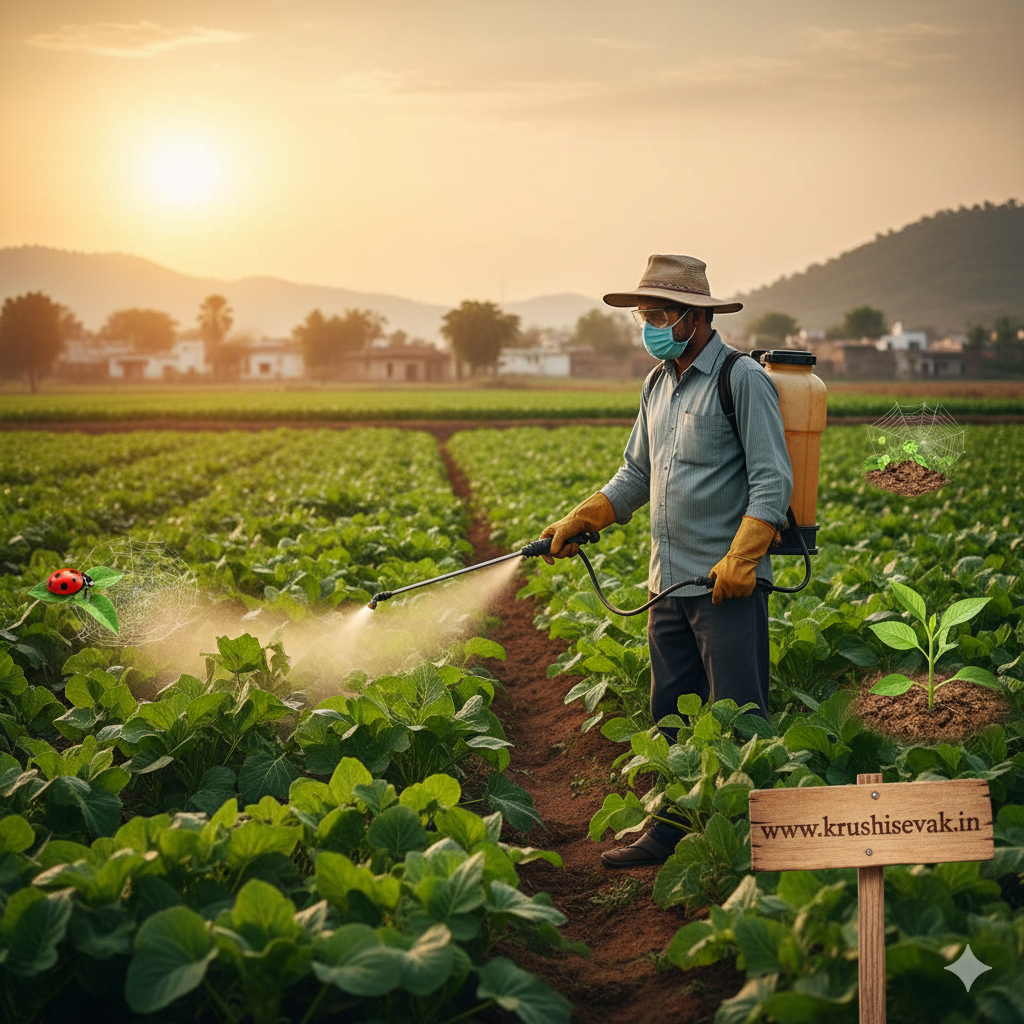
A spray operator should never enter a field in standard cotton clothing, sandals, or bare feet. Standard cotton fabric acts like a sponge, absorbing chemical mist and holding it directly against the skin for hours. A complete, safe PPE kit includes:
- Chemical-Resistant Overalls or Apron: Made from non-porous materials like PVC or heavy-duty rubber to block liquid penetration.
- Nitrile or Neoprene Gloves: Long gloves worn over the sleeves to prevent liquid from running down into the gloves when spraying upward into fruit canopies.
- Rubber Boots: Tall boots worn under the trousers to prevent chemical drips from pooling inside the footwear.
- Respirator Mask: Equipped with active charcoal filters designed specifically to capture toxic chemical vapors and prevent them from entering the lungs. Simple cloth masks offer zero protection against chemical gases.
- Safety Goggles: Enclosed eyewear to shield the eyes from sudden wind shifts or accidental chemical splashes during mixing.
2. Safe Mixing and Handling Practices
The mixing phase is the most dangerous moment of crop protection because the operator handles the chemical in its purest, most concentrated form.
Mixing must always occur outdoors in a well-ventilated area, far away from domestic water wells, livestock troughs, or family kitchens. Operators must use a dedicated wooden or plastic stick to stir the chemical solution; they should never use their bare hands or forearms to mix the liquid.
If a concentrate accidentally splashes onto the skin, the operator must immediately stop what they are doing and flush the area with large amounts of clean, running water and soap.
3. Post-Application Hygiene and Decontamination
Once spraying is complete, the operator must immediately remove their PPE items and wash them thoroughly, separate from the family’s everyday laundry.
The spray operator must take a thorough shower using plenty of soap and clean water before eating, drinking, or interacting with family members.
Crucially, never smoke, chew tobacco, or eat food while handling or spraying pesticides, as this creates a direct pathway for hand-to-mouth chemical ingestion.
Managing Toxicity: Color-Coded Labels and Chemical Storage
To help farmers understand the immediate dangers of different chemicals, regulatory bodies use a standardized, color-coded toxicity triangle on all pesticide packaging. Recognizing these colors allows farmers to implement appropriate storage and handling safeguards.
- Red Label (Extremely Toxic): These are highly dangerous chemicals. Even a tiny dose from accidental ingestion or skin contact can cause severe or fatal poisoning. These products require maximum safety precautions and should only be handled when absolutely necessary.
- Yellow Label (Highly Toxic): These chemicals carry a high risk of injury or poisoning. They require strict adherence to PPE protocols and careful handling during mixing and application.
- Blue Label (Moderately Toxic): These products present a moderate hazard. While less dangerous than red or yellow-labeled chemicals, they can still cause severe skin, eye, or respiratory irritation if handled carelessly.
- Green Label (Slightly Toxic / Safe): These are low-hazard products, often consisting of bio-pesticides or natural botanical extracts. While they are significantly safer for human health and the environment, operators should still practice standard hygienic care when applying them.
Responsible Storage and Disposal Guidelines
Pesticides must be stored like prescription medicines: completely locked away out of reach of children, livestock, and unauthorized individuals. They should be kept in a dedicated, well-ventilated metal cabinet or outdoor shed, away from animal feed, human food, and seeds.
Once a pesticide container is empty, it must never be washed out and reused to store domestic water or fuel. Empty containers must undergo a strict triple-rinse process: filled one-quarter full with clean water, capped, shaken thoroughly, and the rinse water poured safely back into the spray tank.
Finally, the empty plastic container must be punctured or crushed so it can never be reused, and then disposed of through authorized national agricultural recycling programs or buried safely away from local water resources.
The Path Forward: Integrated Pest Management (IPM)
Relying exclusively on chemical pesticides creates a stressful, expensive dependency cycle. Over time, heavy chemical use kills off beneficial predatory insects—like ladybugs, lacewings, and spiders—that naturally keep pest populations in check. Without these natural predators, pest populations can explode, forcing the farmer to purchase larger amounts of increasingly expensive chemicals.
The solution to breaking this cycle is Integrated Pest Management (IPM). IPM is a holistic approach that treats chemical pesticides as a targeted, final tool, rather than the primary method of defense. An effective IPM program combines multiple protective steps:
- Cultural Practices: Selecting certified pest-resistant seed varieties, practicing systematic crop rotation to disrupt pest lifecycles, and keeping fields clear of infected plant debris.
- Mechanical Controls: Installing physical insect netting over high-value crops, deploying yellow sticky traps to catch flying insects, and using pheromone traps to disrupt insect mating cycles and track pest levels across the field.
- Biological Controls: Releasing beneficial predatory insects or spraying organic bio-pesticides early in the season to manage pest populations naturally.
- Chemical Integration: Chemical pesticides are used only when pest numbers cross a verified Economic Injury Level (EIL)—the point where the cost of pest damage exceeds the financial cost of spraying. When a chemical spray becomes necessary, the farmer selects a targeted, green-labeled, or narrow-spectrum product to eliminate the specific pest while leaving the rest of the beneficial ecosystem completely unharmed.
Conclusion
Pesticides remain a vital and highly effective tool for securing global food production and protecting farmers from devastating crop losses. Their diverse formulations provide immediate, reliable solutions to counter intense insect invasions, creeping fungal blights, and aggressive weed competition.
However, the long-term success of crop protection relies entirely on management precision. Pesticides must never be applied through careless, unmeasured guesswork.
By committing to the core principles of the 4R framework, adopting strict operator safety and PPE guidelines, understanding package toxicity labels, and blending chemicals with the wider practices of Integrated Pest Management, the farming community can safely maximize the benefits of modern crop protection. This balanced approach protects both human health and the environment, ensuring a highly productive, sustainable, and profitable future for global agriculture.