
Introduction: The Changing Paradigm of Smallholder Agriculture
For centuries, agriculture has been synonymous with backbreaking human labor. From the early morning hours until sunset, small and marginal farmers have historically relied on manual tools like hoes, sickles, and animal-drawn plows to cultivate their lands. While large-scale tractors and massive combine harvesters transformed farming in expansive western territories, these heavy machines often remain physically and financially unviable for the average smallholder across developing agrarian economies. Small plots, irregular field boundaries, and tight terrace farming layouts make full-scale mechanization nearly impossible.
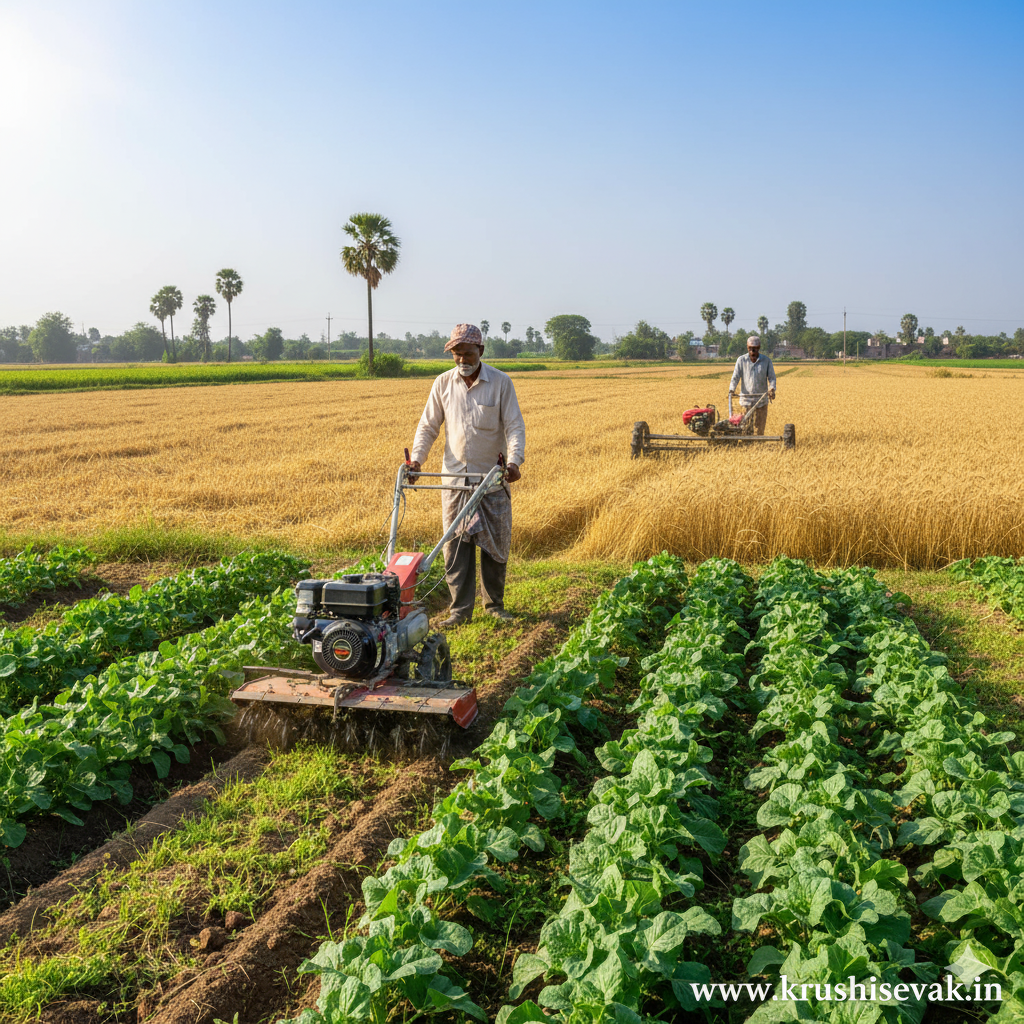
However, a quiet revolution is taking place on small farms. The advent of small, automated, walk-behind engineering wonders—specifically Power Weeders and Power Reapers—is bridging the gap between traditional drudgery and large-scale industrialization. These compact, agile, and cost-effective machines are democratizing farm mechanization. By substituting manual, slow labor with localized engine power, they allow a single operator to complete tasks that once required an entire crew of seasonal workers.
This transformation does not just save time; it reshapes the economic reality of small farms. By understanding the multi-tier benefits of power weeders and reapers, along with mastering their regular maintenance and repair, modern farmers can significantly reduce operational costs, eliminate dependency on scarce seasonal labor, and maximize total crop output.
The Manual Labor Crisis and the Need for Small Automation
Modern agriculture faces a critical challenge: a severe shortage of dependable, skilled agricultural labor. Rapid urbanization, shifting youth demographics, and the availability of less physically demanding service-sector jobs have drawn traditional labor pools away from rural villages. During peak agricultural windows—such as early-season weeding and end-of-season harvesting—farmers often find themselves scrambling to source workers.
When weeding or harvesting is delayed due to labor scarcity, the financial consequences can be severe:
- The Weeding Window: If weeds are not uprooted within the first 20 to 30 days of crop emergence, they aggressively outcompete young crops for sunlight, soil moisture, and essential fertilizers, slashing potential crop yields by up to 40% to 50%.
- The Harvesting Window: If a mature crop like paddy or wheat stays in the field past its optimal ripening point due to missing harvesting crews, it faces extreme risks from unexpected seasonal rain, heavy winds, pest attacks, or over-ripening, which causes grains to shatter and drop directly into the soil.
Small automated machines address these structural bottlenecks directly. By reducing reliance on manual work, they put control back into the hands of the individual farmer, ensuring tasks are completed precisely when the crop needs them.
The Power Weeder: Revolutionizing Weed Management and Soil Health
A power weeder is a compact, walk-behind agricultural machine equipped with an internal combustion engine (either petrol or diesel) that drives a set of rotating tines or blades. Designed primarily to maneuver through narrow rows of crops, this versatile machine replaces the manual spade (Khurpi) or hand-hoeing methods.
Core Agricultural Uses of a Power Weeder
- Weed Uprooting and Control: The primary mechanism involves rotating steel tines that chop, uproot, and bury unwanted weeds, cutting off their access to nutrients.
- Soil Aeration: As the tines slice through the earth, they break up the hard, compacted top layer of soil. This increases soil porosity, allowing oxygen to reach root zones and enhancing the soil’s water infiltration capacity.
- Fertilizer and Compost Incorporation: When farmers spread top-dress chemical fertilizers or organic manure over fields, a quick pass with a power weeder thoroughly blends the nutrients deep into the root zone instead of letting them sit on the surface.
- Inter-Crop Cultivation: Because these units feature adjustable tilling widths, operators can navigate them safely between rows of wide-spaced crops like sugarcane, cotton, vegetables, and fruit orchards without damaging the main plants.
Labor-Saving and Economic Benefits
- Drastic Labor Reductions: Statistics from across the agricultural sector demonstrate that using a power weeder can cut total labor costs by up to 60% compared to traditional hand-hoeing. A task that once required a team of 10 workers over two full days can easily be managed by a single operator in just a few hours.
- Substantial Time Savings: Manual weeding is an incredibly slow process. A self-propelled power weeder covers large patches of land rapidly, allowing farmers to utilize their saved time for higher-value activities like market planning or agro-processing.
- Enhanced Crop Performance: Because mechanical weeding aerates the soil while removing competitors, crops exhibit stronger root architectures, better nutrient absorption, and ultimately higher harvest yields.
The Power Reaper: Transforming the Mechanics of Harvesting
Once a crop reaches maturity, the clock begins to tick against weather risks. The Power Reaper is an automated harvesting machine designed to cut standing field crops—such as paddy, wheat, barley, soybean, and pulses—cleanly at ground level, laying them down in neat, organized rows called windrows.
Core Agricultural Uses of a Power Reaper
- Mechanized Low-Ground Cutting: Equipped with a vertical conveyor or a reciprocating cutter bar, the machine slices through mature stalks uniformly, typically 2 to 5 centimeters above the soil level.
- Organized Windrow Placement: Unlike a combine harvester that threshes grain on the go and discards straw, a power reaper leaves the plant stalks intact and aligns them systematically to one side. This is vital for smallholders who rely on intact straw as valuable fodder for their livestock.
- Multi-Crop Versatility: Modern power reapers feature adjustable cutting speeds and blade alignments, making them equally adept at handling fragile oilseeds like sesame or thick-grain stalks like wheat and ragi.
Labor-Saving and Economic Benefits
- Mitigation of Seasonal Labor Scarcity: Harvesting seasons create immense pressure on local labor markets, causing daily wages to spike. A single operator running a 5 to 7 HP power reaper can harvest roughly 0.5 acres of dense crop per hour, working completely independently of external labor dynamics.
- Minimization of Grain Shattering and Waste: Manual harvesting with standard hand sickles involves uneven pulling and rough handling, which shakes mature panicles and causes grains to drop and go to waste. A power reaper uses high-speed, precise cutting actions that significantly reduce grain loss.
- Weather-Proof Security: If weather forecasts predict unseasonal storms or torrential downpours, a farmer can use a power reaper to rapidly clear entire fields over a single weekend, protecting and securing their year-long financial investment.
Technical Factors and Synergy on Small Farms
When a smallholder integrates both a power weeder and a power reaper into their production lifecycle, the operational synergy multiplies. The farm transitions into a highly efficient, mechanized workflow.
The choice of engine size—typically ranging from 4-stroke 5 HP petrol models for light, sandy soils to heavy-duty 7 HP diesel setups for heavy clay or wet paddy conditions—allows farmers to customize their machinery to their specific environment. Because these machines are compact, they easily fit through narrow field gates, can turn on a dime at boundary lines, and are light enough to avoid causing the long-term soil compaction associated with heavy four-wheel tractors.
Comprehensive Maintenance and Repair Guide
While these automated machines are built to withstand demanding field conditions, their long-term reliability depends directly on regular maintenance. Because an unexpected breakdown during peak weeding or harvesting seasons can cause costly delays, keeping a proactive inspection and repair schedule is essential.
Daily and Weekly Maintenance Protocols
- Post-Operation Cleaning: After every use, turn off the engine and clear away accumulated mud, wet crop residues, and wrapped weeds from the rotating tines or cutter bars. Left untreated, wet organic debris traps moisture, leading to rust, dulling blades, and increased engine strain during the next startup.
- Engine Oil Audits: Engine oil is the lifeblood of small automated machinery. Check the oil level using the dipstick before every single operation. For a brand-new machine, execute the initial oil flush and change after the first 20 to 25 hours of break-in operation. Subsequently, refresh the engine oil every 50 working hours using the manufacturer-recommended grade (typically 10W-30 or 20W-40).
- Air Filter Servicing: Agricultural environments are naturally dusty. Inspect the air filter assembly weekly or every 10 operating hours. If your machine features a foam air filter, wash it gently using mild soap and water, let it dry completely, and add a few drops of clean engine oil before reassembling it. Replace paper filter elements immediately if they appear clogged or damaged.
- Fastener Inspections: The intense vibrations generated by tilling hard soil or driving cutter bars can naturally loosen nuts, bolts, and structural pins over time. Spend five minutes before and after each session checking and tightening all primary fasteners to prevent components from detaching during operation.
- Blade Sharpening and Upkeep: Inspect the weeding tines and reaper cutter blades every 30 to 40 hours for signs of chips, bends, or dullness. Use a hand file or a mechanical grinder to sharpen the edges, maintaining the original cutting angle. If a blade is severely cracked or worn down, replace it immediately to maintain system balance and protect the drivetrain.
Troubleshooting Common Mechanical Failures and Repairs
Issue 1: The Engine Refuses to Start
- Potential Cause: Stale or contaminated fuel, a fouled spark plug, or a clogged carburetor line.
- Repair Action: First, ensure the fuel valve is turned on and there is fresh fuel in the tank. If the machine has been sitting idle for months, drain the old, evaporated fuel from the carburetor bowl. Remove the spark plug using a plug wrench; if the tip is black with carbon deposits or wet with oil, clean it thoroughly with a wire brush and adjust the gap. Replace the spark plug entirely if the porcelain insulator is cracked.
Issue 2: Excessive Engine Smoking
- Potential Cause: Too much engine oil, low-quality fuel blends, or worn-out piston rings.
- Repair Action: Verify that the oil level does not exceed the maximum mark on the dipstick. If you are operating a 2-stroke engine variation, ensure the petrol-to-oil mixing ratio precisely matches manufacturer specifications. If thick blue smoke persists despite correct oil levels, the internal piston rings may require professional mechanical replacement.
Issue 3: The Machine Vibrates Erratically During Operation
- Potential Cause: An imbalanced or broken tine assembly, a loose engine mounting deck, or debris wedged deep inside the axle.
- Repair Action: Shut down the engine immediately and disconnect the spark plug wire for safety. Inspect the rotating axles under the machine. Look for bent tines, missing hitch pins, or wrapped wire and roots. Tighten any loose engine mounting base bolts using a matching wrench set.
Issue 4: The Reaper Cuts Unevenly or Clogs Frequently
- Potential Cause: Slack conveyor belt tension or dull, misaligned cutter bar teeth.
- Repair Action: Check the drive belt tension components; adjust the idler pulley configuration if the belts are slipping under load. Inspect the alignment of the reciprocating cutter teeth. If individual teeth are bent out of alignment, use a soft mallet to gently tap them back into a uniform horizontal plane.
Off-Season Storage Protocols
Because weeders and reapers are seasonal tools, they often sit idle for months at a time. Proper storage prevents component degradation and ensures a smooth startup next season.
- Drain the Fuel System: Untreated fuel left inside an idle engine degrades, forming a gummy residue that clogs the delicate jets of the carburetor. Either add a dedicated fuel stabilizer to a full tank or drain the fuel tank and carburetor bowl completely before storage.
- Lubricate Core Assemblies: Apply a generous layer of multi-purpose grease or specialized machine oil to all exposed moving linkages, throttle cables, joints, bearings, and cutting edges to shield them from ambient moisture and rust.
- Elevate the Machine: Store the automated unit indoors in a dry, clean, well-ventilated space out of direct sunlight. Place the unit on wooden planks or solid blocks to keep the rubber tires off damp ground, preventing flat-spotting and dry rot.
Conclusion: Balancing Efficiency and Maintenance for Long-Term Success
Small-scale farm automation through power weeders and power reapers provides a practical solution to the modern agricultural labor crisis. These compact machines turn demanding, time-sensitive chores into manageable, single-person tasks. They allow smallholders to lower production costs, minimize harvest losses, and improve soil health, helping them achieve greater financial independence.
However, moving away from manual labor requires a shift in mindset toward proper machine care. These tools are investments that require consistent maintenance. By committing to regular oil changes, keeping blades sharp, and performing basic field repairs, farmers can ensure their automated equipment runs reliably for years to come. Ultimately, blending regular mechanical maintenance with smart field use allows modern smallholders to build a more sustainable, profitable, and resilient farming operation.