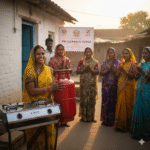

Secure financial planning for a child’s future is one of the most critical responsibilities a parent faces. In India, where the costs of higher education and wedding milestones continue to rise steadily, having a dedicated, inflation-beating, and completely secure savings plan is indispensable. To address this exact need, the Government of India introduced the Sukanya Samriddhi Yojana (SSY) as part of its “Beti Bachao, Beti Padhao” campaign.
As a government-backed small savings initiative, SSY is custom-built to help parents accumulate a substantial corpus for their female children. Offering unparalleled safety, an industry-leading fixed-interest rate, and maximum tax benefits, it stands out as one of the most reliable investment instruments available.
This comprehensive guide covers everything you need to know about the Sukanya Samriddhi Yojana application process, the exhaustive list of required documents, eligibility rules, operational guidelines, and how you can maximize this scheme to build a secure financial foundation for your daughter.
Key Highlights and Benefits of SSY
Before diving into the complex application procedures and documentation, it is essential to understand why millions of Indian households trust the Sukanya Samriddhi Yojana.
Industry-Leading Guaranteed Interest Rates
The interest rate for the Sukanya Samriddhi Yojana is reviewed and announced on a quarterly basis by the Ministry of Finance. For the current financial cycle, the SSY interest rate is fixed at 8.2% per annum, compounded annually. This rate is significantly higher than what is offered by standard bank fixed deposits, recurring deposits, or even other long-term government savings schemes like the Public Provident Fund (PPF), which hovers around 7.1%. Because it features annual compounding, your returns grow exponentially over the long 21-year horizon.
The Coveted EEE Tax Status
One of the most compelling advantages of investing in an SSY account is its Exempt-Exempt-Exempt (EEE) tax classification under the Income Tax Act. This means you save money at three distinct stages:
- The Principal Investment: The contributions you make toward the account every year are fully eligible for a tax deduction under Section 80C, up to a maximum limit of ₹1,50,000 per financial year.
- The Earned Interest: The substantial interest generated and credited to the account annually is entirely free from income tax liability.
- The Maturity Amount: When the account matures after 21 years or is closed upon your daughter’s marriage after she turns 18, the final lump-sum corpus paid out is completely tax-free.
Absolute Safety with Sovereign Guarantee
Since SSY is a direct initiative of the Central Government, your money is backed by a sovereign guarantee. Unlike equity mutual funds or market-linked child insurance plans, there is absolutely zero risk of capital loss or default. Your investments and the accumulated interest are entirely safe, irrespective of macroeconomic market fluctuations.
Core Eligibility Criteria for Opening an SSY Account
Before gathering your documentation, you must carefully audit your eligibility status. The government enforces strict boundaries regarding who can open an account, the age of the beneficiary, and the number of accounts allowed per household.
1. The Beneficiary (Girl Child)
The primary account holder is always the girl child. To qualify for enrollment, the girl child must be an Indian resident from the day the account is opened until its final maturity. Non-Resident Indians (NRIs) and Overseas Citizens of India (OCI) are not eligible to open a fresh SSY account. Furthermore, the girl child must be under 10 years of age at the time of account opening. An account can be opened right from the day she is born up until the precise day of her 10th birthday.
2. The Depositor (Parent or Legal Guardian)
A minor cannot open or legally operate the account independently. The application must be initiated and managed by a natural parent or an officially appointed legal guardian. The parent or guardian is responsible for completing the Know Your Customer (KYC) formalities and executing all future financial deposits until the girl child reaches adulthood.
3. Account Multiplication Limitations
To ensure the equitable distribution of welfare benefits, the government permits only one account per individual girl child. A single family can open a maximum of two SSY accounts for two separate daughters.
However, a critical exception is extended to families experiencing multiple births. If a parent is blessed with twin girls after the birth of their first daughter, or if the very first birth results in triplets who are all female, a third SSY account can be legally opened. This exception requires valid medical documentation and certification from competent authority boards.
Complete List of Required Documents
To eliminate any chance of application rejection or prolonged verification delays at the post office or bank, you must prepare an exhaustive dossier of your papers. Ensure that you carry the original copies along with at least two sets of self-attested photocopies of each document listed below.
1. Primary Documentation for the Girl Child
- Official Birth Certificate: This is the absolute core document for the SSY process. The birth certificate issued by the municipal corporation, grammar panchayat, or designated hospital authorities serves as indisputable proof of the child’s age, date of birth, and identity. The spelling of the child’s name must precisely match across all related documents.
- Recent Passport-Size Photographs: You will need to provide multiple colored, recent passport-size photographs of the girl child. The photos should be clear, taken against a light background, and accurately represent her current appearance.
2. Mandatory Documentation for the Parent or Legal Guardian
- Identity Proof (KYC): To verify the legal existence and identity of the parent or guardian opening the joint account, you must present a government-issued photo identification. Highly preferred documents include an Aadhaar Card, a Permanent Account Number (PAN) Card, a valid Indian Passport, a Voter Identification Card, or a Driving License. Using an Aadhaar card is highly recommended as it streamlines the background cross-checks.
- Address Proof (Residence Verification): You must prove your active residential status to map your branch jurisdiction. Accepted proofs include an Aadhaar Card, an updated Passport, recent utility bills (such as electricity, water, or piped gas bills not older than three months), a registered rent or lease agreement, or a current passbook from a scheduled commercial bank displaying your complete address.
- Recent Passport-Size Photographs: Just like the child, the applying parent or legal guardian must submit recent passport-size color photographs to be affixed to the core application ledger and the issued physical passbook.
3. Supplementary and Special-Case Documents
- Medical Certificate for Twins or Triplets: If you are applying for a third SSY account due to multiple births, you must submit an official medical certificate from the hospital or competent medical board confirming the sequential order of births and verifying the twin/triplet status.
- Legal Guardianship Certificate: In cases where the account is not being opened by the biological father or mother, the applicant must produce a valid court order or an official legal guardianship decree proving their legal right to manage the minor child’s financial affairs.
- Initial Deposit Capital: While not a document in the traditional sense, you must bring the initial funds to activate the account. This can be paid via cash, a personal cheque, or a demand draft. The minimum activation amount is ₹250.
Step-by-Step SSY Application Process
Currently, the Government of India has not authorized a completely end-to-end online account opening mechanism for the Sukanya Samriddhi Yojana due to strict minor verification protocols. Whether you choose a local post office or an authorized public/private commercial bank, the core setup must involve physical documentation submission.
Here is the exact step-by-step process you need to follow to successfully activate an account:
Step 1: Choose Your Financial Institution
You must decide where you want to maintain the account. The scheme is uniform across the country, meaning the interest rates, tenure, and rules remain identical whether you choose the Indian Post Office or an authorized commercial bank (such as State Bank of India, HDFC Bank, ICICI Bank, Axis Bank, Punjab National Bank, or Union Bank of India). It is highly recommended to choose a bank branch where you already hold an active savings account, as this makes setting up future monthly electronic auto-debits incredibly seamless.
Step 2: Procure the Official Application Form (Form SSA-1)
Visit the chosen bank or post office branch and request the Sukanya Samriddhi Account Opening Form, formally known as Form SSA-1. Alternatively, you can save time by visiting the official website of the Indian Post Office or your preferred commercial bank to download the PDF version of Form SSA-1. Print out a clean copy on a standard page.
Step 3: Meticulously Populate the Application Form
Fill out the application form using blue or black ink block letters. You must carefully enter the following critical fields:
- Primary Account Holder Details: Write the full legal name of your daughter exactly as it appears on her official birth certificate. Enter her precise date of birth, place of birth, and gender.
- Joint Holder (Guardian) Details: Input your legal name, permanent address, current communication address, PAN card number, and Aadhaar card number.
- Financial Details: Specify the exact initial deposit amount you are contributing to activate the account. Write the amount out in both numeric figures and words.
- Method of Payment: Indicate whether you are depositing the opening cash directly or attaching a bank cheque/demand draft. If using a cheque, clearly write the cheque number, bank branch, and date on the form.
Step 4: Affix Photographs and Signatures
Carefully glue the passport-size photographs of your daughter and yourself in the designated layout boxes. Do not staple them. Read through the declaration text thoroughly and append your legal signature or thumb impression at the bottom of the form to consent to the terms of the scheme.
Step 5: Submit the Dossier for Verification
Walk down to the post office or bank branch with your fully populated Form SSA-1, your initial funding instrument, and the complete folder of self-attested supporting documents. Hand over the package to the designated customer relationship manager or extension officer. Present your original documents (Aadhaar, PAN, Birth Certificate) when requested so the officer can cross-verify your photocopies on the spot.
Step 6: Account Activation and Passbook Issuance
Once the verification officer is satisfied with the authenticity of your documents, they will process the application and accept your initial deposit. The system will generate a unique Sukanya Samriddhi Yojana account number linked to your guardian credentials.
The branch will then issue a dedicated, physical SSY Passbook. This passbook is an important document; it will display your daughter’s name, date of birth, account activation date, total deposited amounts, and tracking logs for all future interest credits. Ensure that the printed details on the passbook are error-free before you leave the counter.
Essential Account Rules, Maintenance, and Limits
Once your daughter’s account is successfully running, you must remain fully compliant with the ongoing structural rules to keep the account active and avoid unnecessary penalties.
Annual Contribution Thresholds
The Sukanya Samriddhi Yojana operates on a flexible contribution model designed to accommodate families of all income levels:
- Minimum Limit: You must deposit a minimum of ₹250 into the account during every single financial year (from April 1 to March 31).
- Maximum Limit: The maximum permissible investment cap is capped strictly at ₹1,50,000 per financial year. Any excess money deposited beyond this threshold will not earn any interest and can be withdrawn by the parent without any tax implications.
- Mode of Transfer: Deposits can be executed via physical cash, checks, demand drafts, or internet banking solutions like National Electronic Funds Transfer (NEFT), Real-Time Gross Settlement (RTGS), and Unified Payments Interface (UPI) applications.
Understanding the Tenure Layout
It is important to differentiate between the deposit tenure and the account maturity tenure:
- Deposit Horizon (15 Years): You are only required to make active deposits into the account for a duration of 15 years from the initial date of account opening. For example, if you open an account when your daughter is 2 years old, you will make annual deposits until she reaches 17 years of age.
- Maturity Horizon (21 Years): After your 15-year deposit window closes, you do not have to put any more money into the account. However, the account stays locked and continues to aggressively earn compound interest for an additional 6 years, reaching full maturity precisely 21 years from the original account opening date.
Consequences of Default and Account Revival Process
If you fail to deposit the minimum mandatory amount of ₹250 within a financial year, the account will be flagged as an “Account under Default.” A defaulted account continues to earn interest at the notified scheme rates, but you lose the ability to make seamless regular withdrawals or enjoy full benefits until it is normalized.
To successfully revive an irregular or defaulted account, you must visit your parent bank or post office branch before the completion of the 15-year deposit term. You will be required to pay a flat penalty fee of ₹50 for each year of default, along with the minimum missed contribution of ₹250 for every individual lapsed year. Once paid, the account status is instantly restored to active.
Rules for Partial Withdrawal and Premature Closure
Because the primary objective of this government asset class is to fund major life goals like higher education and marriage, the funds cannot be casually withdrawn whenever you face minor cash crunches. The lock-in rules are intentionally stringent.
1. Partial Withdrawal for Higher Education
When your daughter reaches critical educational milestones, you can tap into the accumulated corpus. Partial withdrawal is permitted only after the girl child turns 18 years of age or has successfully completed the 10th standard, whichever occurs earlier.
The maximum quantum of money you can pull out is restricted to 50% of the total balance available at the end of the preceding financial year. To execute this withdrawal, you must submit formal written proof of admission, a fee structure clearance slip, or an admission offer letter from a recognized university, college, or educational institution. The funds must be directly mapped to educational expenses.
2. Full Account Closure Upon Marriage
If your daughter chooses to get married after attaining the legal adult age of 18 years, the SSY account can be closed prematurely to fund the wedding expenses. You will need to file a dedicated application along with a signed affidavit and verified age proofs confirming that she is not a minor at the time of marriage. The application must be submitted at least one month before the wedding date or up to three months after the formal wedding ceremony.
3. Exceptional Premature Closure Situations
The government allows complete premature closure of the account and full withdrawal of the corpus before the 21-year maturity timeline without interest penalties under specific, extreme humanitarian conditions:
- Unfortunate Demise: In the deeply unfortunate event of the untimely death of the primary account holder (the girl child), the account is closed immediately. The entire accumulated balance along with the interest up to the previous month is handed over directly to the registered parent or guardian upon the submission of a valid death certificate. Similarly, if the earning guardian passes away and the family can no longer sustain basic livelihood deposits, compassionate early closure can be requested.
- Medical and Life-Threatening Crises: If the girl child is diagnosed with terminal or life-threatening medical illnesses that demand capital-intensive medical support, the Central Government empowers branch heads to authorize complete account liquidation on compassionate grounds after reviewing legitimate hospital records and medical board verifications.
Conclusion: A Step Toward Your Daughter’s Dreams
The Sukanya Samriddhi Yojana is much more than a traditional government saving scheme; it is a structured, risk-free financial instrument that gives your daughter the freedom to pursue her highest ambitions without being constrained by future financial limitations.
By offering a secure 8.2% annually compounded interest rate alongside a comprehensive EEE tax exemption status, it completely outperforms alternative fixed-income child plans in the modern market landscape.
The application process is simple, straightforward, and highly secure. By carefully arranging your essential documentation folder—including the child’s birth certificate, your KYC proofs, and photographs—and delivering it to a local bank or post office, you can set this powerful wealth-compounding engine in motion. Initiating an SSY account early ensures that when your daughter turns 21, she is greeted with a substantial, tax-free lump-sum fortune designed to turn her educational milestones and life dreams into reality.