
The socioeconomic development of indigenous communities requires a flexible approach. Because Scheduled Tribe (ST) communities reside in diverse geographical conditions—ranging from the deep forest terrains of Gadchiroli to the hilly regions of Nandurbar and Melghat—uniform, statewide social schemes often fail to address localized challenges. To resolve this, the Government of Maharashtra relies on a unique decentralized initiative called the Nucleus Budget Yojana (Center-Oriented Budget Scheme).
Administered by the Tribal Development Department (TDD), this program shifts decision-making power from state headquarters directly to local project officers. This layout allows authorities to quickly create and launch innovative, community-specific solutions.
Core Concept and Objectives
Launched originally in the 1981–82 fiscal year, the Nucleus Budget Yojana was designed to bypass traditional administrative delays. Standard state welfare schemes often require multiple rounds of approvals across various department heads and secretariat levels, leaving time-sensitive local problems unresolved.
The primary objectives of the Nucleus Budget include:
- Decentralized Administration: Giving immediate financial and administrative sanctioning power to regional Project Officers of the Integrated Tribal Development Projects (ITDP).
- Localized Problem Solving: Addressing community-specific gaps that regular statewide Tribal Sub-Plan (TSP) programs miss.
- Encouraging Innovation: Allowing officers to design new, custom projects—such as training local youth in niche regional crafts or installing specialty irrigation infrastructure—without standard procedural roadblocks.
- Direct Asset Distribution: Providing goods, equipment, and targeted skill development rather than raw cash transfers, ensuring long-term financial self-reliance and reducing misuse.
Strategic Classification of Schemes
The Nucleus Budget handles funding through four main areas, each targeting a specific phase of tribal community growth:
1. Income Generation Schemes
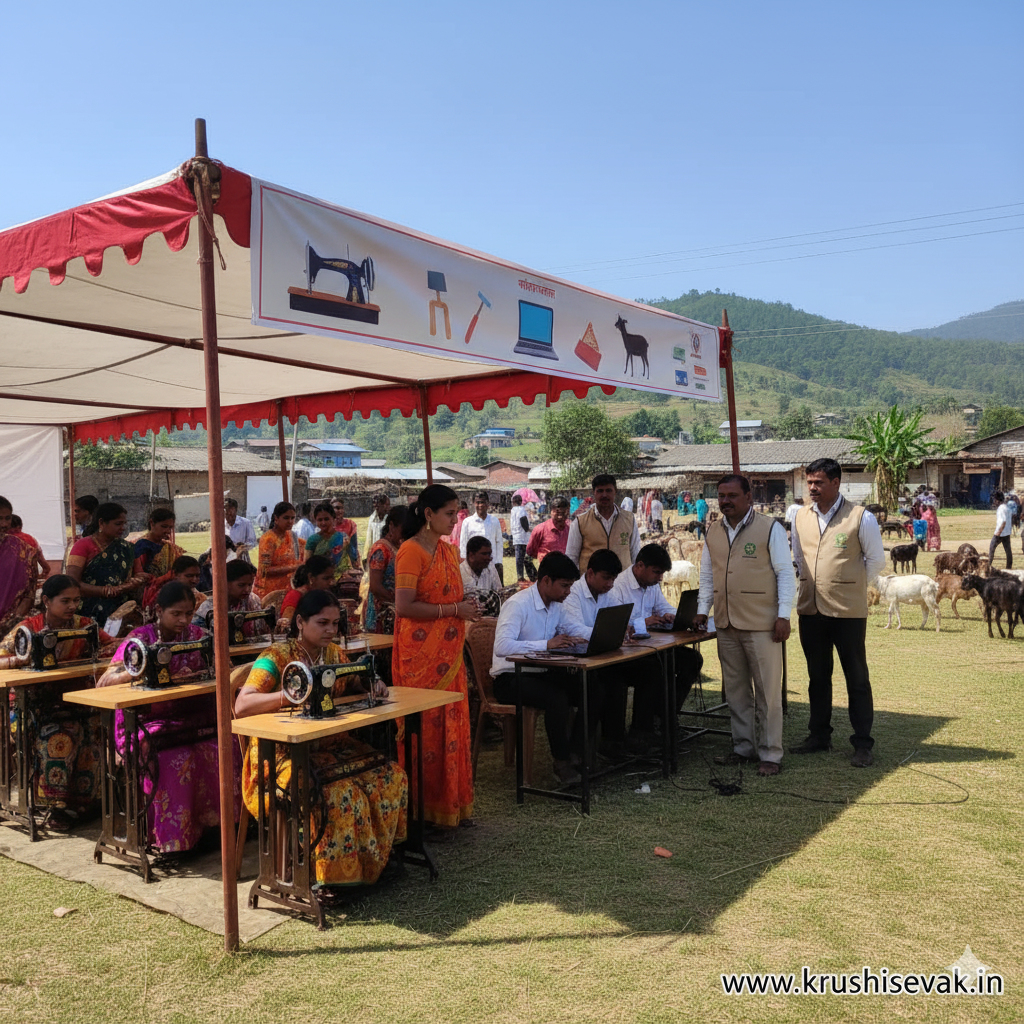
These projects focus on lifting families above the poverty line by funding livelihood tools. Depending on what a region’s terrain supports, this includes distributing drip irrigation equipment, agricultural tools, sewing machines, mini-flour mills, or animal husbandry resources like poultry and goat farming setups.
2. Skill Development and Training
This area builds vocational skills among tribal youth. It funds specialized local training workshops in modern fields like computer operations, mobile repair, motor driving, and advanced agricultural techniques, as well as heritage crafts like specialized bag-making or traditional arts.
3. Resource and Infrastructure Development
While the scheme focuses on individual and family support, up to 10% of the funds can go toward minor, localized infrastructure fixes that unlock economic activity, such as small connecting paths, community wells, or shared storage spaces.
4. Educational and Welfare Support
This component assists tribal students with direct academic needs. It covers competitive exam registration fees (for UPSC, MPSC, or banking exams), entry coaching resources, medical/engineering entrance test fees, and learning materials for students staying in remote institutional setups.
Financial Structure and Subsidy Models
The program relies on a heavily subsidized cost-sharing model to keep resources accessible for low-income tribal households.
- Individual Applications: For individual or family-focused assets, the scheme supports projects costing up to ₹50,000 per application.
- Group/Community Projects: When two or more tribal beneficiaries form a collective or self-help group, the funding limit extends up to ₹7,50,000 for shared community-based assets.
- Subsidy Ratio for General Scheduled Tribes: The government provides an 85% grant-in-aid for standard ST applicants, while the remaining 15% is contributed by the beneficiary as a personal stake in the asset’s upkeep.
- Subsidy Ratio for PVTGs: Particularly Vulnerable Tribal Groups (PVTGs)—such as the Katkari, Madia Gond, and Kolam tribes—receive a 100% complete government grant with zero personal financial contribution required.
Comprehensive Eligibility Criteria
To ensure these local funds reach the right households, applicants must satisfy the following criteria:
- Caste and Identity: The applicant must belong to a recognized Scheduled Tribe (ST) within Maharashtra and hold a valid Caste Certificate issued by an authorized state authority.
- Residency: The applicant must live within the operational jurisdiction of the specific Integrated Tribal Development Project (ITDP) office where they apply.
- Socioeconomic Status: Priority is given to families living Below the Poverty Line (BPL) or those whose household income falls under the state’s low-income limits.
- Prior Benefits: Applicants must not have received identical asset distribution benefits from any other state or central government scheme within the last three years.
- Age and Performance (For Students/Youth): For educational support or vocational training, applicants typically must be between 18 and 35 years old and meet the baseline qualification rules set by the local project office.
Mandatory Documentation
Applicants need to upload clean, legible copies of the following documents to the digital portal or present them at the local ITDP office:
- Aadhaar Card: Serving as primary biometric identification.
- Caste Certificate: Issued by a competent Sub-Divisional Officer or Tehsildar in Maharashtra.
- Caste Validity Certificate: Essential for advanced educational and community funding.
- Income Certificate or BPL Ration Card: An official certificate from the Tehsildar’s office confirming family income.
- Domicile Certificate: Confirming permanent residency in the state.
- Bank Passbook Copy: Showing the account number and IFSC code of an Aadhaar-linked account for tracking the 15% beneficiary share and direct verification.
- Educational Certificates/Marksheets: Required only if applying for student exam funding or advanced technical training programs.
- Passport Size Photographs.
The Digital Transformation: The “NB Portal”
Historically, applying for the Nucleus Budget required visiting remote ITDP offices to complete physical paperwork, which often led to delays and tracking issues. To fix this, the Tribal Development Department launched a dedicated online system known as the NB Portal.
Developed in collaboration with technology and banking partners like State Bank of India (SBI) and Sarthak Infosoft, the portal digitizes the entire lifecycle of the program. It provides a single platform where users can select schemes, fill out forms, track application status, upload documents, and submit the 15% beneficiary financial share. At the same time, regional office staff, assistant project officers, and cashiers can review applications, issue digital corrections, and speed up approvals.
Step-by-Step Online Application Process
Follow this structured workflow to apply through the official Maharashtra Tribal Development portal:
Step 1: User Registration
- Access the official online portal for the Tribal Development Department of Maharashtra or the dedicated NB Portal.
- Select the option for “New Applicant Registration.”
- Enter your full name, a valid email address, and an active mobile number.
- Verify your mobile number using the One-Time Password (OTP) sent by the system.
- Create a unique username and password to secure your portal access.
Step 2: Profile Completion
- Log in with your new credentials and navigate to the personal profile section.
- Fill in your personal details, including your gender, date of birth, and exact communication address.
- Choose your correct Integrated Tribal Development Project (ITDP) area and district from the menus. This step is critical because the portal filters available schemes based on your local ITDP region.
- Input your Caste Certificate details and upload the supporting digital document.
Step 3: Selecting a Scheme
- Head over to the “Nucleus Budget Schemes” tab on your user dashboard.
- Browse the localized list of active income-generating, training, or educational schemes currently open in your project area.
- Select the specific asset or program that fits your needs.
Step 4: Form Completion and Document Uploads
- Fill out the application form for your chosen scheme, explaining how the asset or training will support your livelihood or education.
- Upload clear digital scans (in PDF or JPEG format) of your identity documents, income records, and certificates.
Step 5: Paying the Beneficiary Share (If Applicable)
- For programs that require a 15% beneficiary share, the portal will calculate the exact amount based on the project’s cost.
- Use the integrated, secure online payment gateway on the portal to pay your share via UPI, Net Banking, or Debit Card.
- Print and save the digital payment receipt for your records. (Note: PVTG applicants skip this step automatically).
Step 6: Review and Submission
- Double-check all entries, bank details, and uploaded files to prevent processing errors.
- Check the self-declaration box and hit “Submit.”
- Download and save the final application summary, which includes your unique tracking number. The portal will also send regular status updates to your mobile phone via SMS.
Offline Application Alternative
For residents in remote or low-connectivity tribal areas who cannot access the internet, the state keeps an offline option available:
- Visit the nearest physical Integrated Tribal Development Project (ITDP) office or contact a local Tribal Development Inspector.
- Collect the printed Nucleus Budget application form for your specific desired scheme.
- Fill out the form manually and attach physical photocopies of your Aadhaar card, caste details, income certificate, and land records.
- Hand in the completed application packet directly to the desk clerk at the ITDP office.
- Collect your physical acknowledgment receipt, which contains the application reference number needed for offline tracking.
Verification, Approval, and Distribution
Once an application is submitted, it undergoes a multi-tier review process at the local level:
Desk Scrutiny
The institutional clerk and the Assistant Project Officer verify your documents against the original parameters. If they find missing or incorrect files, they route the application back to your digital dashboard with an SMS notification, giving you a chance to fix and resubmit the form.
Field Verification
For asset distribution requests like irrigation kits or farm machinery, a Tribal Development Inspector may visit your site to confirm your livelihood needs and ensure you don’t already own duplicate equipment.
Final Sanctioning
The Project Officer of the ITDP reviews the verified list and issues formal approvals based on the current local budget. Approved applicants receive text notifications detailing when and where to collect their assets or when their vocational training program begins.