
Introduction
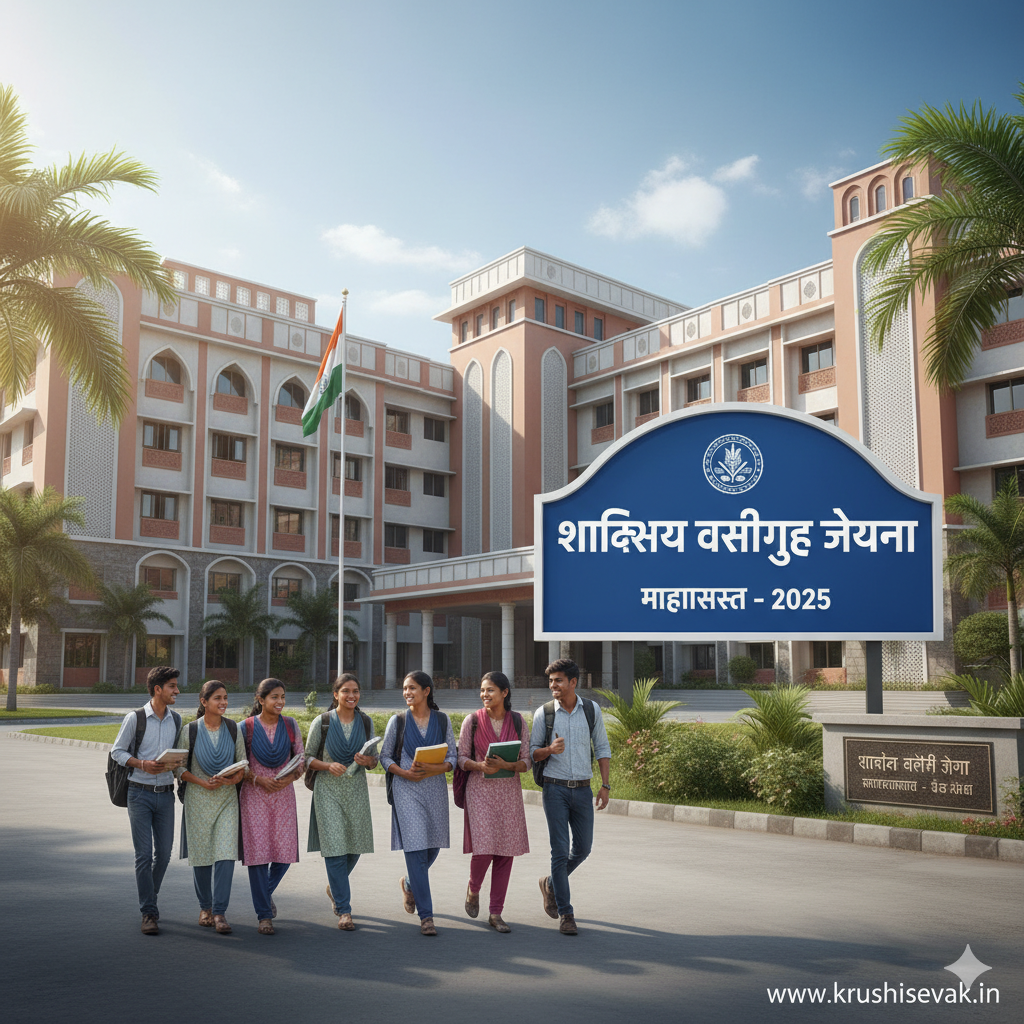
The Government of Maharashtra has long been committed to fostering higher education and ensuring that socio-economic barriers do not prevent meritorious students from achieving their academic dreams. One of the most impactful initiatives driven by the state government is the Government Hostel Scheme. Administered primarily through the Social Justice and Special Assistance Department, alongside the Tribal Development Department and the Directorate of Higher Education, this scheme provides safe, affordable, and well-equipped residential facilities to students across Maharashtra.
For the academic year 2025, the state has further digitized, streamlined, and expanded its network of hostels to accommodate thousands of students from rural areas, underprivileged communities, and economically weaker sections. This detailed guide offers an exhaustive look into the Maharashtra Government Hostel Scheme for 2025, detailing its core objectives, categories, eligibility parameters, required documentation, an step-by-step breakdown of the online application process, and alternative safety-net schemes.
Core Objectives of the Hostel Scheme
The migration of students from rural hamlets, villages, and smaller towns to tier-1 and tier-2 educational hubs like Mumbai, Pune, Nagpur, Nashik, and Chhatrapati Sambhajinagar is a common trend. However, the high cost of living, steep private rent, and lack of secure accommodation frequently force students—particularly girls and those from marginalized backgrounds—to discontinue their higher education.
The primary objectives of the Maharashtra Government Hostel Scheme include:
- Promoting Inclusivity in Higher Education: By easing the financial burden of accommodation and food, the scheme ensures that higher education is accessible to everyone, regardless of their caste, tribe, or economic class.
- Preventing Academic Dropouts: Offering free or heavily subsidized lodging reduces the dropout rate among brilliant rural students who cannot afford urban living expenses.
- Providing a Conducive Academic Environment: State-run hostels offer necessary utilities like libraries, study rooms, digital connectivity, and balanced meals, allowing students to focus completely on their curriculum.
- Empowering Female Students: Dedicated government hostels for girls offer a secure living environment, encouraging families from orthodox or conservative backgrounds to send their daughters to cities for degrees and professional courses.
Types of Government Hostels and Administration
The hostel network in Maharashtra is diverse, structured specifically to cater to different marginalized and socio-economic classes. The administration is broadly divided across the following departments:
1. Social Justice and Special Assistance Department Hostels
These hostels are primarily meant for students belonging to Scheduled Castes (SC), Neo-Buddhists, Vimukta Jati Nomadic Tribes (VJNT), and Other Backward Classes (OBC). The department operates hundreds of hostels across all major districts and talukas. Additionally, divisional-level mega-hostels with vast capacities are functional in major zones like Nagpur, Pune, Mumbai, Amravati, Nashik, Latur, and Chhatrapati Sambhajinagar.
2. Tribal Development Department Hostels
Exclusively reserved for Scheduled Tribe (ST) students, these hostels are situated within tribal belts as well as major academic cities. They ensure that tribal youth transitioning from remote forest and hilly terrains to cities receive comprehensive welfare support, free lodging, and dietary allowances.
3. Higher and Technical Education Department Hostels
Managed directly by the Directorate of Higher Education, these hostels cater to general category students coming from economically weaker backgrounds, as well as students enrolled in specialized professional fields like Engineering, Pharmacy, Architecture, and Management.
Detailed Eligibility Criteria for 2025 Admissions
Securing admission into a Maharashtra Government Hostel is a highly competitive process, strictly regulated by merit and specific social guidelines. To apply for the 2025 session, applicants must meet the following multi-layered criteria:
Nationality and Domicile
- The applicant must be a citizen of India.
- The applicant must possess a valid Domicile Certificate of the State of Maharashtra. Students from other states are generally not eligible for this state-sponsored scheme.
Category and Reservation Compliance
- Hostel seats are heavily reserved based on state reservation policies. Applicants must belong to recognized categories such as Scheduled Castes (SC), Scheduled Tribes (ST), Vimukta Jati Nomadic Tribes (VJNT), Other Backward Classes (OBC), Special Backward Class (SBC), or Economically Weaker Sections (EWS).
- A certified Caste Certificate issued by the competent authority of the Maharashtra Government is mandatory for reserved seats.
Academic Enrollment Status
- The student must be a “Bonafide Student” of a recognized educational institution, college, or university located in Maharashtra.
- Students pursuing continuous regular education (such as 11th, 12th, Graduation, Post-Graduation, Diploma, or professional degrees) are eligible. Distance learning, external, or correspondence students cannot apply.
- For professional and technical courses, preference is strictly given to students who have secured their college admissions through the state-regulated Centralized Admission Process (CAP).
Income Thresholds
- To ensure the benefits reach the truly needy, the state imposes strict parental annual income caps. For most Social Welfare hostels, the annual parental income should not exceed a set threshold, commonly around 2.5 Lakhs to 8 Lakhs depending on the specific sub-category (EWS/OBC/SC/ST) and current government resolution updates.
Geographical Isolation
- The student must not be a local resident of the city or town where the college and hostel are located. The scheme is fundamentally designed for migrant students whose parents live outside the institutional municipal limits.
Minimum Academic Performance
- Admission lists are drawn purely on a merit-basis using the marks obtained in the preceding qualifying examination.
- For general categories, a minimum aggregate of 50% or 60% in the previous year’s exam is usually necessary to enter the merit pool. For reserved categories and specially-abled students, a relaxation of up to 5% to 10% is provided.
Essential Documents Required for Application
To successfully submit the hostel application and pass the rigorous verification checks, students must keep digital scans and physical copies of the following documents ready:
- Aadhaar Card: Asserves as primary identity and biometric proof.
- Domicile Certificate: To verify residency within Maharashtra.
- Caste Certificate & Caste Validity Certificate: Issued by the competent sub-divisional officer or tehsildar.
- Income Certificate: An official certificate issued by the Tehsildar’s office for the financial year reflecting the actual income of the parents. Form 16 or salary slips are required if parents are government or corporate employees.
- Mark Sheets: Authentic copies of SSC, HSC, or the latest semester/graduation transcripts depending on the course level applied for.
- Bonafide Certificate & Fee Receipt: Issued by the currently admitted college confirming regular attendance and the exact nature of the course.
- CAP Allotment Letter: Mandatory for professional courses to prove merit-based admission.
- Bank Account Details: Passbook copy or cancelled cheque of a nationalized bank account which is explicitly linked/seeded with the student’s Aadhaar number.
- Disability Certificate (If Applicable): Valid UDID card or certificate from a medical board demonstrating more than 40% disability.
- Orphan Certificate (If Applicable): Official certification from the Women and Child Development Department.
- Recent Passport Size Photographs & Signature Scans.
Step-by-Step Online Application Process for 2025
The Government of Maharashtra handles hostel admissions through integrated digital systems such as the Social Justice Department’s specialized Hostel Management Academic System (HMAS) portal or the comprehensive MahaDBT portal.
Follow these steps carefully to submit your application without errors:
Step 1: Portal Selection and Initial Registration
- Visit the official portal dedicated to government hostel admissions, such as hmas.mahait.org or the MahaDBT portal.
- If you are a new user, click on the “New Applicant Registration” or “Register” button.
- Enter your primary details: Full Name, Active Mobile Number, Email ID, and your Aadhaar Number.
- Verify your identity using the One-Time Password (OTP) sent to your registered mobile number.
- Create a unique, strong password and a security username. Save these login credentials for future access.
Step 2: Filling out the Profile and Personal Information
- Log into the system using your newly created username and password.
- Navigate to the profile section. Fill in your personal details, including your gender, date of birth, permanent parental residential address, and current communication address.
- Complete the Caste and Category section by entering your caste details, caste certificate numbers, and uploading the corresponding validated files.
Step 3: Academic Details Entry
- Input your comprehensive academic history. Start by filling out your SSC (10th) board name, division, seat number, passing year, and absolute marks obtained.
- Proceed to fill out HSC (12th) or previous graduation degree details in a similar manner.
- Provide your current institutional admission framework: Select the District, Taluka, College Name, Course Name, Course Duration, and the specific year of study you are currently entering.
Step 4: Hostel Selection
- Based on your college location, gender, and category, the portal will auto-populate a list of eligible state government hostels within that specific geographical region.
- Review the location, facility details, and warden contact information if displayed.
- Select your preferred government hostel from the drop-down list. You can choose multiple options in order of priority if the system allows.
Step 5: Document Uploadation
- Upload clear, legible, scanned copies of all required documents (Income certificate, Marksheets, Caste validity, Bonafide, etc.).
- Ensure the documents conform strictly to the specified file formats (usually PDF or JPEG) and size limits (often between 100 KB and 500 KB) mandated by the portal.
Step 6: Bank Account Linking Check
- Confirm that your active bank account is seeded with your Aadhaar card.
- Enter the correct Bank Name, Branch, Account Number, and the exact IFSC code. This step is critical because any direct benefits or maintenance allowances will be routed directly via Aadhaar-Based Bridge Payments.
Step 7: Final Review and Submission
- Thoroughly double-check every line item entered in the application form before final submission. Typos in marks, seat numbers, or caste allocations can lead to immediate rejection.
- Read the declaration clauses carefully and click the check-box.
- Click on the “Submit” button.
- Download the generated application form PDF containing your unique application ID and take a printout for your reference.
Merit List Generation and Post-Selection Steps
Once the application deadlines lapse, the automated portal processes thousands of entries to compile provisional merit lists based on strict percentages, category reservations, and seat quotas.
Tracking the Application Status
Students can regularly check the portal by logging into their dashboards. The application timeline progresses through stages: “Submitted,” “Under Verification by Desk Officer,” “Scrutinized,” and finally “Allotted” or “Waitlisted.”
Document Verification and Admission
If your name features in the published merit list for a specific hostel, you will receive an SMS and an allotment letter download link on the portal. You must visit the office of the Assistant Commissioner of Social Welfare or the respective Hostel Warden within the stipulated timeframe. Bring along original documents for physical verification. Upon successful verification, you will be formally admitted to the hostel room.
Crucial Timelines to Keep in Mind
For the 2025 academic session, the state government issues a strict chronological calendar. While precise dates fluctuate slightly depending on when university results are declared, the standard timeline pattern is:
- Release of Circular/Notification: Generally in the first or second week of June.
- Application Window Open: Mid-June onwards.
- Deadline for School, 11th, and 12th Standard Students: Typically around mid-July.
- Deadline for Undergraduates and Non-Professional Courses: Third or fourth week of July.
- Deadline for Professional/Post-Graduate Courses (CAP Admissions): Extended into August or September, directly aligned with state CAP rounds completion.
- Publication of Provisional & Final Merit Lists: Within 5 to 7 days after the respective application windows close.
Alternative Solutions: The “Swadhar” and “Swayam” Schemes
The demand for government hostels vastly outstrips the physical capacity of the buildings. Recognizing that hundreds of eligible SC and ST students fail to clear the high merit cut-offs despite living in poverty, the Maharashtra government created pioneering alternative cash-transfer schemes.
If a student does not get selected for a government hostel due to a shortage of seats, they are given an option on their application form to avail the benefits of the following schemes:
Dr. Babasaheb Ambedkar Swadhar Yojana
This scheme targets eligible Scheduled Caste (SC) and Neo-Buddhist students who could not get admission into state-run hostels. Instead of a room, the government deposits a substantial financial allowance directly into the student’s bank account to cover private lodging, boarding, and local transport expenses. The annual compensation ranges from ₹43,000 to ₹60,000 depending on whether the student is studying in a tier-3 town, a district headquarters, or a mega-city like Mumbai or Pune.
Pandit Deendayal Upadhyay Swayam Yojana
Operating on the exact same model as Swadhar, the Swayam Yojana is executed by the Tribal Development Department. It serves Scheduled Tribe (ST) students who miss out on tribal hostel seats, providing them with equivalent annual financial allowances to independently finance their food, rent, and learning materials while living in cities.
Dr. Panjabrao Deshmukh Hostel Maintenance Allowance
For students belonging to the Economically Backward Classes (EBC) and children of registered laborers or small-landholding farmers, this scheme offers a monthly maintenance allowance to support hostel stays, provided they are pursuing professional or technical degree courses.
Facilities and Student Code of Conduct
Living in a Maharashtra Government Hostel comes with robust state support alongside strict institutional discipline.
Free Amenities Provided
- Fully furnished rooms with a bed, study table, chair, and locker.
- Complimentary morning breakfast, lunch, and dinner through institutional messes or direct catering contracts.
- Access to recreation rooms, digital computer labs, and filtered drinking water systems.
- In-house libraries stocked with competitive examination guides (MPSC, UPSC, Banking) and university textbooks.
Discipline and Regulations
- Attendance Tracking: Hostels enforce biometric attendance or daily register signing. Students must adhere to strict curfew timings in the evening.
- Academic Performance Continuity: Admission is not guaranteed for the entire multi-year duration of a course as a blanket right. Students must maintain a clean academic record, passing their yearly examinations with at least 50% marks. Failing an academic year or displaying poor attendance can lead to immediate eviction.
- Behavioral Protocols: Any instances of ragging, substance abuse, vandalism of government property, or political misconduct on the hostel premises attract immediate suspension, forfeiture of benefits, and criminal proceedings under state laws.
Key Tips for a Successful Application
To maximize your chances of getting a seat without encountering technical rejections, remember the following practical tips:
- Keep Certificates Updated: Ensure your Income Certificate corresponds strictly to the latest financial year. An outdated income certificate is the number one cause of application rejection.
- Match Names Accurately: The spelling of your name across your Aadhaar card, Caste Certificate, and Mark Sheet should be completely consistent. If there is a massive discrepancy due to marriage or spelling errors, keep an official Government Gazette copy or an educational affidavit ready.
- Check Bank Seeding Status: Simply having a bank account is not enough. Visit your bank branch or use the UIDAI portal online to verify that your Aadhaar card status is mapped as “Active” with your bank account for Direct Benefit Transfer (DBT) protocols.
- Do Not Wait for the Last Date: The state servers face heavy traffic loads on the final days of registration, leading to timed-out payments, failing OTPs, and uploading errors. Complete your profile registration as soon as you secure your college bonafide certificate.
- Seek Help from Social Welfare Offices: If you encounter technical glitches on the HMAS or MahaDBT portals, visit the nearest regional office of the Assistant Commissioner of Social Welfare (Samaj Kalyan) in your district. They have designated helpdesks to guide students through form submission errors.