
Introduction to Tribal Welfare in Maharashtra
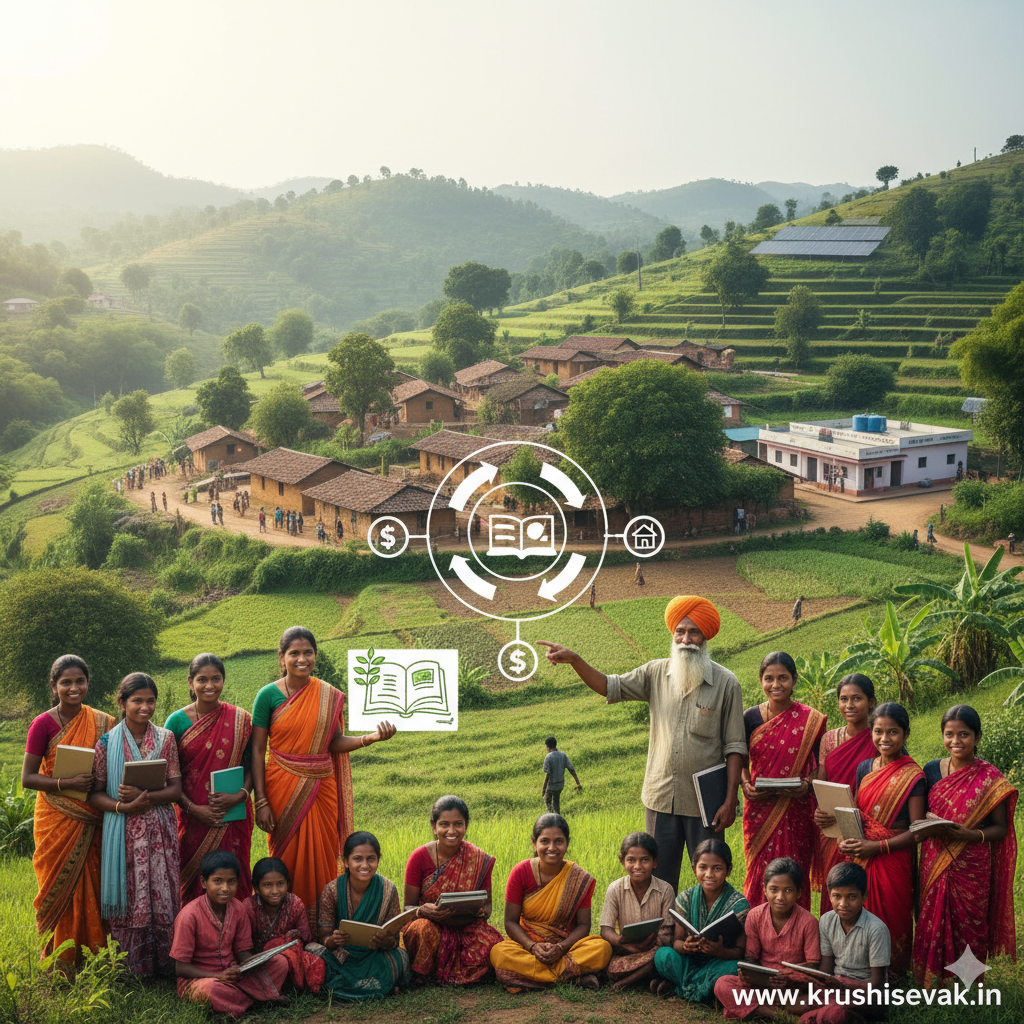
The Scheduled Tribe (ST) communities in Maharashtra, historically referred to as Aadivasis, constitute a significant portion of the state’s diverse population. These communities are predominantly nestled across hilly, forested, and remote terrains, including regions like Thane, Palghar, Nashik, Nandurbar, Dhule, Jalgaon, Gadchiroli, and Chandrapur. Because of geographical isolation and historical economic marginalization, tribal populations have often faced gaps in accessing standardized education, modern healthcare, stable livelihood options, and robust civic infrastructure.
To close these societal gaps and support the constitutional mandate of uplifting vulnerable communities, the Government of Maharashtra runs a dedicated Tribal Development Department (Aadivasi Vikas Vibhag). The department formulates, finances, and executes a wide spectrum of multi-sectoral development schemes known collectively under the umbrella of Aadivasi Vikas Yojana (Tribal Sub-Plan). These initiatives aim to empower tribal individuals, raise families out of generational poverty, and bring comprehensive structural development to historical tribal settlements.
Core Focus Areas of Aadivasi Vikas Yojana
The strategy of the Tribal Development Department spans several critical domains. Instead of providing short-term relief, the policy focuses on creating a permanent scaffolding for human and economic development.
Educational Advancement and Accommodations
Education is considered the most potent vehicle for social mobility. Because tribal hamlets (Pada or Vasti) are frequently situated in deep rural pockets lacking senior secondary schools or colleges, the government funds comprehensive residential education systems.
- Government Ashram Schools: These are fully residential schools where tribal children receive free education, boarding, lodging, uniforms, books, and healthcare.
- Eklavya Model Residential Schools (EMRS): Modeled alongside national elite schools like Navodaya Vidyalayas, these institutes deliver high-quality middle and secondary school education to talented tribal students in tribal-dominated blocks.
- Post-Matric Hostels: For students pursuing higher education, degrees, or technical diplomas in urban centers, the state runs dedicated hostels for boys and girls to eliminate the financial burden of city rent.
Sustainable Livelihoods and Agrarian Support
A large majority of the Aadivasi workforce relies on subsistence agriculture or the collection of Minor Forest Produce (MFP). The Yojana aims to modernize agricultural practices and introduce diversified vocational skills to eliminate seasonal underemployment.
- Birsa Munda Krishi Kranti Yojana: This initiative provides financial packages directly to tribal farmers to build sustainable irrigation sources, such as new wells, farm ponds, old well repairs, and solar or electric pump sets, helping shift farms from rain-dependent single crops to multi-crop models.
- Skill Development and Vocational Training: Unemployed tribal youth are sponsored for specialized vocational courses in fields ranging from driving and mechanical repairs to digital literacy and hospital care, linking them to mainstream employment opportunities.
Infrastructure and Community Development
Improving the physical environment of tribal clusters is crucial for long-term health and economic connection.
- Thakkar Bappa Aadivasi Basti Sudharana Yojana: This flagship program funds structural work within areas where the tribal population exceeds 50 percent. It covers concrete internal roads, clean drinking water wells, connected approach roads, community halls (Samaj Mandir), street lighting, and sanitation facilities.
- Shabari Aadivasi Gharkul Yojana: To counter sub-standard housing conditions, this scheme provides direct financial assistance to rural and semi-urban tribal families who do not own a permanent home, helping them build durable, weather-resistant houses.
Health, Nutrition, and Social Protection
Remote tribal zones often show higher vulnerabilities to malnutrition, endemic conditions, and maternal healthcare issues.
- Dr. A.P.J. Abdul Kalam Amrit Aahar Yojana: This focused nutritional scheme supplies hot, balanced, nutritious meals to pregnant women, lactating mothers, and infants attending local Anganwadis in tribal blocks, working to curb infant mortality and low birth weight.
- Direct Financial Safeguards: From medical emergency cash allocations to specialized support packages for Particularly Vulnerable Tribal Groups (PVTGs) like the Katkari, Madia Gond, and Kolam, the department provides target-specific financial protection.
Key Welfare Schemes Explained
Post-Matric Scholarship Scheme for ST Students
This initiative ensures that financial limitations do not force tribal students to drop out after completing their Class 10 (Matriculation) exams. It supports those pursuing higher secondary education, graduation, post-graduation, professional medical or engineering streams, or technical diplomas.
The program covers compulsory non-refundable fees charged by educational institutes and provides a monthly maintenance allowance based on the nature of the course and whether the student is a day scholar or a hosteller. To qualify, the annual combined family income must not exceed 2.50 Lakhs. The scheme operates through a Direct Benefit Transfer (DBT) mechanism, sending funds directly into the student’s Aadhaar-linked bank account.
Pandit Dindayal Upadhyay Swayam Yojana
Finding accommodation can be a major challenge for tribal students who qualify for higher education in major tier-1 or tier-2 cities but fail to secure a spot in crowded government-run hostels. The Swayam Yojana resolves this by offering direct monthly cash assistance to students to cover private room rentals, mess charges, and local transportation.
The financial allowance is tiered based on city classification—higher amounts are allocated for major metropolitan hubs like Mumbai, Pune, Nagpur, and Thane, with adjusted amounts for other district headquarters and taluka places. This approach ensures that a shortage of physical hostel buildings does not block access to premium urban colleges.
Birsa Munda Krishi Kranti Yojana
Agriculture in tribal belts often suffers from low productivity due to uneven terrain and lack of irrigation. This scheme provides financial assistance to tribal landowners to establish reliable water sources. Eligible farmers can receive grants to dig new wells, install solar-powered or electric pump sets, set up micro-irrigation systems like drip or sprinkler arrays, and renovate old, dysfunctional wells. By securing a year-round water supply, farmers can move away from unpredictable monsoons and grow high-value cash crops or secondary winter crops.
Thakkar Bappa Aadivasi Basti Sudharana Yojana
Named after the pioneering social reformer, this scheme focuses on developing entire communities rather than individual households. It applies to any tribal hamlet, settlement, or urban ward where over half the residents belong to Scheduled Tribes.
The funds bypass standard rural development pipelines and go directly toward urgent civic needs. The program builds vital local infrastructure, including connecting remote hamlets to state highways, paving interior muddy paths with cement concrete, installing localized solar drinking water pumps, and constructing public community centers for social gatherings and vocational training.
General Eligibility Criteria
While individual initiatives have specific requirements, applicants must generally satisfy a set of baseline eligibility parameters to access benefits under the Aadivasi Vikas Yojana umbrella:
- Caste Identification: The primary applicant must belong to a community officially recognized as a Scheduled Tribe (ST) within the state of Maharashtra.
- Residential Status: The applicant must be a permanent resident of Maharashtra and possess a valid state domicile certificate.
- Income Thresholds: Income caps vary by program. For educational scholarships and agrarian subsidies, the annual family income generally must not exceed 2.50 Lakhs. For specific housing or high-tier foreign education scholarships, the limit can scale higher.
- Asset and Welfare Rules: For land-based agricultural schemes, the applicant must hold valid land records (7/12 extract) within a specified acreage limit. For housing schemes like the Shabari Gharkul Yojana, the applicant must not own any other permanent (pucca) house anywhere in the state.
- Academic Progression: Students applying for educational benefits must have cleared their previous qualifying examinations without unauthorized gaps, and they must maintain regular attendance at an institution approved by the state.
Documentation Required for Application
To maintain transparency and prevent fund leakage, applicants must submit a standardized dossier of certified documents. Keeping these digital and physical copies ready streamlines the verification process:
- Identity and Age Proof: Aadhaar Card, Voter ID, PAN Card, or School Leaving Certificate.
- Caste Verification Papers: A valid Scheduled Tribe Certificate issued by a competent Sub-Divisional Officer (SDO) or Deputy Collector, alongside an official Caste Validity Certificate from the Scrutiny Committee for higher education and employment benefits.
- Income Certification: An authentic Annual Family Income Certificate issued by the competent revenue authority, such as the Tahsildar. Form 16 or private declarations are generally insufficient.
- Residence Verification: State Domicile Certificate, Ration Card, or latest electricity/water utility bills.
- Educational Certificates: Marksheets and passing certificates of the previous academic year, current college admission receipts, bonafide certificates, and hostel residency certificates (if applicable).
- Land and Asset Verification: Updated 7/12 land extract documents, 8-A crop registration certificates, and non-encumbrance proofs for agricultural or well-digging benefits.
- Financial Details: A copy of the bank passbook showing the account number, branch name, and IFSC code. The account must be active, held in the applicant’s name, and linked to their Aadhaar card.
Step-by-Step Online Application Process via MahaDBT
The Government of Maharashtra handles individual welfare disbursements through its unified portal, Aaple Sarkar MahaDBT. This platform digitizes the workflow from initial registration to final fund transfer, minimizing red tape.
Step 1: New Applicant Registration
- Open an internet browser and navigate to the official portal: mahadbt.maharashtra.gov.in.
- Locate and click on the option labeled New Applicant Registration.
- The portal will ask if you possess an Aadhaar Number. Select Yes to streamline the process.
- Choose your preferred authentication method: OTP (sent to your Aadhaar-registered mobile number) or Biometric (requiring a fingerprint scanner at a local service center).
- Enter your Aadhaar number and trigger the verification code. Once verified, the portal automatically imports your name, date of birth, gender, and address directly from the UIDAI database.
Step 2: Creating Login Credentials
- After the Aadhaar details auto-populate, the system prompts you to create a unique Username and a strong Password.
- Input your personal email address and active mobile number, verifying both using individual OTP confirmations sent by the portal.
- Complete the security Captcha and click Register. A confirmation message will appear indicating your user profile has been successfully generated.
Step 3: Detailed Profile Creation
- Return to the portal home screen, click Applicant Login, and log in using your newly created username and password.
- Go to the dashboard section labeled My Profile. You must fill out this six-part section entirely before you can browse available schemes:
- Personal Information: Input your marital status, religion, and specific caste details, along with your Caste Certificate number.
- Address Details: Provide your current and permanent residential details, including district, taluka, and village.
- Other Information: Input family details, parent/guardian occupations, and disability status if applicable.
- Current Course: Detail your ongoing studies, including university name, college name, year of study, and fee structures.
- Past Qualifications: Enter your complete academic history, including SSC and HSC seat numbers, passing years, and percentages.
- Hostel Details: Specify whether you reside in a government hostel, live as a day scholar, or rent private accommodations.
Step 4: Uploading Supporting Documents
- Scan your original documents clearly as PDFs or high-resolution JPEGs (ensuring they stay within the portal’s file size limits, usually under 500 KB).
- Upload each document to its corresponding section in your profile (e.g., income certificate under the income tab, caste validity under the caste tab). Double-check clarity to prevent application rejection due to unreadable files.
Step 5: Matching and Applying for Schemes
- Once your profile hits 100 percent completion, click on the All Schemes tab on the left-hand navigation panel.
- Select Tribal Development Department from the department dropdown list.
- The portal automatically filters and displays the schemes you qualify for based on the age, income, caste, and educational data in your profile.
- Read the specific guidelines for your target scheme, click Apply, and upload any additional program-specific declarations required. Submit your application.
Step-by-Step Offline Application Process
For tribal citizens living in remote locations with limited internet access or electricity, the state maintains a parallel offline application track through local administrative offices.
Step 1: Locating the Correct Office
Identify the nearest local office of the Tribal Development Department. Depending on your location and the type of scheme, this will be:
- The Integrated Tribal Development Project (ITDP) Office, managed by a Project Officer.
- The Assistant Commissioner Office of the Tribal Development Department.
- The local Panchayat Samiti office or Gram Panchayat center in tribal blocks.
Step 2: Securing the Scheme Form
Visit the office and request the specific application form for your desired scheme (such as the Shabari Gharkul housing form or the Birsa Munda irrigation form). These official forms are provided entirely free of charge. Alternatively, you can request an authorized printout from a local Setu Suvidha Kendra or Maha-E-Seva Center.
Step 3: Compiling and Verifying Documents
Fill out the form manually in clear handwriting. Gather physical copies of your essential documents, including your ST certificate, income statement, land records, and identity cards. Take these copies to a local gazetted officer, school headmaster, or Sarpanch to have them officially attested, if required by the program guidelines.
Step 4: Physical Submission and Acknowledgment
Submit the completed form along with the attested document copies directly to the desk officer at the ITDP or Panchayat Samiti office. Ensure that the receiving clerk gives you a stamped and signed acknowledgment receipt. This receipt features a manual inward application tracking number, which is vital for following up on your application later.
Direct Benefit Transfer (DBT) and Monitoring
To eliminate intermediate leakages and delayed payments, the state government manages all financial assistance under the Aadivasi Vikas Yojana via Direct Benefit Transfer (DBT).
- Aadhaar Seeding Requirement: For cash benefits to transfer successfully, your bank account must be actively linked to your Aadhaar card via the National Payments Corporation of India (NPCI) mapper. If this link is broken, the automated payment system will fail, even if your application is fully approved.
- Tracking Application Status: Applicants can log in to the MahaDBT portal at any time to monitor progress under the Applied Schemes section. The dashboard clearly marks the application’s current stage, such as Under Scrutiny, Approved, or Disbursed.
- Handling Redressal and Grievances: If an application is rejected or sent back with queries, the portal shows the exact reason given by the verification officer. The applicant is typically granted a specific window of time to upload corrected documents or file an official appeal directly through the portal’s Grievance/Suggestion module.
Contact and Support Information
If you run into technical issues with the online system, face administrative delays, or need help understanding scheme guidelines, you can reach out through several official support channels:
- Official Portals: For policy updates and institutional details, visit tribal.maharashtra.gov.in or mahatribal.gov.in. For online applications, use mahadbt.maharashtra.gov.in.
- State Helpline Number: You can call the dedicated MahaDBT technical helpline at 022-61316429 between 9:00 AM and 7:00 PM, Monday through Friday, for help resolving registration or portal errors.
- Ground Support Centers: You can visit any authorized Maha-E-Seva Kendra, Setu Suvidha Kendra, or Common Service Center (CSC) in Maharashtra. These centers are trained to help applicants scan documents, fill profiles, and submit online scheme forms for a nominal, state-regulated fee.
- Administrative Oversight: For complex issues or collective village grievances, citizens can write directly to the Project Officer of their regional Integrated Tribal Development Project (ITDP) office, or visit the Tribal Development Commissionerate based in Nashik.