
Introduction to Financial Inclusion in India
The Pradhan Mantri Jan Dhan Yojana (PMJDY) stands as one of the most significant and expansive financial inclusion initiatives in modern economic history. Launched by the Government of India, the primary mission of this program is to ensure that the unbanked segments of the population—particularly individuals from economically weaker sections, rural communities, and marginalized urban areas—gain seamless, affordable access to essential financial services. Rather than functioning merely as a drive to open savings accounts, PMJDY establishes a comprehensive gateway to an entire ecosystem of financial products, including institutional credit, seamless remittance facilities, secure insurance covers, and structured pension schemes.
Historically, a massive portion of the Indian population remained entirely cut off from formal banking. This lack of access forced families to rely on informal, unregulated, and often predatory credit systems like local moneylenders. PMJDY fundamentally transformed this landscape by expanding institutional banking across the nation. Over the years, the program shifted its focus from covering “Every Household” to empowering “Every Unbanked Adult.” This core adjustment ensures that every citizen can establish a distinct financial identity. By integrating technology with grassroots banking, PMJDY serves as the foundational structure for delivering social security benefits, driving digital payments, and building deep-rooted financial independence.
Core Pillars of the Jan Dhan Architecture
The structural framework of PMJDY is built upon an integrated system designed to resolve the historic roadblocks to universal banking. These foundational pillars ensure the program operates smoothly and sustainably:
Universal Access to Banking Services
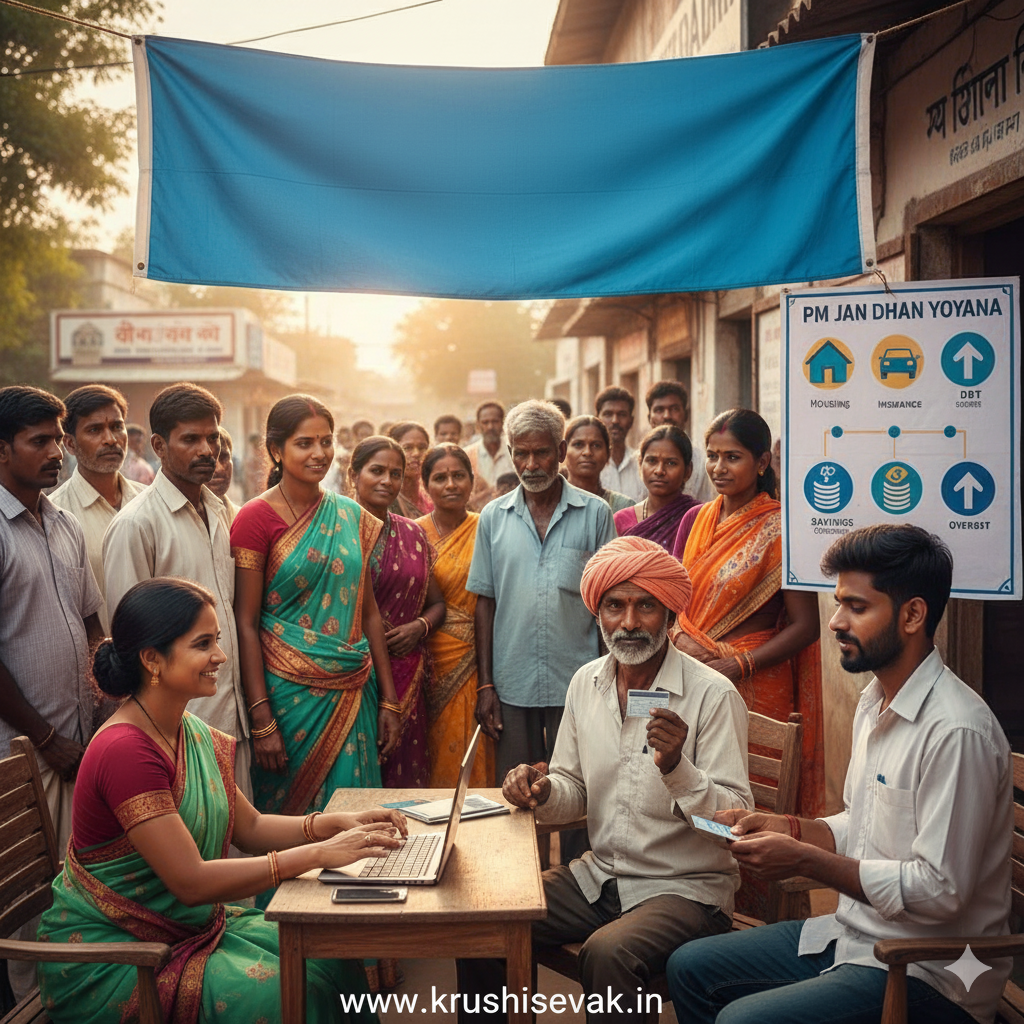
To bridge the physical gap between remote villages and brick-and-mortar bank branches, the scheme deploys a vast network of Business Correspondents, commonly known as Bank Mitras. These are authorized individuals equipped with handheld biometric devices, micro-ATMs, and digital kiosks. They bring vital banking services directly to the doorsteps of rural communities, allowing citizens to deposit funds, withdraw cash, and check account balances without traveling long distances.
Basic Savings Bank Deposit Accounts (BSBDA)
The fundamental offering of the scheme is a highly flexible, zero-balance savings account. Unlike standard commercial bank accounts that penalize users for falling below a fixed monthly average balance, a Jan Dhan account carries absolutely zero minimum balance requirements. This allows low-income individuals to secure their earnings within a formal bank without worrying about hidden administrative fees or penalties.
Broad Financial Literacy Programs
Opening an account is only the first step; ensuring active usage is equally critical. The program runs dedicated financial literacy campaigns at the village and block levels. These initiatives teach beneficiaries the benefits of systematic savings, how to operate automated teller machines (ATMs), the process for securing institutional credit, and methods for safeguarding their digital accounts against fraud.
Direct Benefit Transfer (DBT) Integration
PMJDY serves as the primary processing mechanism for the government’s welfare programs. Central and State subsidies—including funds for cooking gas (PAHAL), student scholarships, agricultural supports (PM-KISAN), and rural employment wages (MGNREGA)—are routed directly into the beneficiary’s Jan Dhan account. This direct flow completely eliminates middle-tier bureaucratic layers, minimizes administrative leakages, and ensures citizens receive their full entitlements without delay.
Key Benefits and Features of PMJDY Accounts
A PMJDY account operates as a specialized Basic Savings Bank Deposit Account, packed with distinct benefits designed to maximize social security and financial stability:
Zero-Balance Account with Full Interest
Account holders can open and maintain their accounts with a zero balance. Any funds deposited into the account earn regular savings bank interest over time, calculated and credited periodically, helping turn small, irregular earnings into secure savings.
Complimentary RuPay Debit Card
Every beneficiary receives an indigenous RuPay Debit Card completely free of charge. This card can be used to withdraw cash at any ATM across India, make digital transactions at Point of Sale (POS) terminals in commercial establishments, and complete e-commerce transactions online.
Complimentary Accidental Insurance Cover
The RuPay card comes with a built-in, complimentary Accidental Insurance Cover. For accounts opened since the enhanced phase of the scheme, this coverage provides a substantial safety net of ₹2 Lakh to the beneficiary’s family in the event of an accidental death or permanent total disability. To keep this insurance active, the cardholder must perform at least one successful financial or non-financial transaction (at an ATM, POS terminal, or through a Bank Mitra) within the 90 days prior to the accident.
Access to the Overdraft (OD) Facility
After an account operates satisfactorily for a minimum of six months—demonstrating consistent transactions and maintaining a clean account history—the holder becomes eligible for an overdraft facility of up to ₹10,000. This feature functions as a hassle-free micro-loan to help families handle unexpected medical emergencies or urgent consumption needs without turning to informal lenders.
- An overdraft amount of up to ₹2,000 is available without any complex terms or background checks.
- The upper age limit to qualify for this overdraft facility is 65 years.
- To avoid duplicate limits, the overdraft is restricted to only one account per household, with preference given to the female head of the family.
Integrated Gateways to Social Security
A Jan Dhan account serves as the direct link to enroll in India’s highly affordable micro-insurance and pension portfolios:
- Pradhan Mantri Jeevan Jyoti Bima Yojana (PMJJBY): Offers a ₹2 Lakh term life insurance cover for a nominal annual premium.
- Pradhan Mantri Suraksha Bima Yojana (PMSBY): Provides a ₹2 Lakh accidental insurance policy at a minimal yearly fee.
- Atal Pension Yojana (APY): Allows unorganized sector workers to secure a guaranteed monthly pension after retirement based on their contribution history.
Eligibility Criteria for Opening an Account
The framework of PMJDY is designed to maximize inclusivity, featuring highly relaxed eligibility parameters:
- Nationality: The applicant must be a citizen of India.
- Age Profile: Any individual above the age of 10 can open a basic account. However, minors below the age of 18 are not eligible to access the overdraft facility.
- Unbanked Status: The individual must not already own a functional savings account at any commercial, cooperative, or regional rural bank. In line with regulatory directives, an individual cannot hold a standard savings account alongside a BSBDA/Jan Dhan account within the same banking institution. If an individual already possesses a regular account, they can submit a formal request to convert it into a PMJDY account.
Detailed Documentation Requirements
The program features an adaptable Know Your Customer (KYC) architecture to ensure that a lack of formal paperwork does not block a citizen’s access to banking.
Primary KYC Option (Single-Document Verification)
If an applicant possesses a valid Aadhaar Card, no other document is required. The Aadhaar card serves as conclusive proof of both identity and current residential address. If the applicant’s current residential address differs from the address printed on the Aadhaar card, a simple self-certification of the new address is sufficient.
Secondary KYC Option (Officially Valid Documents)
If an Aadhaar card is not available, the applicant can present any one of the following Officially Valid Documents (OVDs) to satisfy both identity and address requirements:
- Voter Identity Card
- Permanent Account Number (PAN) Card
- Driving License
- Valid Passport
- Mahatma Gandhi National Rural Employment Guarantee Act (MGNREGA) Job Card duly signed by an authorized state official
Alternative Option for Low-Risk Categories
If an applicant cannot provide any of the standard OVDs, banks can clear the application under low-risk assessment parameters if the individual presents:
- An official Identity Card featuring the applicant’s photograph issued by Central or State Government Departments, Statutory Authorities, Public Sector Undertakings (PSUs), or Scheduled Commercial Banks.
- A formal letter issued by a Gazetted Officer containing a duly attested photograph of the applicant.
The “Small Account” Provision
For citizens who lack any form of official identification or supporting documentation, PMJDY permits the opening of a Small Account. This account type allows individuals to enter the banking system based entirely on a self-attested photograph and a signature or thumbprint impression made in the physical presence of an authorized bank official.
To manage financial risks, Small Accounts operate under the following statutory limitations:
- The aggregate of all financial credits within a single financial year cannot exceed ₹1 Lakh.
- The total of all electronic transfers and manual withdrawals within a single calendar month cannot exceed ₹10,000.
- The total account balance cannot exceed ₹50,000 at any given point in time.
- The account is strictly barred from receiving any foreign remittances.
- Small Accounts remain valid for an initial period of 12 months. To extend this validity, the account holder must provide proof that they have applied for an official identity document within those first 12 months.
Step-by-Step Account Opening Process
An eligible individual can secure a Jan Dhan account through either physical or digital channels, depending on their comfort level and local infrastructure.
The Offline Application Method (Via Bank Branch or Bank Mitra)
Step 1: Selecting the Banking Facility
Locate the nearest public sector bank, participating private sector bank, Regional Rural Bank (RRB), or an authorized Bank Mitra kiosk.
Step 2: Procuring the Application Form
Request the official PMJDY Account Opening Form. This form is available entirely free of charge at all bank branches. Alternatively, the standard bilingual (English and Hindi) application form can be downloaded directly from the official PMJDY web portal (pmjdy.gov.in).
Step 3: Completing the Form
Carefully fill out the required information sections, including:
- Name of the bank branch and the applicant’s full legal name.
- Current and permanent residential addresses.
- Aadhaar card number or chosen OVD identifiers.
- Occupation details, annual family income, and total asset holdings.
- Nomination Details: It is crucial to fill out the nominee section completely, specifying the full name, age, and relationship of the individual who will manage the account funds in the event of the account holder’s death. This safeguards the insurance claims process.
Step 4: Attaching Supporting Documents
Attach clear photocopies of your chosen identity and address documents to the completed form, ensuring you bring the original documents along for on-the-spot physical verification by the banking agent.
Step 5: Submission and Verification
Hand over the application package to the bank official or Bank Mitra. The clerk verifies the details against the originals, checks that the applicant has no existing accounts, and inputs the information into the bank’s Core Banking Solution (CBS) network.
Step 6: Account Activation and Card Issuance
Once verified, the bank generates your new account number. You will receive a passbook along with a welcome kit containing your personalized RuPay Debit Card and its corresponding secure PIN configuration.
The Online Application Method (Via E-KYC Enabled Portals)
Step 1: Navigating to the Bank Portal
Visit the official web portal of your chosen financial institution (such as State Bank of India, Bank of Baroda, or Punjab National Bank) and select the Financial Inclusion / PMJDY Account Opening section.
Step 2: Initiating Authentication via Aadhaar
Enter your full name, active mobile number, and your 12-digit Aadhaar number. The portal initiates an encrypted verification call to the Unique Identification Authority of India (UIDAI) database.
Step 3: Completing OTP Verification
An ephemeral One-Time Password (OTP) is sent to the mobile number registered with your Aadhaar card. Enter this code into the portal to authorize the bank to pull your demographic details, photograph, and address automatically.
Step 4: Providing Supplementary Information
Fill out the remaining online fields, such as your chosen nominee details, current occupation, and income status. Review the declaration confirming you do not hold any other savings accounts, and submit the online form.
Step 5: Final Review and Processing
The bank’s central processing engine reviews the submission. Once approved, the account details are sent via SMS, and the physical RuPay Debit Card and passbook are dispatched directly to your registered residential address via speed post.
Important Operational Guidelines for Account Holders
To maximize the benefits of a Jan Dhan account and keep it running smoothly, beneficiaries should follow these key practices:
- Avoid Account Inactivity: If an account registers zero customer-induced transactions (such as cash deposits, ATM withdrawals, or digital payments) for a continuous period of two years, the bank classifies it as an Inoperative Account. This status halts automated incoming transfers and deactivates the associated RuPay debit card until the holder completes a physical re-verification process at their home branch.
- Protect Your RuPay Card PIN: Under no circumstances should an account holder share their 4-digit RuPay ATM PIN with anyone, including individuals claiming to be bank managers, government inspectors, or Bank Mitras.
- Link Your Mobile Number: Ensure an active mobile number stays linked to the account. This allows you to track transactions in real time via automated SMS alerts and resolve any unauthorized access immediately.
- Maintain Transaction Records for Insurance Claims: To preserve your eligibility for the ₹2 Lakh accidental insurance cover, use your RuPay card regularly for everyday transactions, ensuring you complete at least one successful transaction every 90 days.
Helpdesk and Grievance Support
If you experience issues like delayed account openings, cards that fail to arrive, or technical errors with Direct Benefit Transfers, you can get support through several channels:
- Official Web Platform: Access official guidelines, download application forms, and review institutional updates on the central website: pmjdy.gov.in.
- National Toll-Free Assistance: The Ministry of Finance runs a dedicated, nationwide toll-free helpdesk line available at 1800-11-0001 and 1800-180-1111. These numbers connect you directly with support agents who can help resolve scheme-related issues and clarify application processes.
- State-Level Grievance Redressal: Every state across India maintains its own dedicated State-Level Bankers’ Committee (SLBC) helpline number. These localized contact numbers are listed on the primary PMJDY web portal, allowing citizens to escalate unresolved branch-level issues directly to senior regional nodal officers.