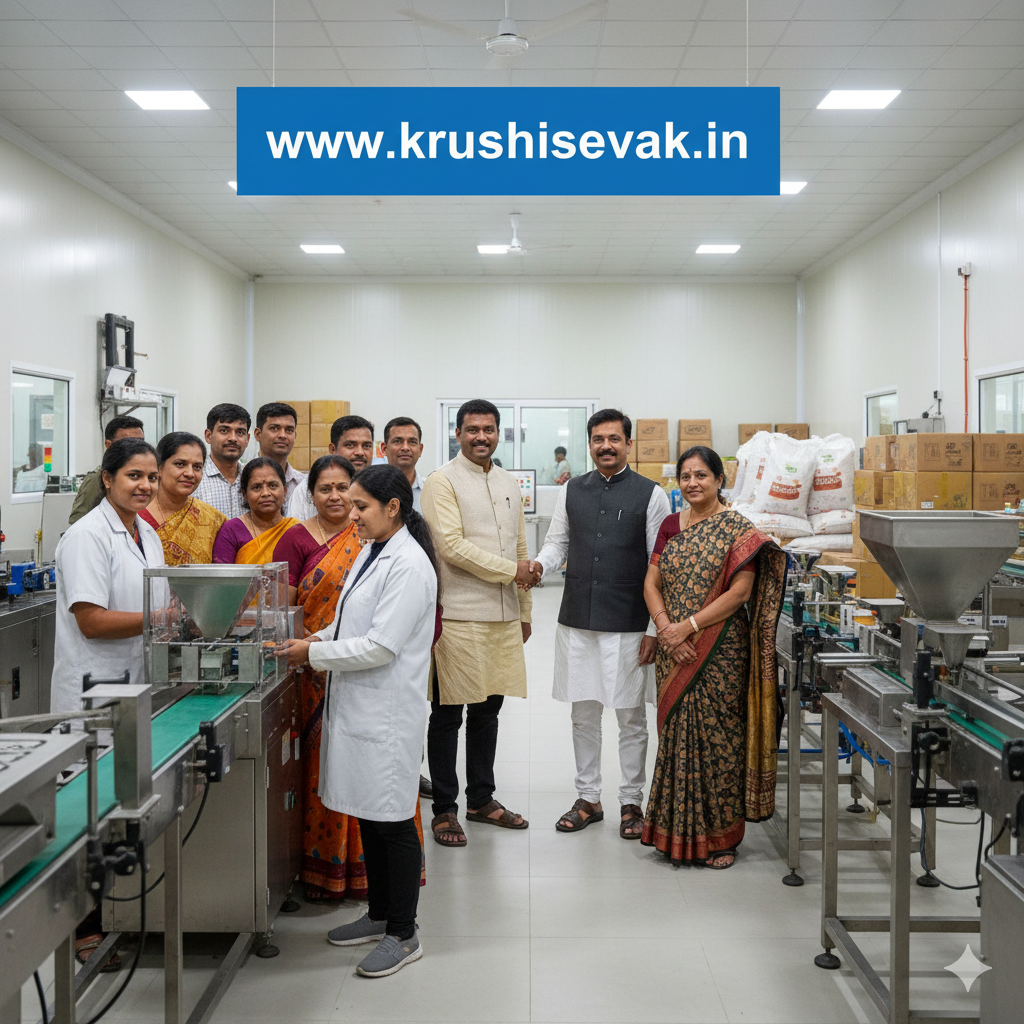

The unorganized food processing sector in India faces structural challenges, including a lack of access to modern technology, institutional credit, and formal market linkages. To address these vulnerabilities, the Ministry of Food Processing Industries (MoFPI) implements the Pradhan Mantri Formalisation of Micro Food Processing Enterprises (PMFME) Scheme. Originally launched under the Atmanirbhar Bharat Abhiyaan, this centrally sponsored initiative aims to upgrade and formalize micro-enterprises across the nation.
Operating with a financial framework shared between the Central and State governments—typically in a 60:40 ratio for general states and 90:10 for North-Eastern and Himalayan states—the scheme provides technical, financial, and business support. It serves individual entrepreneurs, Farmer Producer Organizations (FPOs), Self-Help Groups (SHGs), and producer cooperatives. This comprehensive framework helps small-scale businesses transition from informal local setups into legally compliant, economically sustainable units.
Core Pillars and Structured Opportunities
The One District One Product (ODOP) Strategy
The foundational pillar of the PMFME scheme is the One District One Product (ODOP) framework. Under this strategy, each district across India identifies a specific agricultural, horticultural, marine, or organic raw material that has an established production base in the region. Examples include mangoes in specific districts of Uttar Pradesh, ginger in parts of the Northeast, millets in Rajasthan, or marine products in coastal areas.
While the scheme prioritizes individual applications and common infrastructure setups aligned with the district’s designated ODOP, it does not exclude other processing lines. Existing micro-enterprises handling non-ODOP items are eligible for capital subsidy and technical upgrades to support business survival and diversification. However, new processing facilities seeking capital grants are primarily encouraged to align with the regional ODOP to maximize local sourcing efficiencies and cluster development.
Upgradation of Individual Micro-Units
For standalone food processing entrepreneurs, the scheme offers direct financial assistance to modernize aging production lines. Many micro-units operate using inefficient machinery, which can lead to high product spoilage rates and inconsistent product quality. The scheme provides a credit-linked capital subsidy of 35% of the eligible project cost, capped at a maximum ceiling of ₹10 lakh per unit.
To maintain skin in the game, the individual applicant must provide a minimum own contribution of 10% of the overall project cost, with the remaining balance funded through a commercial bank loan. This capital injection helps businesses replace manually operated machinery with automated systems, expanding their processing capacity and output quality.
Support for Group Categories (FPOs, SHGs, and Cooperatives)
The scheme recognizes the cooperative strength of farmer collectives and provides targeted group-level interventions along the entire processing value chain:
- Capital Subsidy for Groups: FPOs, SHGs, and producer cooperatives can access the 35% credit-linked capital subsidy for establishing shared processing lines, collection centers, or cold storage facilities.
- Seed Capital for SHG Members: For grassroot-level operations, the scheme provides seed capital of ₹40,000 per member of an SHG involved in food processing. This initial grant is disbursed to the SHG Federation to cover immediate working capital needs and the purchase of small hand tools, providing a bridge to regular institutional credit.
Development of Common Infrastructure
Setting up specialized facilities like testing laboratories, cold storage chains, custom packaging lines, and primary processing centers requires substantial capital that an individual micro-entrepreneur cannot afford. The PMFME scheme addresses this gap by offering a 35% credit-linked subsidy to public or private entities, FPOs, and cooperatives to establish common infrastructure. These shared facilities operate on a user-fee model, allowing local micro-units to access industrial-grade processing tools without heavy upfront equipment investments.
Branding and Marketing Support
Gaining space on modern retail shelves requires compliant packaging, standardized nutritional facts, and a recognizable brand. The scheme provides a 50% financial grant for marketing and branding initiatives executed at a regional or national level. This support is available to groups of FPOs, SHGs, or cooperatives developing a shared brand for localized products, helping them cover costs for packaging design, quality compliance, and regional marketing campaigns.
Capacity Building and Technical Training
Financial aid is most effective when paired with technical knowledge. The capacity building component provides structured training to beneficiaries through the National Institutes of Food Technology Entrepreneurship and Management (NIFTEM) and State Level Technical Institutions (SLTIs). Entrepreneurs receive detailed training on the Food Processing Entrepreneurship Development Programme (EDP), which covers production hygiene, machinery operations, inventory control, and FSSAI licensing standards.
Detailed Eligibility Criteria
To build a reliable evaluation process, the ministry enforces clear eligibility parameters for individual applicants and group entities.
Prerequisites for Individual Entrepreneurs
- Age and Education: The primary applicant must be an Indian citizen, at least 18 years of age, and must have cleared at least the 8th standard or equivalent.
- Family Limitations: To ensure broad distribution of benefits, only one member of a nuclear family (applicant, spouse, and children) can receive financial assistance under the scheme.
- Enterprise Scale: The target enterprise must fall strictly under the micro-category, meaning it should be unincorporated and employ fewer than 10 workers.
- Operational History: Existing micro-units must demonstrate active production. For units using electrical power, recent utility bills can serve as proof of operation; for manual units, physical verification of machinery and stock by a designated Resource Person is used.
Prerequisites for Groups and Collectives
- FPOs and Cooperatives: Collectives must be legally registered under their respective state or central statutes. The business plan must demonstrate clear economic benefits for its constituent farmer members, and the group must show sufficient financial capability to manage the remaining loan liabilities.
- Self-Help Groups (SHGs): For seed capital or enterprise loans, the SHG must have an active tracking record of internal thrift savings and credit management for at least one year.
The Step-by-Step Application and Approval Process
The application flow for the PMFME scheme is designed to combine digital transparency with ground-level field verification.
Step 1: Initial Portal Registration
The applicant logs onto the official PMFME online portal administered by MoFPI. They select the correct category (Individual, FPO, SHG, or Common Infrastructure) and create a unique user ID and password using a valid mobile number and email address.
Step 2: Form Documentation and Project Planning
Once logged in, the applicant fills out the multi-part digital application form. This requires entering basic personal histories, demographic data, firm structural details, bank account contexts, and a comprehensive Detailed Project Report (DPR). The DPR must clearly break down the project costs, including machinery quotations from suppliers, expected working capital, structural repair estimates, and projected profit margins over a five-year window.
Step 3: Ground-Level Engagement with District Resource Persons (DRPs)
To assist applicants who may face technical or digital barriers, the State Nodal Agencies empanel dedicated District Resource Persons (DRPs).
- Assistance: DRPs are available to help applicants gather necessary documents, clarify machinery choices, and draft the required project report.
- Verification: The DRP carries out an initial physical verification of the entrepreneur’s existing facility, assessing its infrastructure and checking its alignment with the district’s target ODOP clusters.
Step 4: District Level Committee (DLC) Evaluation
Once verified by the DRP, the application passes to the District Level Committee (DLC), chaired by the District Collector or District Magistrate. The DLC examines the technical viability of the food processing project, interviews the applicant if necessary, and ensures the proposal complies with local zoning and environmental regulations.
Step 5: State Nodal Agency (SNA) Verification
Approved applications travel to the State Nodal Agency (SNA) portal. The SNA performs a final technical audit to ensure that the asset calculations, building rental definitions, and machine configurations align with the scheme’s cost guidelines. Once approved by the SNA, the file is pushed digitally to the applicant’s chosen commercial bank.
Step 6: Bank Appraisal and Subsidy Management
The lending bank performs its standard commercial due diligence, evaluating the applicant’s credit score, repayment capacity, and overall business viability.
- Sanction: If the project meets the bank’s internal credit benchmarks, the lender issues a formal loan sanction letter and disburses the first installment of the project loan.
- Subsidy Settlement: Following loan disbursement, the Central and State subsidy share is released into a separate, interest-free Subsidy Reserve Fund Account maintained at the lending bank branch. This subsidy is adjusted against the loan principal after a specified operational window, provided the enterprise stays active and avoids default.
Mandatory Documentation Checklists
To avoid delays or application rejections, you must compile and upload clean, legible copies of all required documents.
For Individual Entrepreneurs
- Identity and Address Proofs: Clear copies of the applicant’s PAN card, permanent address proofs (such as recent utility bills, water bills, or property tax receipts), and a passport-size photograph.
- Educational Proofs: School leaving certificate or 8th standard passing marksheet to verify the basic educational requirement.
- Business Credentials: Existing bank passbooks or financial statements spanning the last six months, Udyam Registration Certificate (if already registered), and valid FSSAI registrations or food handling licenses where applicable.
- Project Documents: A Detailed Project Report (DPR) detailing the required investments, along with formal price quotations for all new processing machinery sourced from verified industrial equipment manufacturers.
For Group Applications (FPOs / Cooperatives / SHGs)
- Legal Registrations: Registration certificates issued by the Registrar of Societies or Cooperatives, along with the firm’s formal Memorandum of Association (MoA) and Articles of Association (AoA).
- Administrative Proofs: PAN cards and address proofs for all executive board members, promoters, or primary guarantors.
- Financial Records: Audited balance sheets and Income Tax Returns (ITR) from the previous three financial years to demonstrate financial health.
- Resolutions: An official board resolution signed by all authorized directors, approving the plan to secure the commercial project loan and implement the micro-enterprise upgrade.
Key Operational Challenges and Risk Mitigation
Expanding a micro food processing business involves navigating several common operational challenges that require careful risk management:
- FSSAI Compliance Hurdles: Many traditional micro-units find it difficult to transition to strict food safety and hygiene regulations, which can result in compliance delays or audit failures.
- Mitigation: Applicants should use the capacity-building training provided by State Level Technical Institutions (SLTIs). Working closely with a District Resource Person during the initial planning phase helps ensure the layout of the processing shed complies with FSSAI hygiene standards.
- Raw Material Price Fluctuations: Seasonal shortages of agricultural inputs can squeeze operating profit margins.
- Mitigation: Aligning with the local One District One Product (ODOP) strategy can help secure supply chains. Building reliable, direct procurement relationships with local farmer groups or FPOs provides a more consistent supply of raw inputs.
- Loan Sanction Delays: Banks may delay processing loans if an applicant’s project report lacks clear financial parameters or demonstrates weak repayment capacity.
- Mitigation: Ensure that the Detailed Project Report (DPR) includes detailed cash flow projections, realistic market demands, and clear machinery quotes. Seeking guidance from a DRP can help ensure the plan aligns well with standard commercial banking metrics.
Strategic Action Steps for Market Entry
For entrepreneurs and collectives planning to leverage the PMFME scheme to build or modernize a food processing business, following these strategic steps can help streamline the onboarding process:
- Verify Your District’s ODOP Status: Check the official MoFPI portal to identify the approved One District One Product list for your specific location. Choosing a business model that aligns with this product category can simplify your access to raw materials and help fast-track the review process.
- Connect with a Local District Resource Person: Visit your local District Industries Centre (DIC) or Agriculture Department to get the contact details of the empanelled DRP for your area. Their guidance can save considerable time when drafting the project report.
- Obtain Your Udyam Registration: Secure your free Udyam Registration certificate online before submitting your application. Having this formal MSME identity helps verify your enterprise status and can simplify your loan processing with commercial banks.
- Gather Clear Equipment Quotations: Avoid using vague or rounded cost estimates in your project plan. Contact reliable industrial machinery suppliers to get detailed, formal invoices that break down the base costs, transportation fees, and installation charges for your proposed equipment.